
Last updated September 22, 2026
Free on-site gate assessment - hinges, posts, and your LiftMaster or Nice gate operator checked before anything is quoted
The assessment is free and the quote is the invoice.

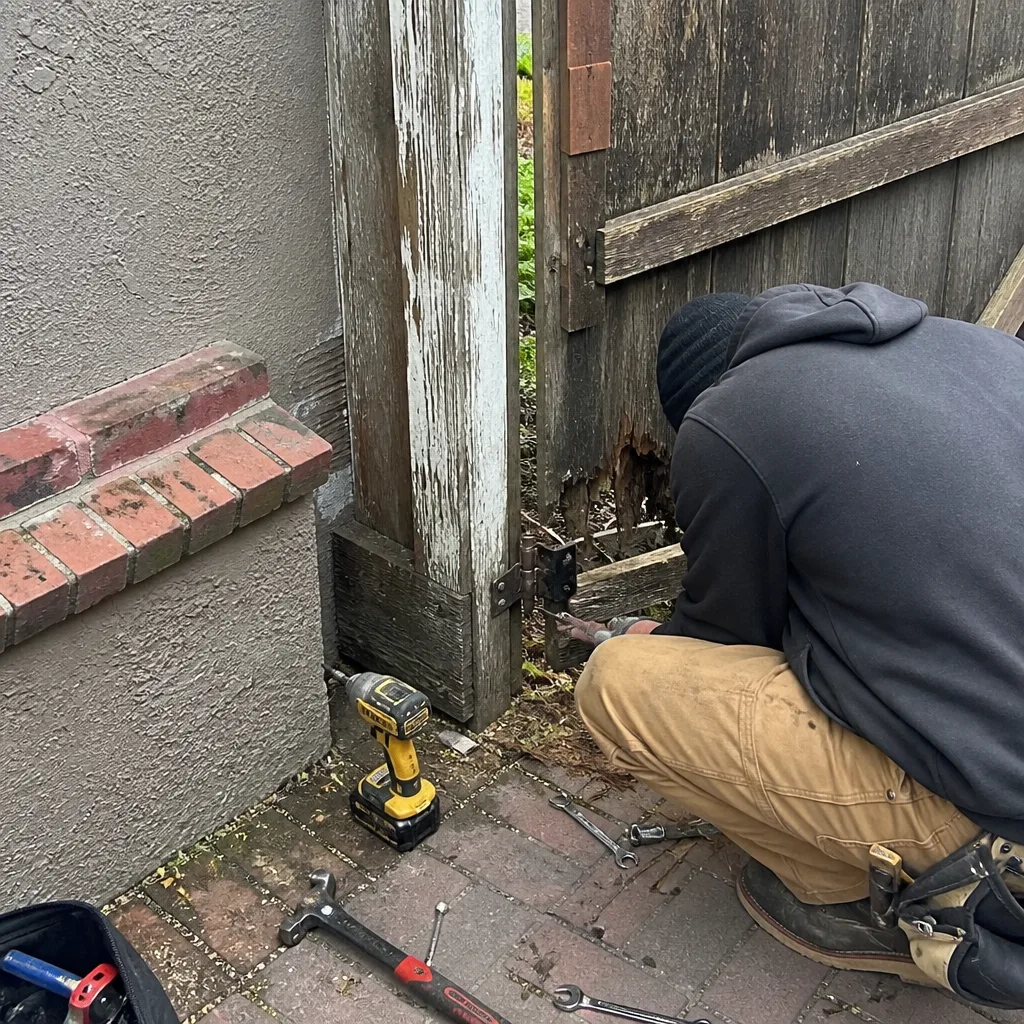 Before
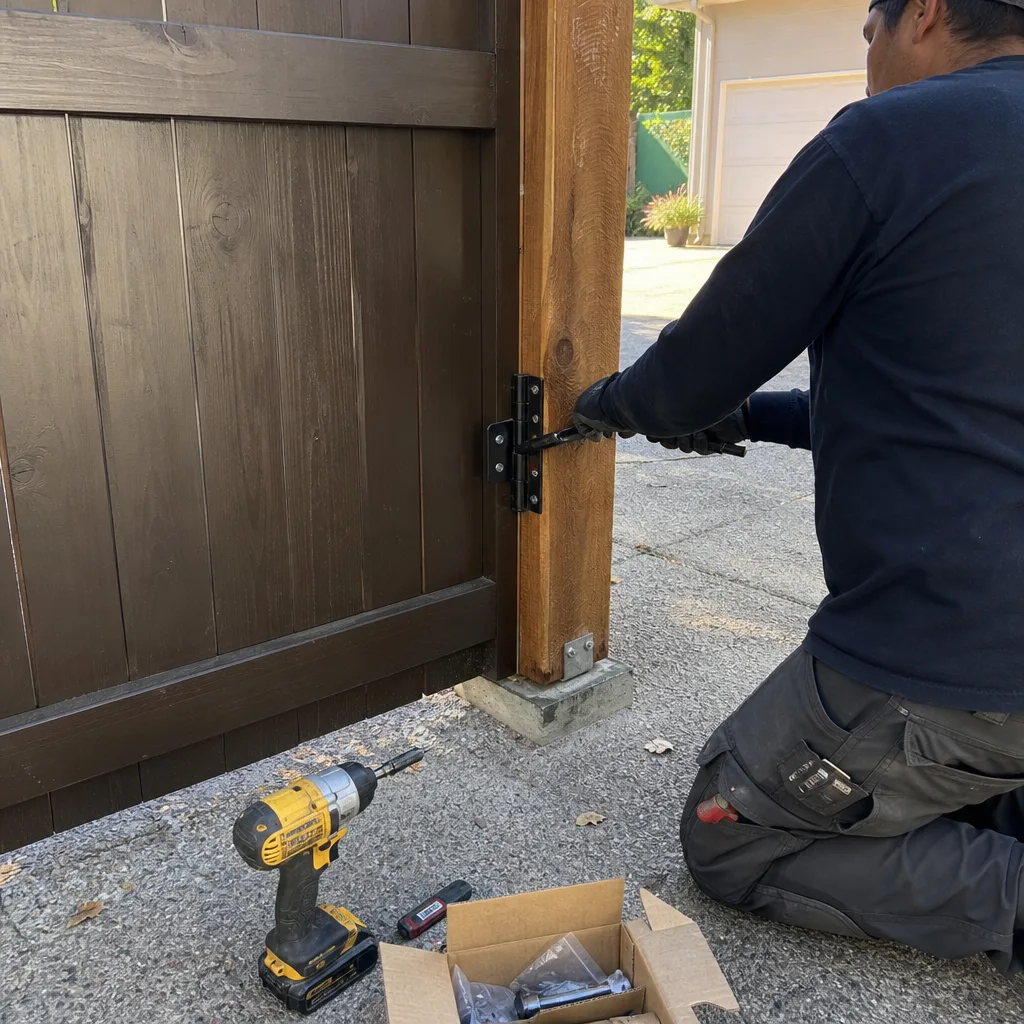 After
After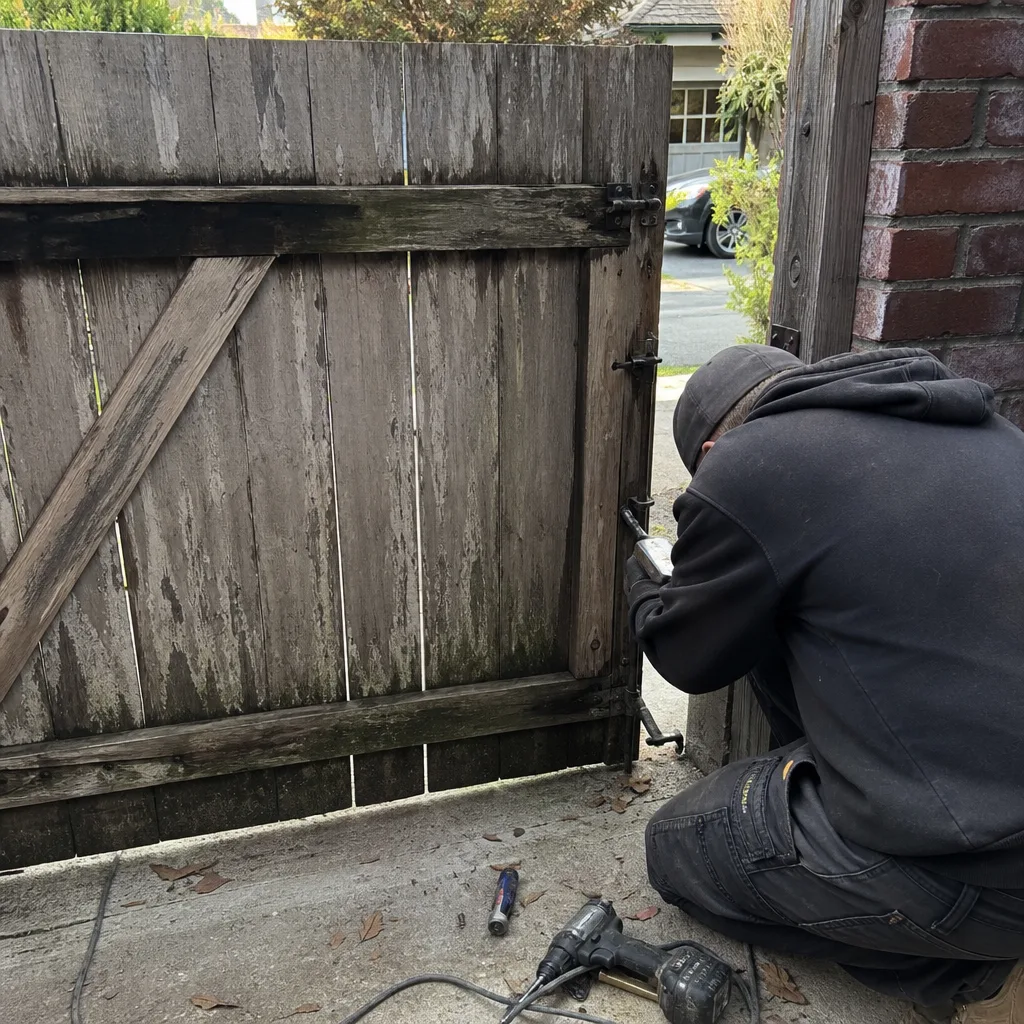 Before
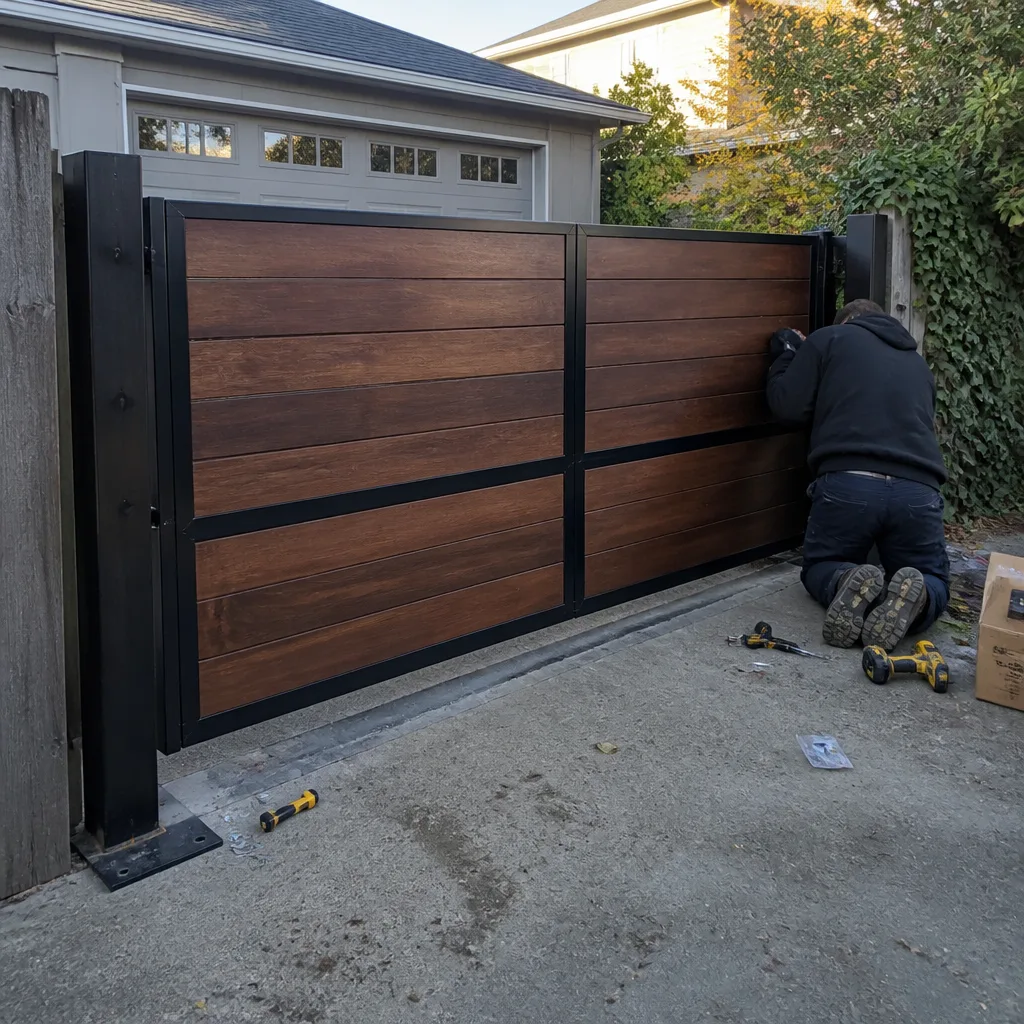 After
After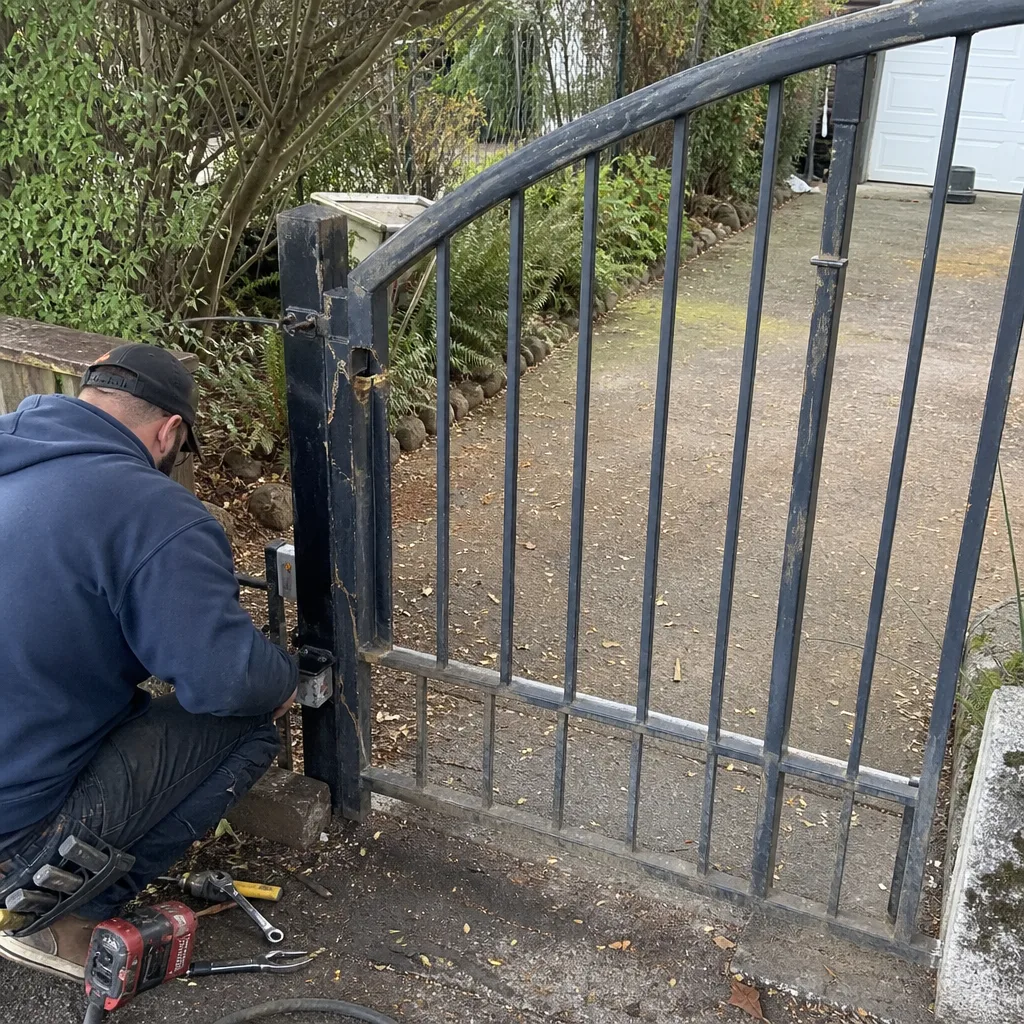 Before
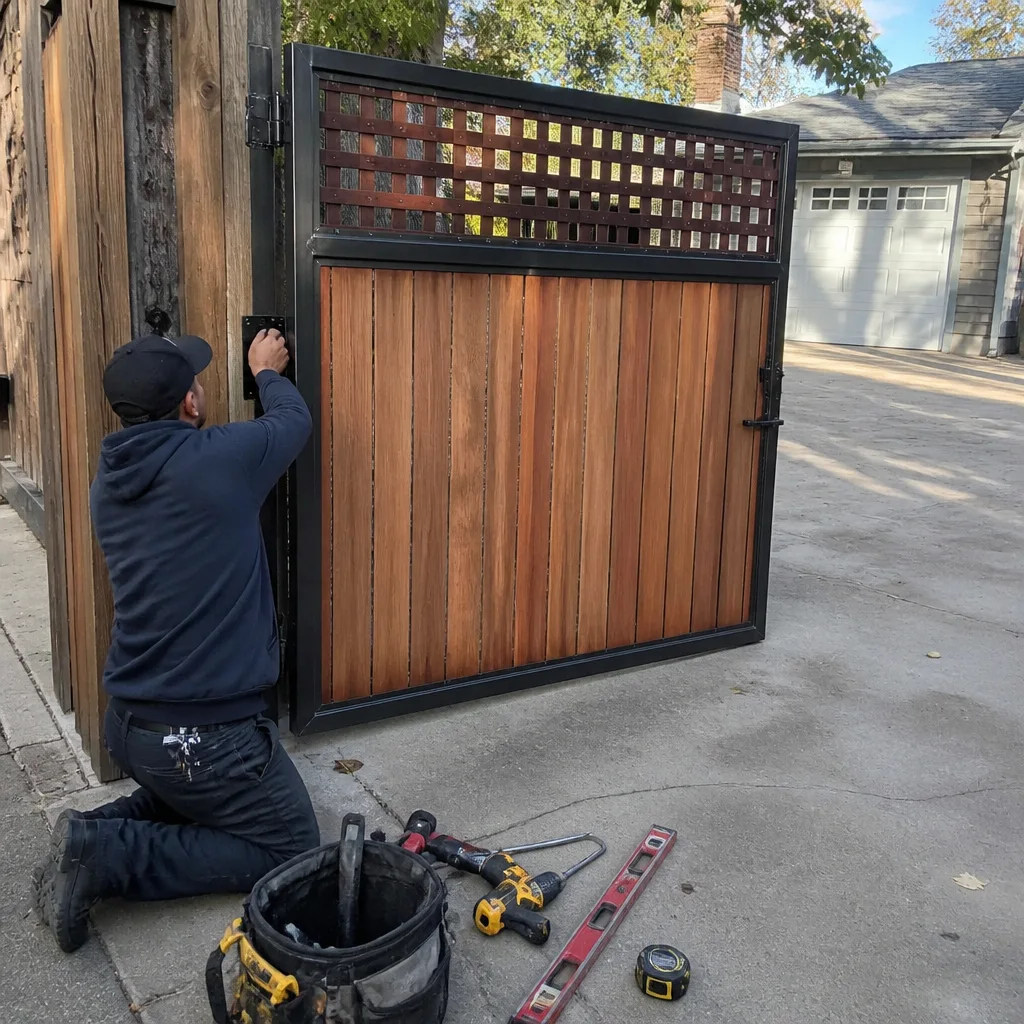 After
AfterThe Complete Guide to Gate Repair in Berkeley
Most Berkeley gate failures trace back to one of three root causes - but because technicians fix the symptom without recording the source, homeowners often pay to fix the same underlying issue two or three times over. In the Berkeley hills, clay soil settles in wet winters and swells in dry summers, slowly torquing gate posts out of plumb. Down toward the flats and the Marina, marine air carries enough salt to corrode low-voltage control boards well before their rated lifespan expires. And across every neighborhood, limit switches drift out of calibration without anyone writing down where they started. This guide maps that failure chain so you understand exactly what you’re looking at and what documentation you should demand before any repair begins; for more guides & resources, see our blog.
Quick Answer
Our Gate Repair Cost Breakdown: The Berkeley Homeowner’s Reference for 2026 shows that gate repair in Berkeley typically costs between $180 and $650 for most common issues, with full motor replacements running $850-$1,800 depending on brand and gate type. Most swing-gate hinge adjustments and limit-switch resets can be completed same-day, while slide-gate track repairs or control-board replacements may require a return visit if parts need ordering. The three root causes of Berkeley gate failure are clay-soil settlement stressing hinges and posts, marine-air corrosion of electronic components, and undocumented limit-switch drift that technicians fix without recording baseline readings.
Table of Contents
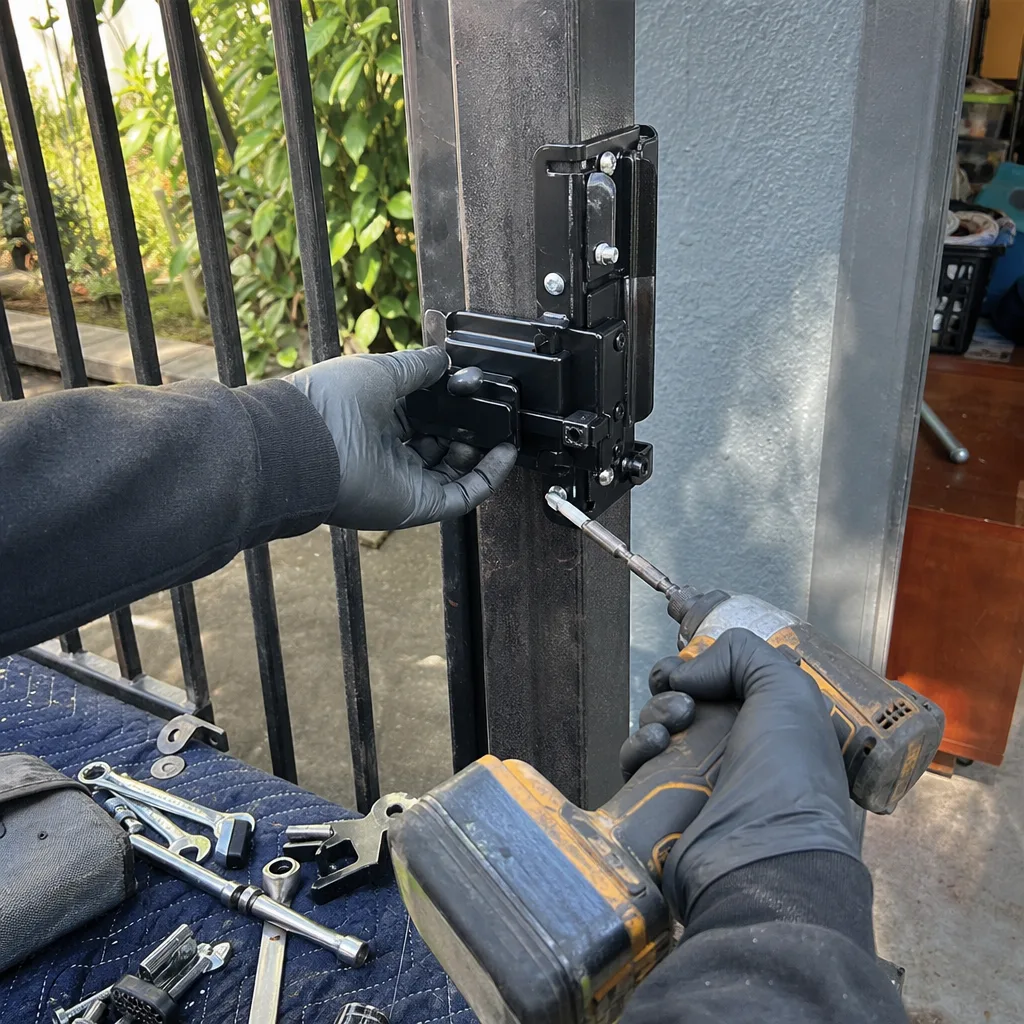
- The Berkeley Gate Failure Chain: Three Root Causes
- Gate Types Common in Berkeley and Their Distinct Failure Modes
- How to Read a Written Scope of Work
- The Documentation Standard That Prevents Repeat Charges
- What Gate Repair Costs in Berkeley
- What You Can Check Yourself vs. What Requires a Technician
- Choosing a Gate Repair Technician in Berkeley
- A Realistic Maintenance Schedule for Berkeley’s Climate
 Before
 After
AfterThe Berkeley Gate Failure Chain: Three Root Causes
Berkeley’s geography creates a narrow, predictable sequence of gate failure. Understanding this sequence lets you diagnose a problem before you touch a phone, and more importantly, lets you ask the right questions when a technician arrives.
Root Cause 1: Clay-Soil Settlement in Hills Neighborhoods
The Berkeley hills sit on expansive clay soils that shrink and swell with moisture changes. In winter, saturated soil softens and gate posts tilt. In summer, desiccated clay contracts and pulls posts further out of plumb. A post that was level in October may be two degrees off by March.
What this means for your gate: the hinge axis shifts, binding the gate against the post or dragging the far end across the driveway. We’ve seen this in North Berkeley, Elmwood, and the Claremont hills regularly. The symptom is a gate that “sticks” at a certain point in its swing or makes a grinding noise at full open or close. The real problem is post position, not hinge wear. A technician who replaces the hinge without checking post plumb with a level - and without photographing the post angle - has fixed the symptom and left the cause.
In our experience, a gate post installed without a concrete footing extending below the clay active zone (typically 24-30 inches in Berkeley) will require re-plumbing every 3-5 years. A proper footing with drainage gravel reduces this to once per decade or less.
Root Cause 2: Marine-Air Corrosion of Control Electronics
Berkeley’s proximity to San Francisco Bay means persistent marine air, especially in neighborhoods west of Sacramento Street and anywhere with a clear Bay view. This air carries chloride ions that corrode low-voltage control boards, transformer terminals, and photo-eye housings faster than manufacturer specifications predict.
National product ratings for control boards assume inland atmospheric conditions. In Berkeley, we’ve found that a control board rated for 10 years often shows capacitor bulging and trace corrosion at 5-7 years. The symptom is intermittent operation: the gate works fine nine times, then fails to respond on the tenth. The homeowner resets power, it works again, and they assume it was a fluke. It wasn’t. The fluke is the early stage of board failure.
A technician who replaces the board without noting the installation environment - and without photographing the corrosion pattern - has missed the chance to recommend a sealed enclosure or relocated venting that would extend the replacement’s life.
Root Cause 3: Limit-Switch Drift Without Baseline Documentation
Every automated gate has limit switches that tell the motor when to stop at fully open and fully closed. These switches drift over time due to vibration, temperature cycling, and mechanical wear. The symptom is a gate that bangs against the stop or reverses before reaching full travel.
The fix is simple: reset the limit switches. But without recording the new switch positions - the degree readings on a mechanical switch, the pulse counts on an electronic one - the next technician has no baseline. If the gate drifts again in six months, is it new drift or the old problem recurring? Without documentation, you pay for rediscovery.
Under our Haven Standard, every limit-switch adjustment includes a photographed record of the new settings, dated and filed with the job record. When we return for any future issue, we check against that baseline in under two minutes instead of running a full diagnostic.
Gate Types Common in Berkeley and Their Distinct Failure Modes
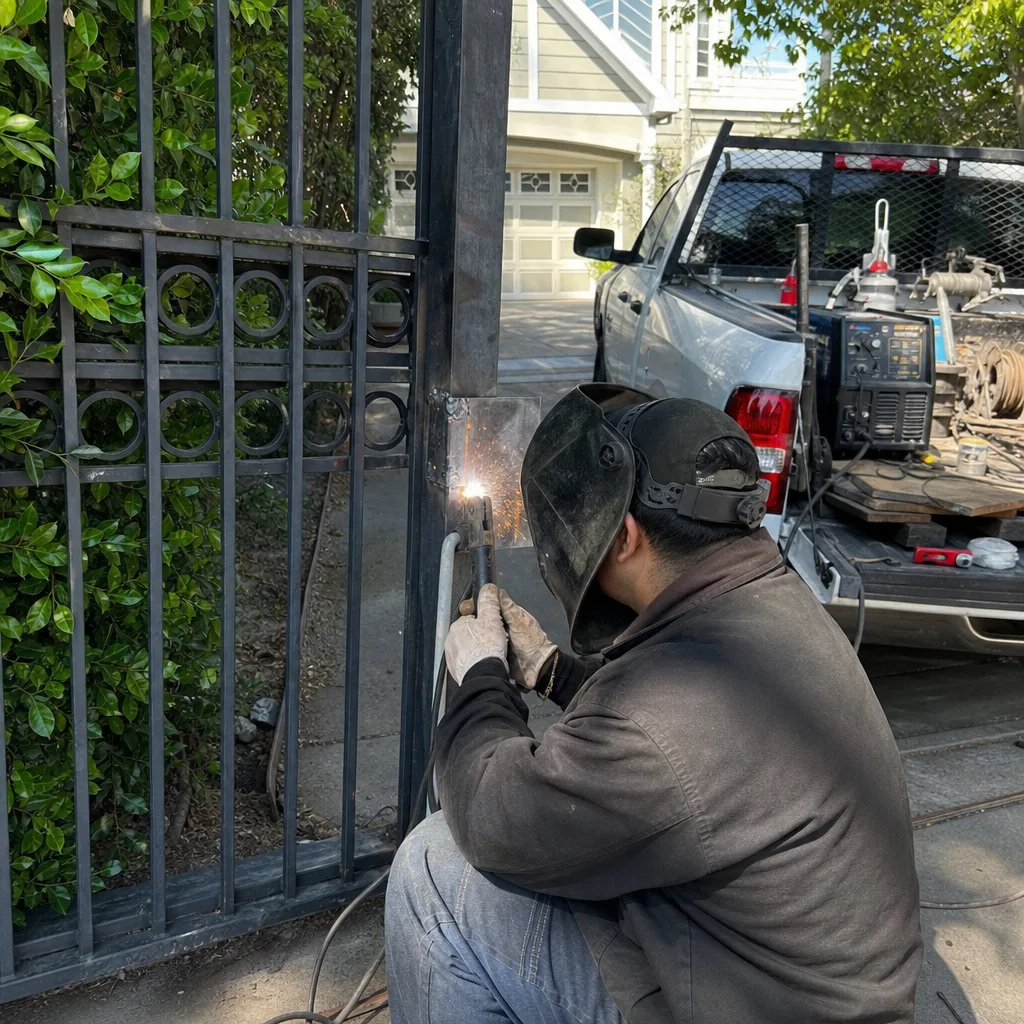
Berkeley’s housing stock and zoning create distinct gate populations with different failure patterns. Knowing which type you have tells you what to watch for.
Swing Gates
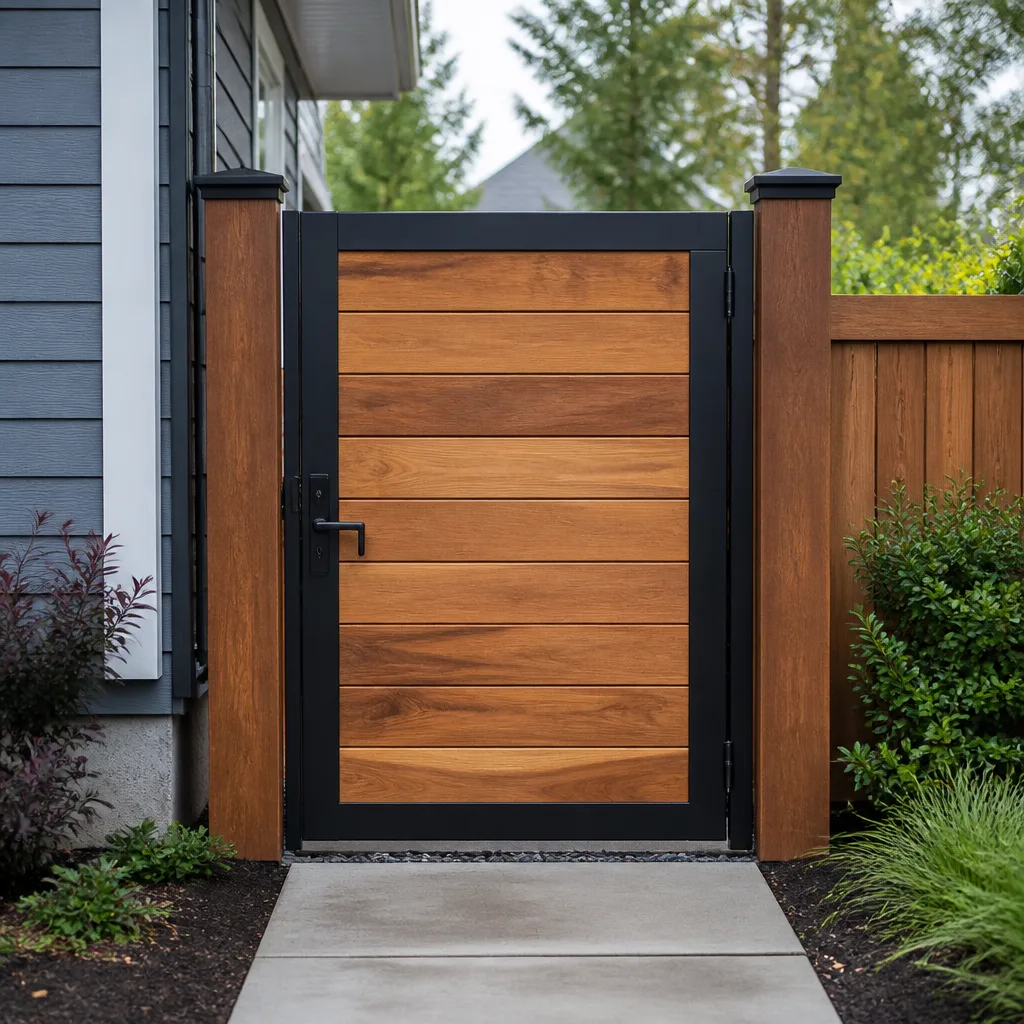
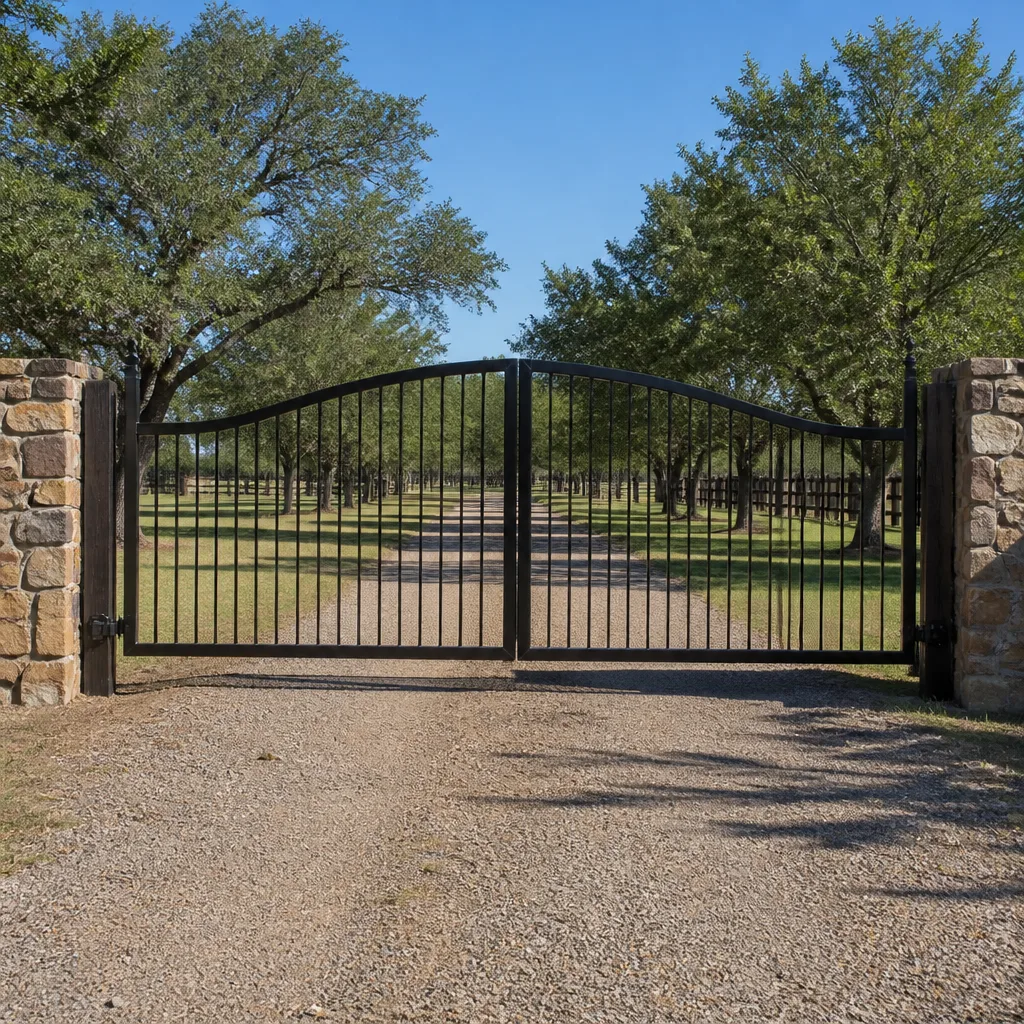
Common in North Berkeley, Elmwood, and the hills, swing gates are typically wood or wrought iron on steel frames. Their failure modes:
- Hinge fatigue from post settlement: The most common issue we see in Berkeley. As clay soil shifts, the hinge pin bears lateral load it wasn’t designed for. Bronze bushings wear oval; steel pins gall. The gate develops a sag or a bind.
- Arm bracket stress on automation: A swing-gate operator (brands like Viking, Ghost Controls, or Elite) pushes or pulls through an arm attached to the gate frame. If the gate is already binding due to post settlement, the arm bracket takes cyclic overload and eventually cracks.
- Wood rot at the hinge block: In Berkeley’s wet winters, water wicks into end grain where the hinge bolt passes through a wood gate. We’ve replaced hinge blocks in Thousand Oaks and Panoramic Hill where the bolt was the only thing holding the corner together.
Slide Gates
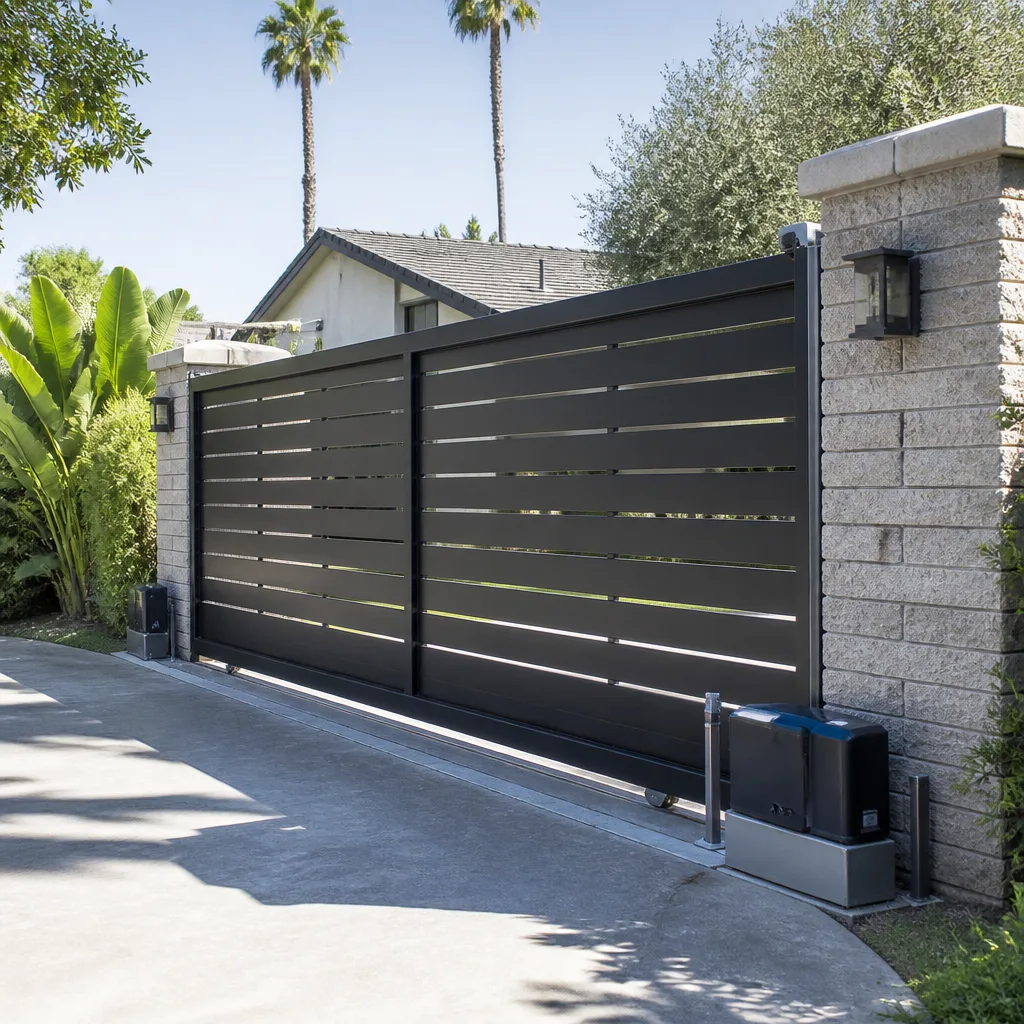
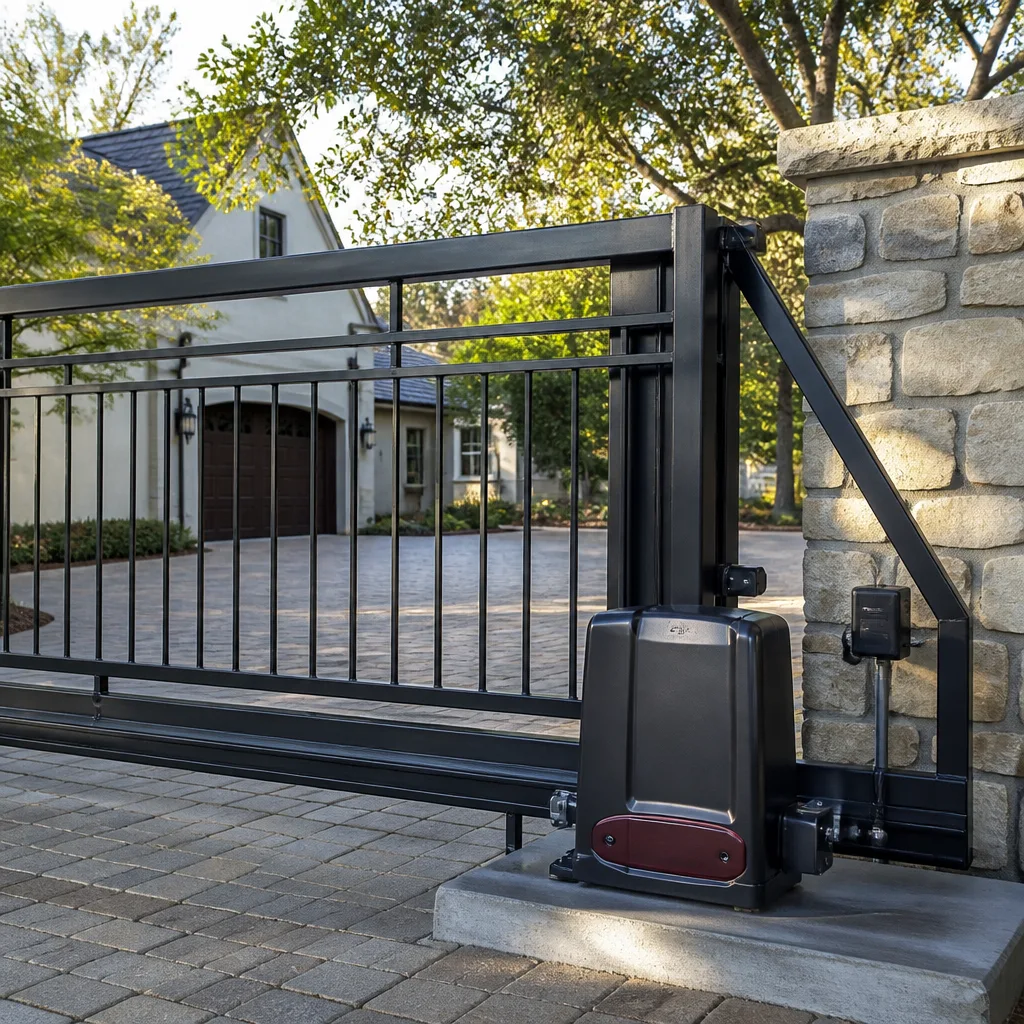
More common in flat-lot neighborhoods and commercial properties, slide gates run on a track or cantilever without ground contact. Their failure modes differ:
- Track deformation from vehicle impact or tree-root heave: Berkeley’s mature street trees lift track sections, creating a bump that rollers climb and drop from, stressing the motor.
- Roller wear from grit: Track rollers pick up Bay-area grit and salt, accelerating bearing wear. A roller that should last 8 years often needs replacement at 5 in Berkeley’s coastal environment.
- Chain or belt stretch: The drive mechanism elongates over time. Without periodic tension adjustment, the gate begins to creep or stall at end positions.
Material-Specific Issues
Wood gates: Redwood and cedar are common in Berkeley for aesthetic match with Craftsman and brown-shingle architecture. End-grain water absorption, checking from sun exposure, and hardware loosening as wood shrinks and swells are the primary issues. A wood gate in Berkeley needs hinge-bolt torque checks every 18 months.
Wrought iron and steel: Powder-coated steel frames with iron infill are durable but rust at weld points and inside hollow posts where water collects. In marine-exposed locations, we’ve found rust-through in hollow posts at 12-15 years that inland ratings would predict at 20+.
Aluminum: Lighter and corrosion-resistant, aluminum gates are increasingly common in modern Berkeley construction. Their weakness is galvanic corrosion where steel fasteners contact aluminum frame members, and fatigue cracking at welded joints under cyclic load.
How to Read a Written Scope of Work
The Haven Standard Clause 1 requires a written price before any work starts. But a written price is only as good as the scope it describes. Here’s how to read one critically.
Red Flags in a Scope
- “Repair gate motor” without specifying the motor brand or model. A Viking operator and a Mighty Mule operator use different parts and different labor hours. Vague language lets a contractor substitute a cheaper part or bill extra when they discover the actual motor.
- “Adjust as needed” without defining “as needed.” This is where limit-switch resets and hinge adjustments get buried, often with no documentation of what was found or what was set.
- No mention of post plumb or footing condition. On a swing gate in the Berkeley hills, this omission virtually guarantees the hinge repair will be temporary.
- “Replace control board” without noting environmental protection. In marine-exposed Berkeley locations, a board replacement without a sealed enclosure or relocated venting is a repeat failure waiting to happen.
- No photo-documentation clause. If the scope doesn’t promise visual evidence of what was found and what was done, you have no recourse if the problem recurs.
What a Proper Scope Includes
A scope that prices the problem, not just the part, reads like this:
“Inspect gate post for plumb in two axes; photograph current angle. If post is out of plumb >1 degree, excavate to footing, re-plumb, and re-grout with non-shrink grout. Replace hinge pin and bronze bushing; torque to 45 ft-lb. Reset limit switches; record and photograph new degree settings. Test cycle count: 10 open/close cycles. Deliver photo log and written settings record.”
That scope names what will be found, names what it costs, and names what you get when the technician leaves. Anything less is gambling.
The Documentation Standard That Prevents Repeat Charges
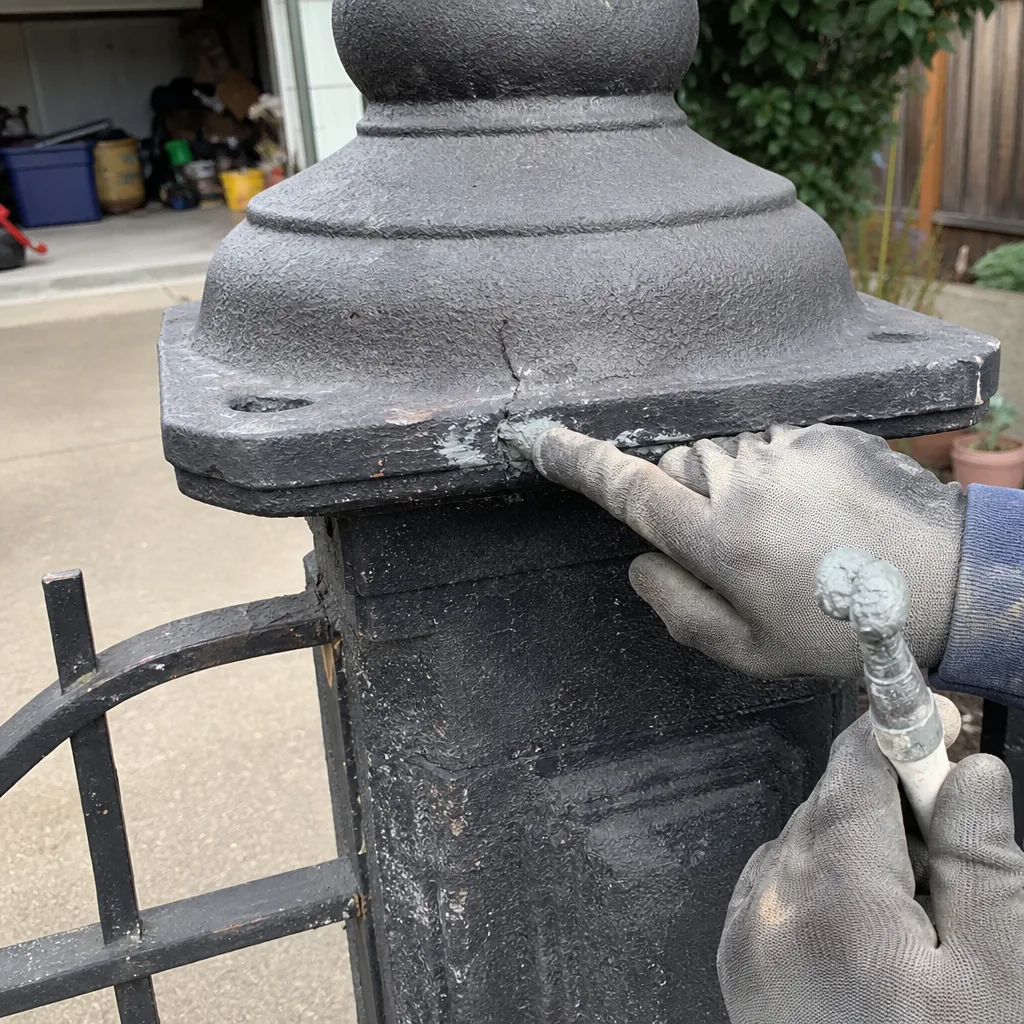
The single most expensive element in gate repair is diagnostic labor. A technician who has to figure out what the last technician did charges you for that time. Documentation eliminates rediscovery.
Under Haven Standard Clause 4, every Vance Gate Repair Berkeley visit includes:
- Photographs of the fault as found: corrosion pattern on a control board, crack propagation in an arm bracket, post angle relative to a level.
- Photographs of every adjustment: limit-switch degree readings, hinge bolt torque wrench display, track roller position relative to the gate frame.
- Photographs of installed components with visible part numbers: so future technicians know exactly what’s in the system without disassembly.
- A written record delivered to the homeowner and filed in the job record: dated, technician-named, cross-referenced to the photo log.
This documentation habit came from Adrian Vance’s commercial access-control work starting in 2014. Commercial sites require as-built drawings and maintenance logs for code compliance and warranty claims. Residential gate repair had no equivalent standard. We applied one.
The practical value: when a Berkeley homeowner calls us about a gate that “started doing that thing again,” we pull the prior job record and compare current behavior to documented baselines. If the limit switch was at 12 degrees open and now reads 9, we know it’s drift, not a new failure. The diagnostic takes minutes, not an hour. The homeowner doesn’t pay for rediscovery.
If your current gate repair company doesn’t leave documentation, ask why. If they can’t answer, you’re paying for their disorganization.
What Gate Repair Costs in Berkeley
These ranges reflect Berkeley’s market as of 2024-2025, including labor rates, parts availability, and the environmental factors that affect part longevity. Every price is quoted and agreed before any work starts.
| Service | Typical Range | What Affects Price |
|---|---|---|
| Hinge adjustment or bushing replacement (swing gate) | $180-$320 | Post requires re-plumbing; number of hinges; access for excavation |
| Limit switch reset and calibration | $150-$240 | Mechanical vs. electronic switches; travel distance to site |
| Photo-eye realignment or replacement | $140-$280 | Hardwired vs. wireless; conduit condition; marine-rated housing needed |
| Control board replacement (single gate) | $450-$780 | Brand and model; sealed enclosure upgrade; programming complexity |
| Swing-gate motor replacement | $950-$1,650 | Brand (Viking, Ghost Controls, Elite vary in parts cost); arm bracket condition; post stability |
| Slide-gate motor replacement | $1,100-$1,800 | Chain vs. belt drive; track condition; roller replacement bundled |
| Track repair or section replacement (slide gate) | $380-$650 | Length of section; root-heave damage; welding required |
| Post re-plumbing with footing repair | $550-$1,200 | Excavation depth; concrete volume; access constraints |
| Full diagnostic with documentation package | $120-$180 | Applied to repair if work proceeds; waived under maintenance agreement |
These ranges are for single-family residential gates in Berkeley. Commercial or multi-family installations with intercom integration, loop detectors, or card-access systems require custom scope and pricing.
We offer free second opinions on any written estimate from another company. Bring the paperwork and we’ll review scope completeness, parts specifications, and whether the estimate addresses root cause or symptom. No charge, no obligation.
What You Can Check Yourself vs. What Requires a Technician
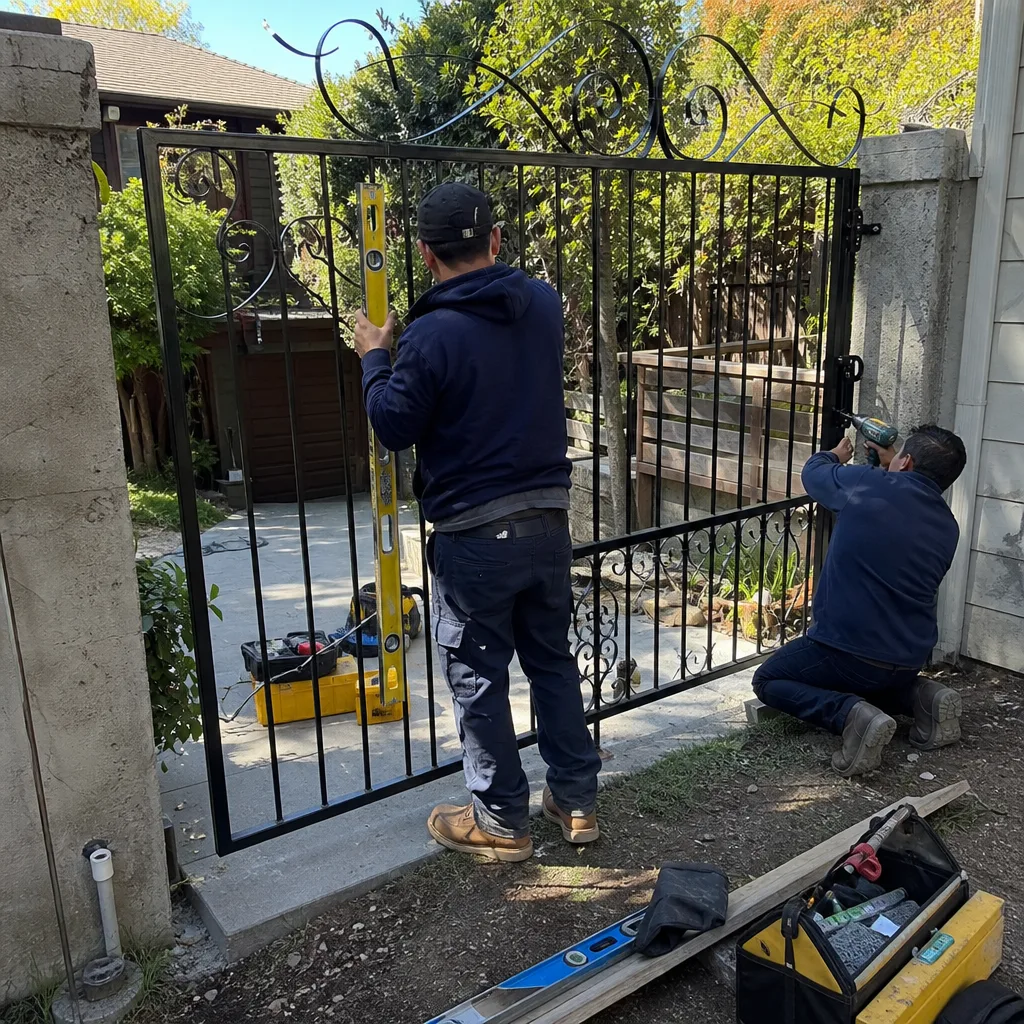
Some gate issues are safe to investigate; see our DIY vs Professional Gate Repair: The Berkeley Homeowner’s Decision Guide for the dividing line. Others involve high-tension springs, line-voltage electrical components, or hydraulic systems that can cause serious injury. Here’s that dividing line.
Safe to Check Yourself
- Power supply: Verify the outlet or hardwired disconnect has power. A tripped GFCI or blown breaker is the most common “failure” we dispatch to.
- Photo-eye alignment: Look for obvious misalignment, spider webs, or foliage blocking the beam. Clean lenses with a dry cloth. If the LED indicators don’t match the manufacturer’s pattern, note which one is off before calling.
- Physical obstructions: Stones in the track, debris against the gate, or a shifted planter box can trigger safety reversals.
- Remote battery: Replace the battery; test from multiple distances. A weak battery can work intermittently and mimic receiver failure.
Requires a Trained Professional
- Any work on the motor, gearbox, or drive arm: These components store rotational energy and can move unexpectedly if disengaged improperly.
- Control board replacement or programming: Line voltage is present; incorrect wiring can damage the board or create fire risk.
- Spring-assisted or counterweighted gates: Torsion and extension springs are under lethal tension. Never attempt adjustment or replacement without proper tools and training.
- Post excavation or concrete work: Underground utilities, proper depth for frost/heave protection, and structural grout selection require expertise.
If you’re uncertain which category your issue falls into, err toward professional assessment. Our diagnostic fee is modest and applied to repair if you proceed. It’s cheaper than an emergency room visit or a motor replacement after a DIY mistake.
Choosing a Gate Repair Technician in Berkeley
The Bay Area has no shortage of companies that install gates. Few specialize in repair, and fewer still document their work. Here’s what distinguishes a technician who will fix your gate once from one who will return annually.
Ask These Questions Before Booking
- “Will you provide a written scope and price before starting work?” If the answer is “we’ll tell you after we look,” you’re signing a blank check. Under Haven Standard Clause 1, we write the scope and price on-site and hand it to you before touching a tool.
- “What documentation do I receive when the job is done?” A photo log and written record should be standard, not extra. Clause 4 makes it mandatory on every Vance visit.
- “Do you service my motor brand, or do you only install your preferred brand?” We service nine major automation brands - Viking, Ghost Controls, DoorKing, Elite, and five others - because replacing a functional motor to match a technician’s preference is wasteful.
- “What’s your policy if the repair doesn’t solve the problem?” Our 365-Day Done Right Promise gives one full year for us to make any repair right at no additional charge. No argument, no fee, no expiration within that window.
- “Who will arrive at my property, and when?” We provide technician name and photo before dispatch. Background-checked, uniformed, and licensed.
Local Knowledge Matters
A technician familiar with Berkeley understands that a gate in the hills fails differently than one in the flats. They know which neighborhoods have clay-soil issues, which have marine-air exposure, and which building eras used which gate materials. They don’t learn this from a manual. They learn it from documented records across hundreds of Berkeley jobs.
Since 2014, we’ve built that record: 22,000+ gates repaired and installed, every one with a written price before work started and a documented record when the technician left. When we arrive at a Berkeley property, we’re not starting from zero.
A Realistic Maintenance Schedule for Berkeley’s Climate
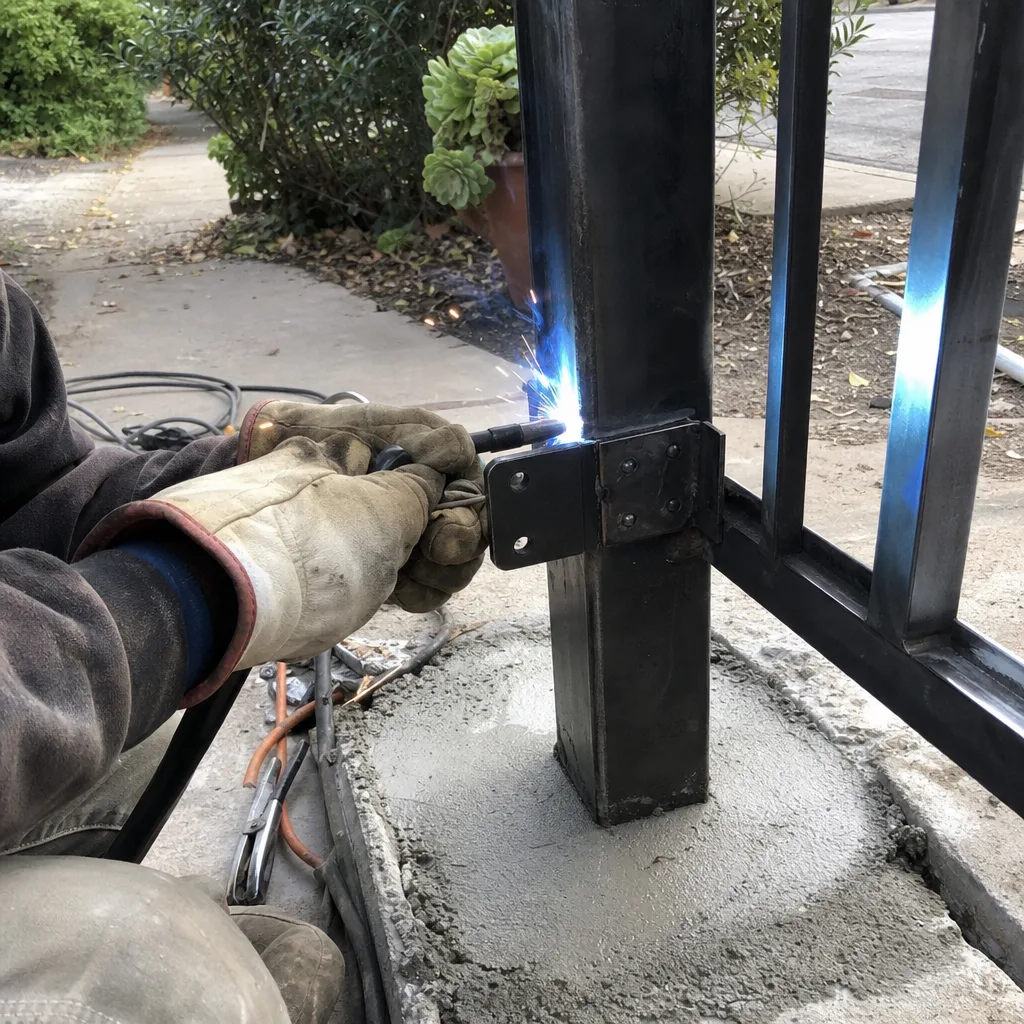
Preventive maintenance is cheaper than reactive repair, but only if the maintenance addresses actual local conditions. Here’s what Berkeley’s climate demands.
Annual Tasks (Every 12 Months)
- Hinge and roller inspection: Check for play, corrosion, and lubrication condition. Re-torque fasteners to spec.
- Photo-eye alignment and lens cleaning: Marine film builds faster in Berkeley than inland; clean with optical-grade solution, not household glass cleaner.
- Control board enclosure inspection: Check gasket condition, vent filter if equipped, and any corrosion on terminals. Photograph for year-over-year comparison.
- Limit switch function test: Verify stop positions haven’t drifted; record readings.
Bi-Annual Tasks (Every 6 Months)
- Post plumb check (swing gates in hills neighborhoods): After the wet season and after summer drying, check with a level. Early catch prevents hinge damage.
- Track clearance and drainage (slide gates): Remove debris; verify track section joints haven’t separated from root heave or settlement.
- Battery test (battery-backup systems): Load-test and replace before failure, especially important if Pacific Gas and Electric public safety power shutoffs affect your area.
Post-Event Checks
After significant earthquakes, heavy wind storms, or extended power outages: run full open/close cycles, listen for unusual noise, and check safety reverse function with a solid object (not your body). Any anomaly warrants professional inspection.
We offer maintenance agreements that include scheduled visits, priority scheduling, and waived diagnostic fees. The documentation from each visit builds a longitudinal record that makes future diagnosis faster and cheaper.
Common Mistakes to Avoid
- Accepting a verbal estimate for gate repair. In Berkeley’s competitive market, some contractors lowball verbally and invoice higher. A written scope and price, delivered before work starts, is your only protection. Haven Standard Clause 1 exists because we saw this pattern repeatedly.
- Ignoring intermittent operation as “just a glitch.” Intermittent failure is early-stage board or connection failure. Addressing it early prevents the complete failure that strands your vehicle.
- Hiring a general handyman for automated gate work. Gate automation involves electrical, mechanical, and safety-system integration. A handyman who can fix a fence may not understand limit-switch calibration or safety-edge compliance.
- Replacing a motor without checking post stability. In Berkeley hills neighborhoods, a new motor on a settling post fails prematurely because the binding load cycles back through the arm bracket. Fix the post first.
- Neglecting photo-eye maintenance until complete failure. Misaligned or dirty photo-eyes cause nuisance reversals that homeowners bypass by holding the button, defeating a critical safety system.
- Assuming all technicians document their work. Most don’t. Ask explicitly what you’ll receive when the job is done. If the answer is a receipt, you’re not getting documentation.
When to Call a Professional
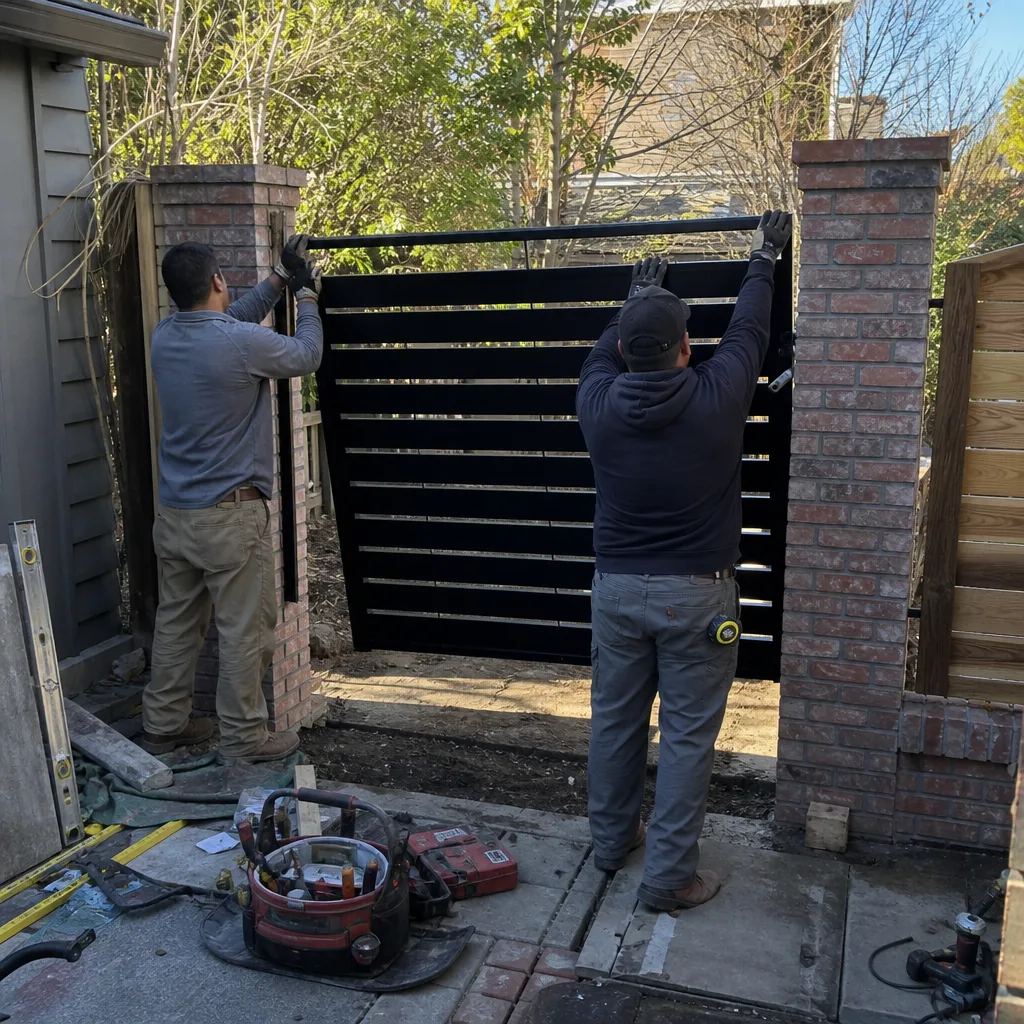
Call a technician when the gate makes new noises, moves unevenly, reverses without obstruction, or fails to respond to controls. Call promptly when operation is intermittent; complete failure follows unpredictably. Call immediately if you smell electrical burning, see sparking, or if the gate has struck a vehicle or person - safety systems may be compromised even if the gate appears to function.
Vance Gate Repair Berkeley offers free estimates in Berkeley. A live person answers the phone 24 hours a day, seven days a week - no voicemail loop, no callback queue. Call (510) 879-5471 to schedule. We’ll provide technician name and photo before arrival, a written scope and price before any work starts, and a documented photo record before we leave.
Frequently Asked Questions
Most common gate repairs in Berkeley range from $180 to $650, with hinge adjustments, limit-switch resets, and photo-eye work at the lower end and control-board replacements or track repairs at the higher end. Full motor replacements typically run $850-$1,800 depending on brand and whether related components like arm brackets or rollers need attention. We provide exact written quotes after inspection, not estimates that balloon. Call (510) 879-5471 for a free estimate.
Many gate motors are repairable if the gearbox, arm, or control board is the failed component and the motor frame and windings are sound. We service nine major brands - Viking, Ghost Controls, DoorKing, Elite, and others - and we repair when repair is viable. Replacement becomes necessary when the motor frame is cracked, windings are burned, or parts are obsolete. We assess and quote both options in writing before you decide.
Clay-soil settlement in Berkeley hills neighborhoods tilts gate posts seasonally, cycling load through hinges that were designed for stable alignment. A hinge replacement without post re-plumbing fixes the symptom temporarily. We check post plumb on every hinge call, photograph the angle, and recommend re-plumbing when the deviation exceeds 1 degree. Addressing the root cause prevents repeat hinge failures.
For repair calls where the gate is inoperable, we typically dispatch same day or next day depending on call volume and your location within Berkeley. A live person answers our phone at all hours to schedule and provide technician information. Installation and scheduled maintenance are booked in advance; repair urgency gets priority dispatch.
You should receive a photo log showing what was found, what was adjusted or replaced, and what settings were applied, plus a written record of part numbers and calibration values. Under Haven Standard Clause 4, this documentation is included on every Vance visit at no additional charge. It prevents future technicians from charging you to rediscover the same information.
Most gate repairs - hinge replacement, motor repair, limit-switch adjustment - do not require permits in Berkeley. Work that modifies the gate structure, electrical service, or safety systems may trigger permit requirements depending on scope. When permits are needed, we identify them in the written scope and can coordinate submission. We never start work that requires a permit without confirming compliance.
The Bottom Line
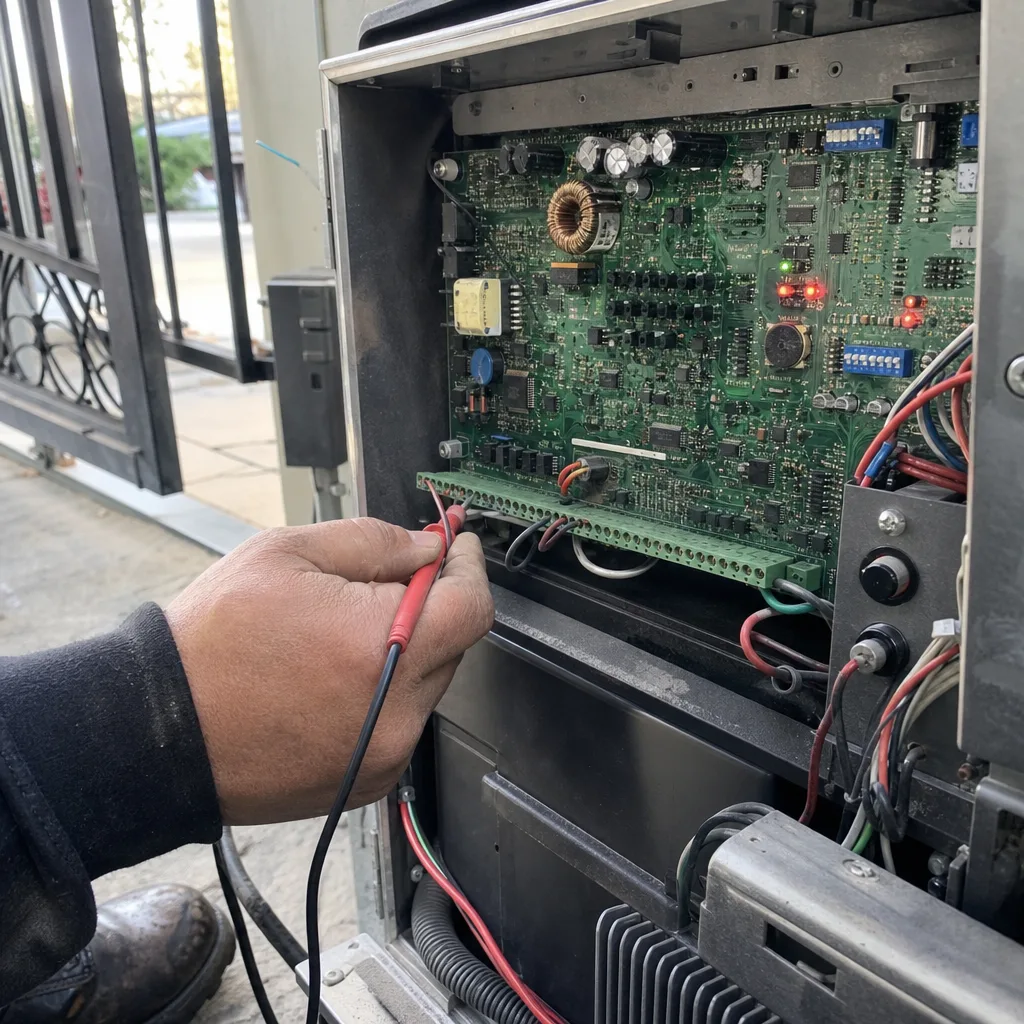
Berkeley gate failure follows a pattern: clay-soil settlement in the hills, marine-air corrosion in flat and coastal neighborhoods, and undocumented limit-switch drift everywhere. Knowing this pattern lets you ask better questions, read scopes critically, and demand documentation that prevents repeat charges. The technician who names what they found, names what it costs, and names what they left behind is the technician who fixes your gate once. The one who doesn’t will be back, and you’ll pay for the return trip.
Since 2014, we’ve applied commercial documentation standards to every residential gate repair in Berkeley: written price before work starts, photographed evidence of every adjustment, and a 365-Day Done Right Promise that means something because the record exists to back it up. That’s the Haven Standard. It’s not marketing language. It’s how we work.
Need gate repair in Berkeley? Call (510) 879-5471 for a free estimate. A live person answers 24/7. We’ll provide technician name and photo before dispatch, a written scope and price before any work begins, and a documented photo record before we leave your property.
Written by Adrian Vance, Owner at Vance Gate Repair Berkeley, serving Berkeley since 2014.