
Last updated September 22, 2026
Free on-site gate assessment - hinges, posts, and your LiftMaster or Nice gate operator checked before anything is quoted
The assessment is free and the quote is the invoice.

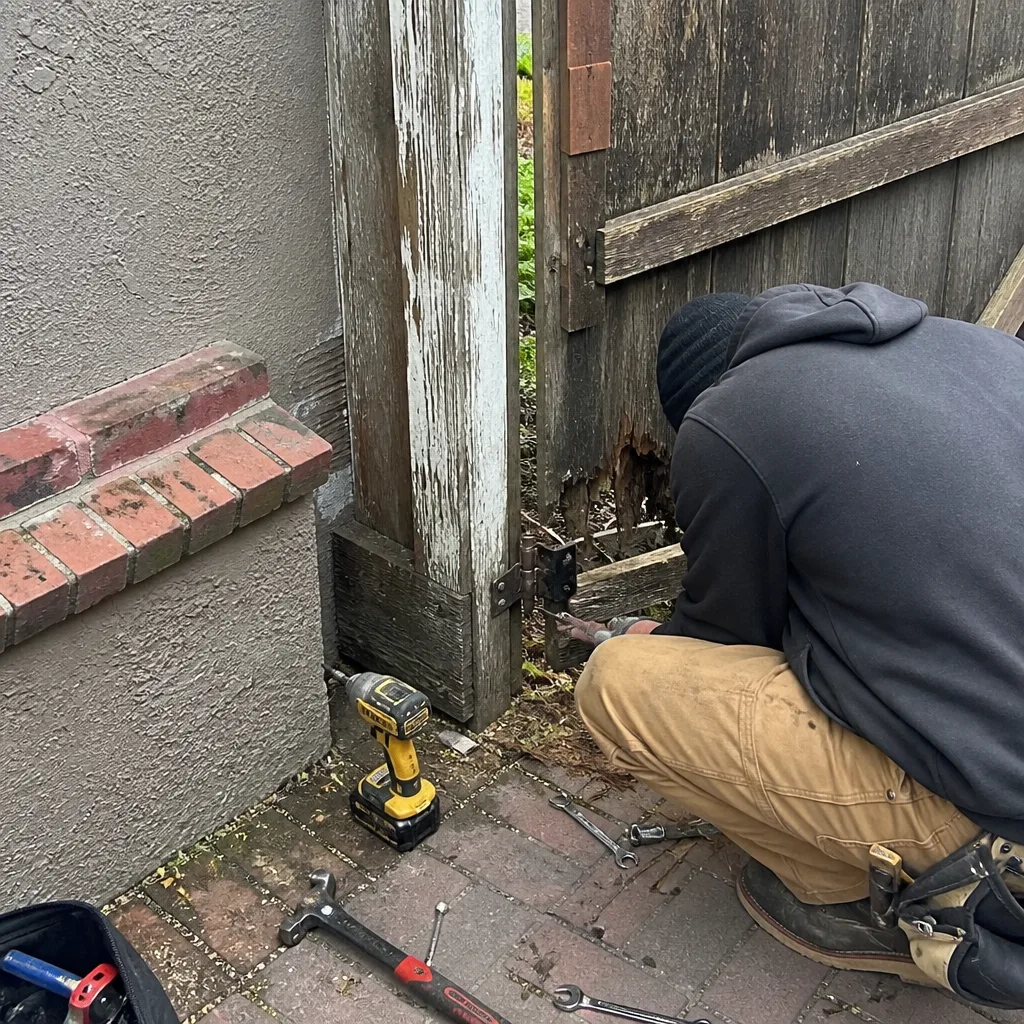 Before
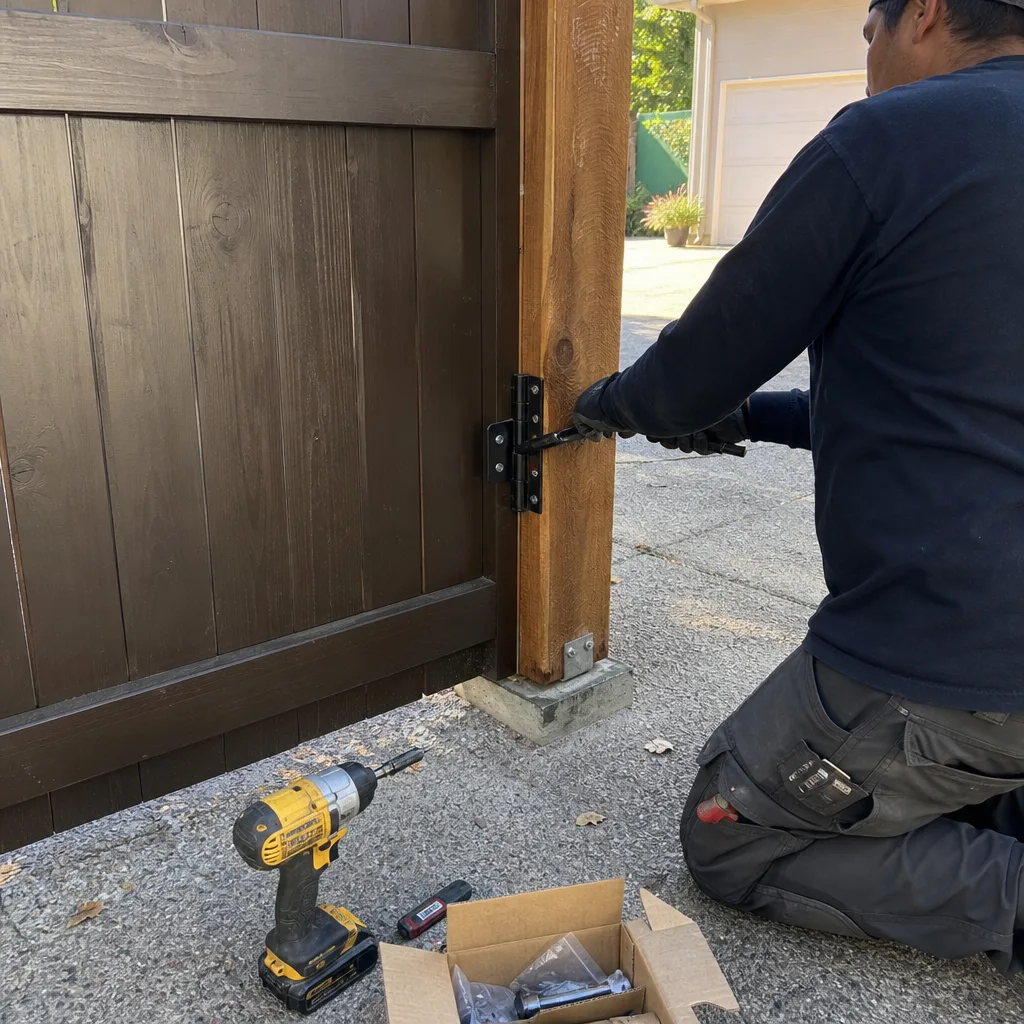 After
After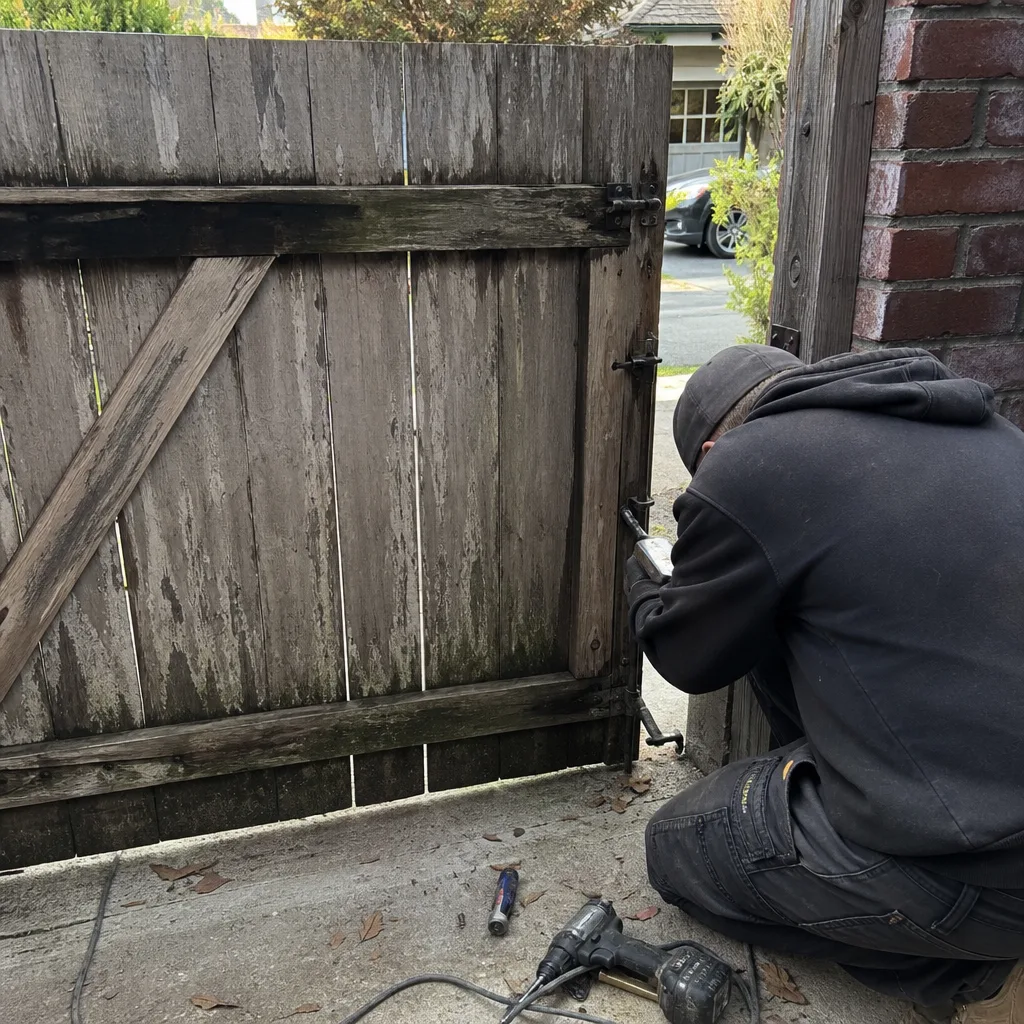 Before
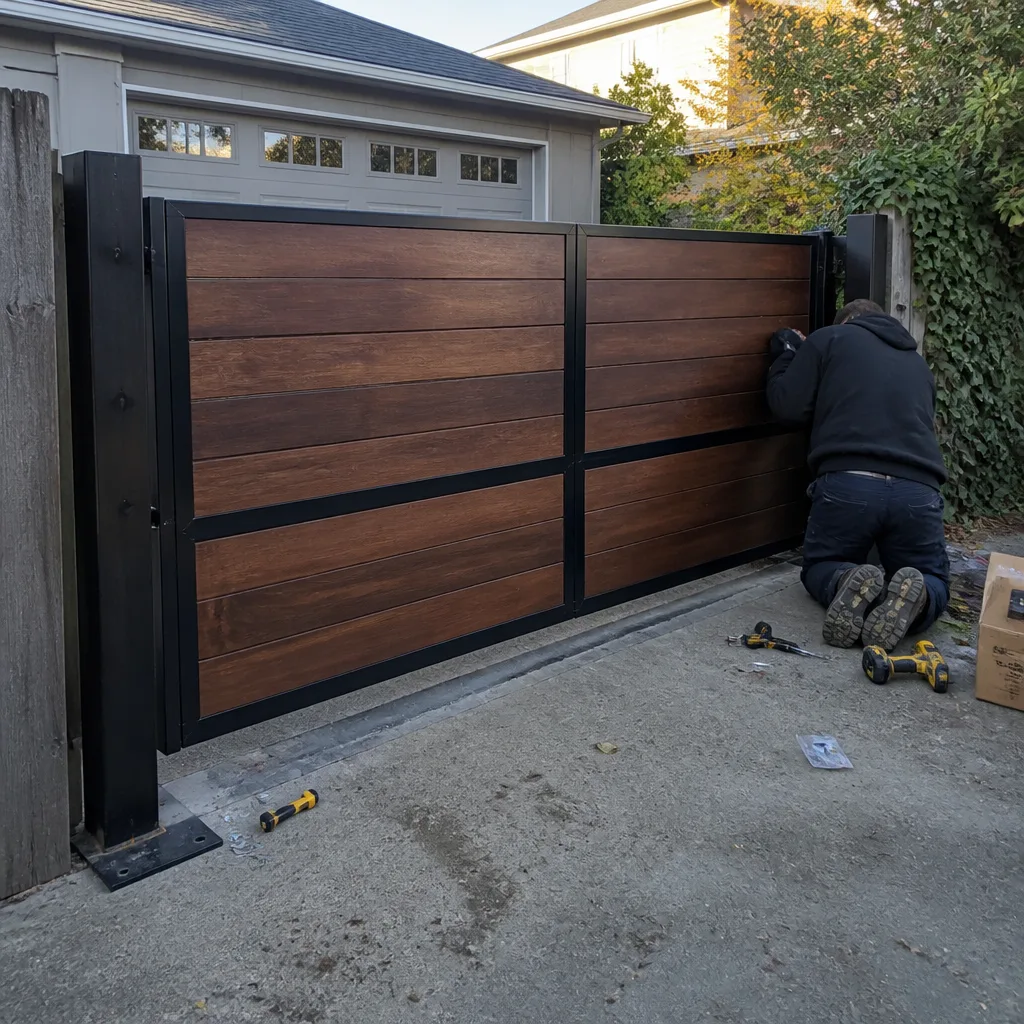 After
After Before
 After
AfterGate Repair Maintenance Checklist for Berkeley Homeowners
Every maintenance checklist tells you to lubricate hinges twice a year. Almost none tell you that Berkeley’s marine air layer, carried inland on summer fog, deposits enough salt on exposed steel to pit a hinge pin within eighteen months, grease or no grease. We’ve replaced swing-gate motors in the Berkeley Hills where the root cause wasn’t the motor at all, it was a post that had tilted 3 degrees off plumb after winter rains shifted the clay soil. The motor burned out trying to pull a gate through a binding arc it was never designed to travel. This guide gives you a checklist calibrated to what actually fails first in Berkeley, with specific pass-fail criteria you can measure yourself and a documentation habit that turns scattered inspections into a maintenance history any technician can read.
Quick Answer
A thorough gate maintenance checklist for Berkeley homeowners should include monthly visual checks of safety devices and drain holes, quarterly post-plumb measurements and fastener corrosion ratings, and annual motor limit-switch verification and hinge-pin extraction tests. The three Berkeley-specific additions no generic checklist covers are: soil-movement post monitoring for clay-hill properties, salt-corrosion inspection of all exposed fasteners within three miles of the bay, and fog-season drain-hole clearance for hollow aluminum or steel gate frames. Document every check with dated photos and measurements so your next technician sees the gate’s history instead of starting from zero.
Table of Contents
- Why Berkeley Gates Fail Differently
- Monthly Maintenance Tasks
- Quarterly Maintenance Tasks
- Annual Maintenance Tasks
- Three Berkeley-Specific Checks Competitors Ignore
- How to Document Your Maintenance Visits
- Physical Measurements You Can Take With a $12 Bubble Level
- Common Mistakes to Avoid
- When to Call a Professional
- Frequently Asked Questions
 Before
 After
AfterWhy Berkeley Gates Fail Differently
Gate manufacturers publish maintenance schedules based on median national conditions. Berkeley is not median. Three local factors create a stress profile that accelerates specific failure modes while leaving others nearly irrelevant.
Marine salt deposition. The bay’s influence extends well past the flatlands. We’ve found salt-corrosion on fasteners in North Berkeley properties more than two miles inland, particularly on gates facing southwest where prevailing winds carry marine air. This isn’t theoretical. In 2019 we documented a LiftMaster actuator arm that had seized at the clevis pin, not from wear, but from salt-induced swelling of the zinc-plated hardware. The motor itself tested fine. The homeowner had been quoted a full motor replacement elsewhere.
Clay-soil movement. The Berkeley Hills and the slope neighborhoods below them sit on expansive clay that swells when saturated and shrinks in dry months. A post set in this soil can move 1/4 inch vertically and tilt measurably off plumb within a single season. The gate motor doesn’t know the post moved. It simply strains harder against increasing friction until the thermal overload trips, the circuit board fails, or the mechanical clutch strips.
Dry-season thermal cycling. Berkeley’s September heat spikes, often 30 degrees above summer fog temperatures, expand metal frames and contract them again within hours when the fog returns. Hollow aluminum gates with blocked drain holes trap condensation from these cycles. We’ve cut open frames in the Elmwood and Claremont neighborhoods where the interior was lined with corrosion product the owner never saw from the outside.
Your checklist needs to address these three stressors directly, not treat gate maintenance as a generic task.
Monthly Maintenance Tasks
Monthly checks are visual and operational. They take ten minutes if you know what you’re looking for. The goal is catching safety-device failures and obvious mechanical problems before someone gets hurt or something seizes.
1. Test All Safety Devices
Every automated gate in Berkeley must have functioning safety devices per California Building Code requirements. Monthly testing is the minimum reasonable frequency.
- Photo-eye test: Block the infrared beam with a solid object while the gate is closing. The gate must reverse immediately. If it hesitates, continues, or reverses only after contact, the photo-eye is misaligned, dirty, or failing. Clean the lenses with a dry cloth first. If the problem persists, note the brand (common in Berkeley: LiftMaster, FAAC, BFT) and call for adjustment.
- Edge sensor test: If your gate has a safety edge on the leading post, press it firmly while the gate moves. It should stop and reverse. Test both the closing and opening direction if the edge is bidirectional.
- Auto-reverse force test: With the gate closing, apply steady resistance with your hand at mid-height. The gate should reverse within two seconds. California code specifies a maximum 40 lbf resistance before reversal. If you need to push hard, the force setting is too high and the motor controller needs adjustment.
Pass/fail: All three tests must reverse the gate within two seconds. Any failure is a call-for-service item, not a DIY adjustment. Force settings on modern controllers affect liability exposure.
2. Clear Drain Holes on Hollow Gates
Locate the drain holes at the bottom of hollow aluminum or steel gate frames. They clog with leaf debris, spider webs, and in Berkeley’s flatlands, fine silt from winter sheet flow. A blocked drain hole turns the frame into a condensation trap.
Pass/fail: Water must flow freely when you pour a cup into the frame top. If it pools or drains slowly, clear the obstruction with a piece of stiff wire and flush with water. Document the date; if you’re clearing the same hole repeatedly, the frame may have internal corrosion narrowing the channel.
3. Visual Fastener Check
Walk the gate perimeter with a flashlight. Look for rust streaks below bolt heads, cracked or missing bolt caps, and any fastener that has backed out more than 1/8 inch from its seated position.
Pass/fail: No rust streaks, no backed-out fasteners, no missing hardware. In Berkeley properties within two miles of the bay, any orange staining on stainless hardware is a flag; “stainless” grades vary, and marine-grade 316 is specified for a reason.
4. Listen to the Motor
Operate the gate fully open and fully closed. Note any change in sound from the previous month. A healthy motor has a consistent pitch. Grinding, clicking, or a rising whine that drops off suggests mechanical loading problems, gear wear, or controller issues.
Pass/fail: Consistent sound through full travel. Any new noise gets a dated note in your log.
Quarterly Maintenance Tasks
Quarterly checks require simple tools and fifteen to twenty minutes. These are where you catch the problems that monthly visuals miss.
1. Post Plumb Measurement
This is the single most important quarterly check for Berkeley hillside properties, and almost no homeowner does it.
- Hold a 24-inch bubble level vertically against the gate post on two perpendicular faces.
- Note the bubble position at top, middle, and bottom of the level’s travel.
- Measure the gap between level and post at the top if the bubble shows out-of-plumb. Record in 1/16-inch increments.
- Repeat on the opposite face of the post.
- Compare to your previous quarter’s reading.
Pass/fail: Post must be plumb within 1/4 inch over 24 inches in both directions. Any change of more than 1/16 inch from the previous quarter indicates soil movement. A post that has moved 1/8 inch in two consecutive quarters needs professional evaluation before the motor or hinge welds fail. We’ve replaced gate motors in Berkeley where a 3-degree post tilt was the only actual problem.
2. Hinge Pin Extraction Test
Don’t just look at hinges. Test whether the pin can actually move.
- Support the gate leaf with a temporary prop or have a second person bear weight so the hinge isn’t loaded.
- Attempt to rotate the hinge pin 1/4 turn with pliers or a wrench on the exposed head.
- Attempt to lift the pin 1/8 inch vertically.
Pass/fail: Pin must rotate and lift with moderate hand pressure. If it’s seized, note whether the seizure is uniform (corrosion) or directional (bent pin or ovaled hole). A seized pin in Berkeley often means salt corrosion at the pin-barrel interface. Don’t force it; extraction without proper support risks dropping the gate leaf.
3. Fastener Corrosion Rating
Rate every exposed fastener on a 1-4 scale:
- 1: Bright metal, no discoloration
- 2: Light tarnish or surface clouding, no pitting
- 3: Visible pitting, orange staining, or scale formation
- 4: Structural reduction of fastener cross-section, flaking, or seized threads
Pass/fail: No fastener rated 3 or 4. Any 3-rated fastener gets replacement scheduled within 30 days. Any 4-rated fastener is immediate replacement; its clamping load is compromised and vibration will accelerate failure. In Berkeley’s marine influence zone, we’ve seen Grade 5 hardware reach rating 3 in under two years.
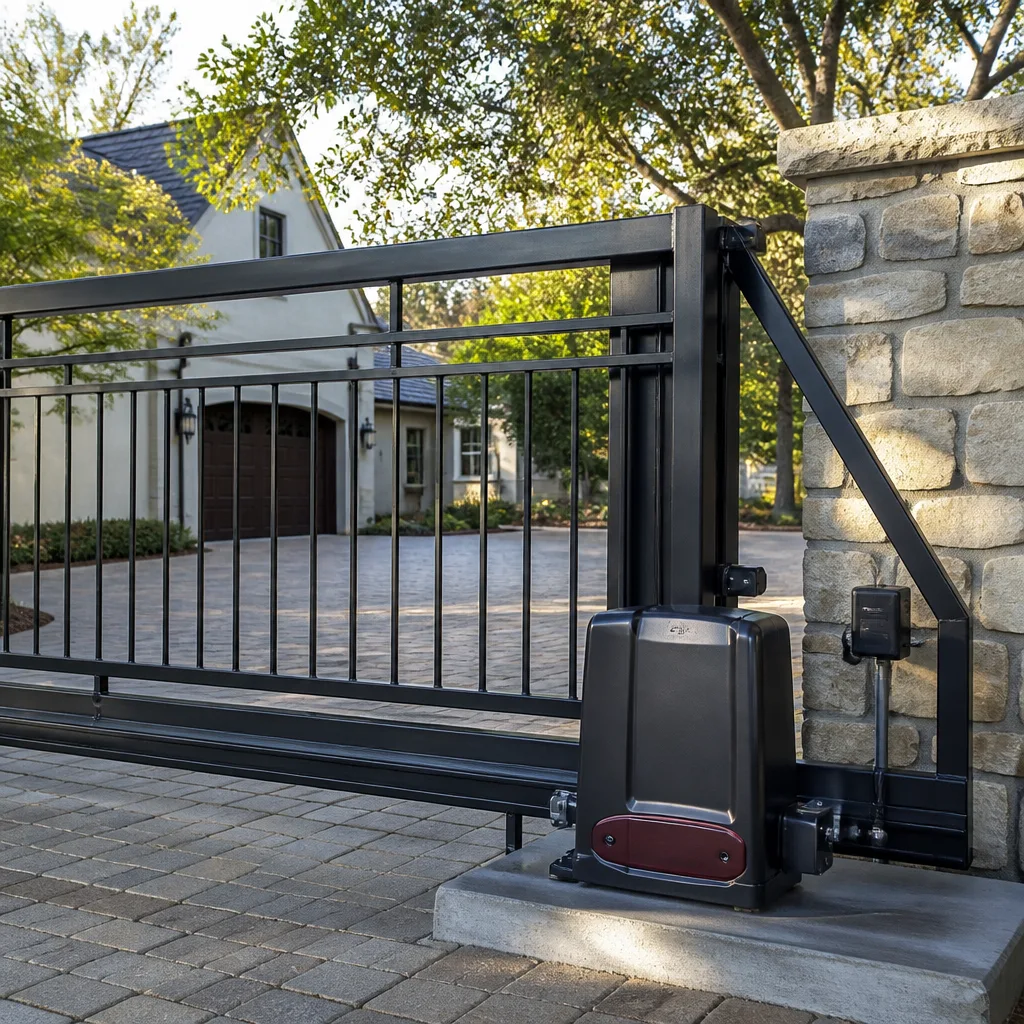
4. Chain or Belt Tension (Sliding Gates)
Check the drive chain or belt on sliding gate operators. Press the chain midpoint between sprockets with moderate finger pressure.
Pass/fail: Chain deflection of 1/2 to 3/4 inch is normal. More than 1 inch means the tensioner needs adjustment or the chain has stretched. Less than 1/4 inch means over-tension, which loads motor bearings and accelerates wear. Belt drives have manufacturer-specific specs; check your manual for deflection limits.
5. Control Box Interior Inspection
Open the motor control box with power off at the disconnect. Look for insect nests, moisture staining, and corrosion on terminal blocks. Berkeley’s mild winters let spiders colonize boxes year-round, and condensation from fog cycling is common in unsealed enclosures.
Pass/fail: Clean, dry interior with no debris. Any moisture staining gets a dated photo and a call for enclosure sealing evaluation.
Annual Maintenance Tasks
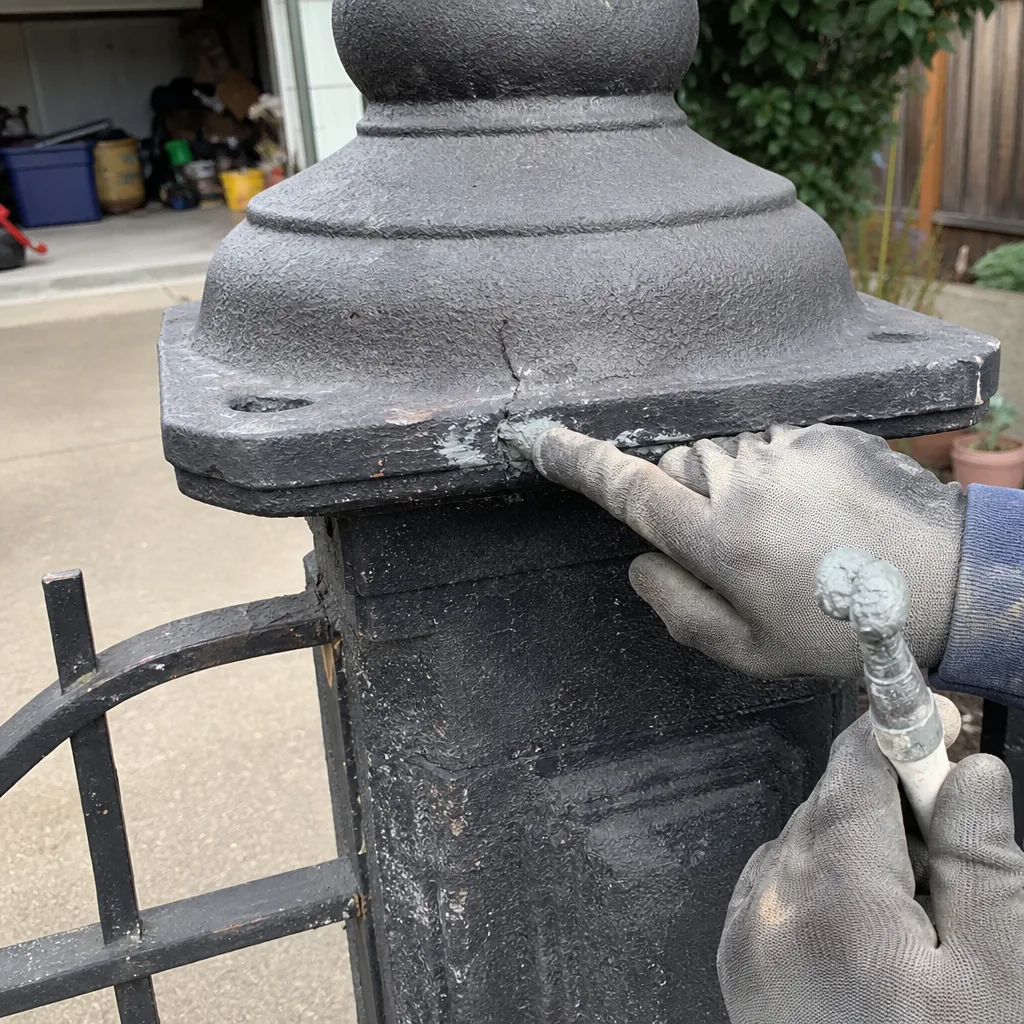
Annual checks verify the systems that protect the motor and ensure code compliance. These often require a second person or specific tools.
1. Limit Switch Verification
The limit switches tell the motor where to stop in open and closed positions. Drift here causes over-travel, which stresses mechanical stops and can jam a gate against its post.
- Run the gate to full open. Measure the gap between gate edge and stop post with a tape measure. Record to 1/8 inch.
- Run to full closed. Verify the latch or stop engages without the motor forcing against it for more than one second.
- Compare to your previous year’s measurements and to the manufacturer’s specified travel limits.
Pass/fail: Open and closed positions must match previous year within 1/4 inch. Any drift indicates limit-switch slippage or mechanical wear in the drive system. On FAAC and BFT operators, limit adjustment is encoder-based and requires specific procedure; on older Mighty Mule units, it’s mechanical cam-based. Incorrect adjustment can destroy the motor gearbox.
2. Ground Fault and Bonding Verification
Gate operators are required by NEC and California Electrical Code to have proper equipment grounding and GFCI protection for outdoor receptacles. Annual verification:
- Test the GFCI receptacle serving the operator with its test button; it must trip within 25 milliseconds.
- Visually inspect the grounding conductor connection at the operator chassis for corrosion or looseness.
- Verify the equipment grounding conductor is continuous back to the panel; green wire must be visible and unbroken.
Pass/fail: GFCI trips promptly, grounding connections clean and tight. Any failure is electrical work, not a homeowner repair. Berkeley’s salt air accelerates grounding-conductor corrosion at connection points.
3. Full Hinge Disassembly and Inspection
Once annually, if the hinge pin passed the quarterly extraction test, actually remove it.
- Support the gate leaf properly; a falling leaf can cause serious injury.
- Extract the pin, inspect for wear patterns, scoring, and corrosion pits.
- Measure pin diameter with calipers at three points; compare to original specification if available.
- Inspect the hinge barrel interior for ovaling, cracking, or galling.
- Reassemble with appropriate lubricant for the material and environment.
Pass/fail: Pin diameter within 1/32 inch of specification, no visible pitting deeper than surface texture, barrel round and unworn. Replace pin if undersized or pitted; replace barrel if ovaled. In Berkeley, we see hinge barrels ovaled from salt-corroded pins that were never extracted for inspection.
4. Gate Frame Square Check
Measure the gate frame diagonally corner to corner. On rectangular gates, these measurements must match within 1/4 inch for the gate to travel without binding.
Pass/fail: Diagonals equal within 1/4 inch. Any difference indicates frame racking from impact, soil movement, or weld failure. A racked frame loads the motor unevenly through every cycle.
Three Berkeley-Specific Checks Competitors Ignore
Generic checklists miss these entirely. They’re the difference between maintenance that preserves a gate and maintenance that misses the actual problem.
Soil-Movement Post Plumb Check
We’ve covered this in quarterly tasks, but it deserves emphasis. In the Berkeley Hills, from Grizzly Peak down through the Elmwood and Claremont districts, expansive clay soil moves gates more than any other single factor. A post that was plumb in April may be visibly tilted by October. The motor compensates until it can’t. Measure plumb quarterly, record the numbers, and act on trend, not absolute value. A post moving 1/16 inch per quarter is telling you something the motor will eventually scream about.
Salt-Corrosion Rating on Exposed Fasteners
Our 1-4 rating system isn’t arbitrary. We’ve documented fastener failures across Berkeley that correlate directly to distance from the bay and exposure to southwest winds. Properties near the marina, the waterfront, and extending into West Berkeley and parts of South Berkeley see accelerated corrosion on hardware that isn’t marine-grade 316 stainless or properly coated. Generic checklists say “inspect for rust.” They don’t tell you that by the time you see rust on the surface, the fastener may have lost 30% of its cross-section. Rate systematically, replace proactively.
Fog-Season Drain-Hole Clearance on Hollow Gate Frames
Berkeley’s fog season runs roughly May through August, with marine layers pushing inland overnight and burning back by midday. This cycle deposits moisture on cool metal surfaces, which then evaporates and leaves salts behind. Hollow gate frames with blocked drain holes trap this moisture. We’ve opened frames in the Thousand Oaks neighborhood where the interior corrosion was advanced enough to compromise structural ribs the owner never knew existed. Monthly drain-hole clearing is the prevention; annual borescope inspection if you suspect internal accumulation is the verification.
How to Document Your Maintenance Visits
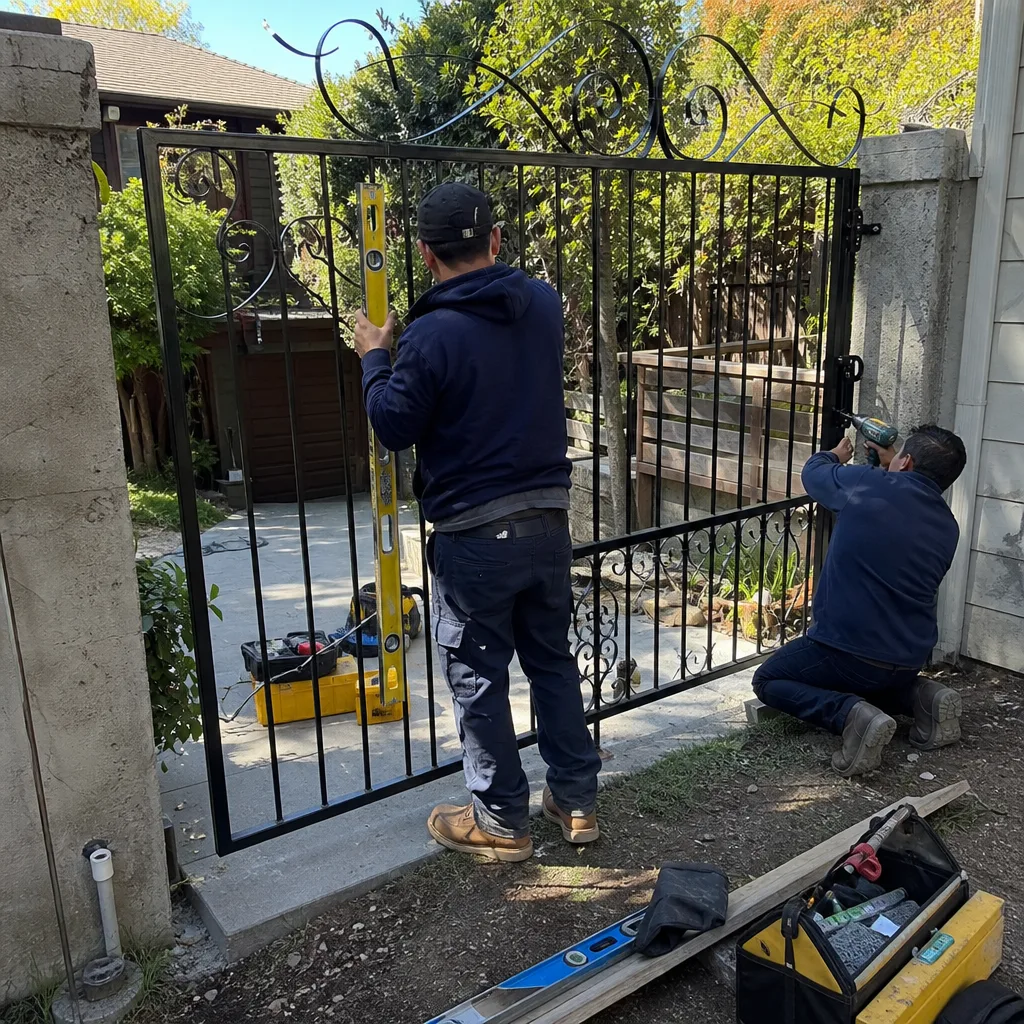
A checklist you fill out and throw away is worth half of one you keep. The documentation habit is what separates reactive repair from predictive maintenance. Here’s the system we recommend, based on what we provide under The Haven Standard on every professional visit.
The Minimum Record
For every inspection date, create a single document with:
- Date and weather conditions (temperature, recent rain, fog presence)
- Photos of each checked item, with the date visible on a card or phone timestamp
- Measured values: post plumb readings, chain deflection, limit-switch gaps, fastener corrosion ratings
- Any anomalies found and action taken or scheduled
- Technician or homeowner name
The File Structure
Organize by year, then by date. Keep a running spreadsheet with columns for date, task category, finding, measurement, and action. This becomes your gate’s medical history. When you call Vance Gate Repair Berkeley or any technician, you can say: “The post plumb was 1/8 inch off in March, 3/16 in June, and 1/4 in September,” instead of “It’s been making noise for a while.” The first statement gets a targeted repair. The second gets exploratory work and a larger invoice.
Photo Standards
Photos need context to be useful. Include a recognizable reference in each frame: the house corner, a fence post, the motor brand label. Close-ups of rust are meaningless without location context. We photograph every job with a reference shot, then a detail shot, then a measurement shot with the tape or level visible. Do the same and your records will be readable by any technician in five years.
Physical Measurements You Can Take With a $12 Bubble Level
You don’t need a surveyor’s transit to catch problems early. A 24-inch bubble level and a tape measure handle 90% of preventive detection.
Post Plumb: The Critical Measurement
- Place the level vertically against the post, oriented toward the gate’s direction of travel.
- Center the bubble. The gap between level and post at the top, if any, is your out-of-plumb measurement.
- Without moving the level’s bottom, rotate it 90 degrees to check the perpendicular face.
- Record both measurements to 1/16 inch.
- Mark the level position with tape or a pencil mark so next quarter’s reading is at the same height.
Interpretation: A post plumb within 1/4 inch over 24 inches is acceptable. Between 1/4 and 1/2 inch, monitor monthly and check for loose footing or soil erosion. Over 1/2 inch, stop operating the gate and call for evaluation; motor damage is likely already occurring.
Gate Leaf Level: Catch Frame Racking Early
- Close the gate fully.
- Place the level horizontally across the top rail at multiple points.
- Note any location where the bubble doesn’t center.
- Measure the vertical gap between level and frame at the high point.
Interpretation: A gate top rail should be level within 1/8 inch. More than that suggests hinge wear, post tilt, or frame distortion. Operating a significantly out-of-level gate loads the motor unevenly and accelerates wear on the high-side hinge.
Latch Alignment: The Daily Wear Indicator
- Close the gate and engage the latch manually.
- Observe whether the latch bolt drops freely into the strike or requires lifting, pushing, or shoulder pressure.
- Measure any gap between latch face and strike face when the bolt is engaged.
Interpretation: Free engagement with no gap is correct. Any binding or gap indicates movement somewhere in the system. Track this measurement quarterly; increasing binding is your early warning of post movement or hinge wear before the motor feels it.
Common Mistakes to Avoid
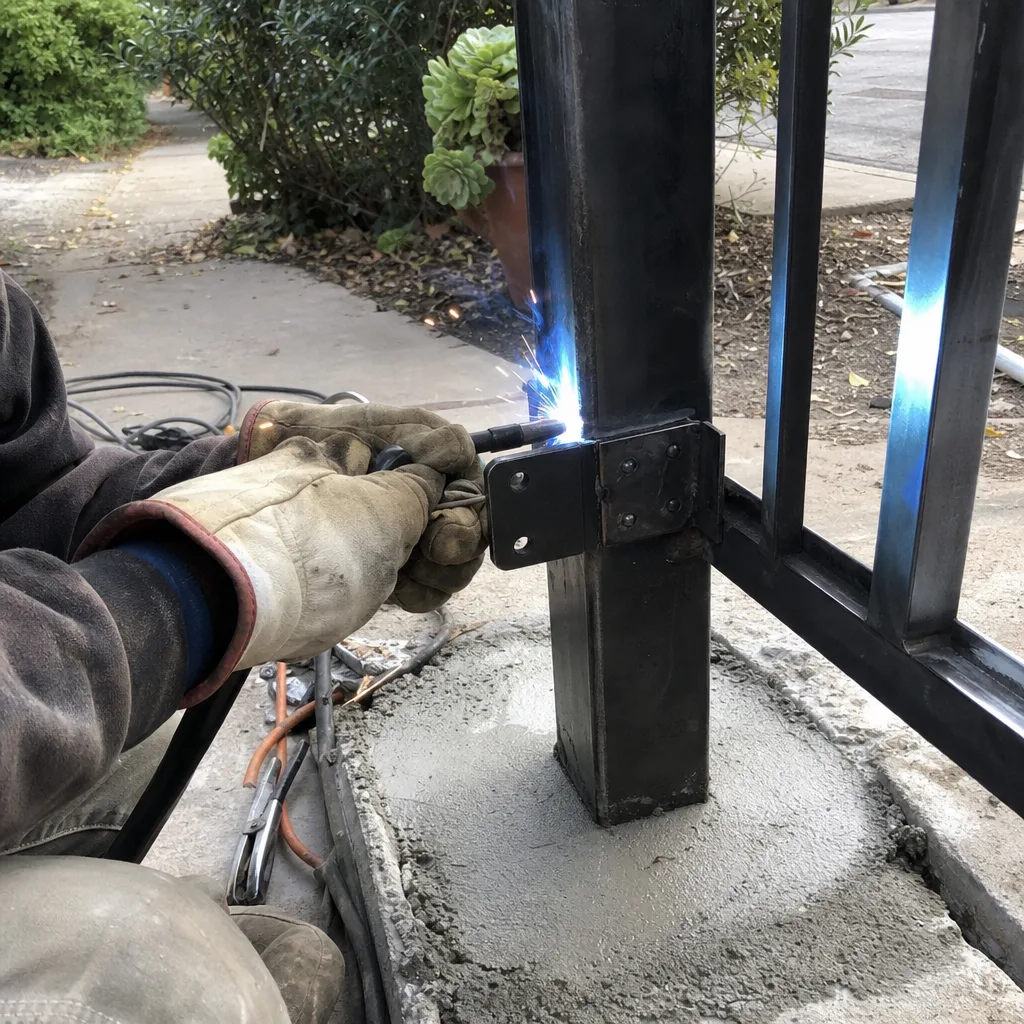
- Over-lubricating hinges and rollers. Excess grease attracts dust and grit, which forms an abrasive paste. In Berkeley’s dry season, this paste accelerates wear rather than preventing it. Wipe old lubricant off before applying new, and use the minimum that provides visible coverage of bearing surfaces.
- Ignoring the control box environment. Spiders, moisture, and leaf debris in the control box cause more mysterious failures than any component defect. Opening the box twice a year takes two minutes and prevents callbacks that cost hundreds.
- Testing safety devices with insufficient force. A photo-eye blocked by a hand is not the same test as a photo-eye blocked by a child’s torso. Use a solid object at least 12 inches in dimension. The auto-reverse force test should use steady, deliberate pressure, not a light touch.
- Assuming “stainless steel” means corrosion-proof. Grade 304 stainless, common in gate hardware, corrodes in marine environments. Grade 316 is specified for a reason. If you’re replacing fasteners in Berkeley within three miles of the bay, specify 316 or accept that you’ll be replacing them again.
- Measuring once and forgetting. A single plumb reading tells you the post position today. Three readings over a year tell you whether the soil is moving, and at what rate. The trend is the diagnostic; the single point is nearly meaningless.
- DIY force-setting adjustment on modern operators. Force settings on current operators affect liability exposure and safety certification. Incorrect adjustment can cause injury and void insurance coverage. This is not a homeowner maintenance item.
- Waiting for noise before inspecting. By the time a gate motor makes noise you can hear from the house, damage is usually established. The checklist is designed to find problems before they’re audible.
When to Call a Professional
Some maintenance tasks carry genuine safety risk and should not be attempted without training and proper equipment. High-tension spring-assisted gates, whether torsion or extension spring systems, can cause serious injury if disassembled incorrectly. Any work on the electrical supply, grounding system, or control wiring requires licensed electrical knowledge. Gate leaf removal for hinge work risks property damage and personal injury without proper lifting equipment and support.
Call for professional evaluation if your quarterly measurements show trending movement, if any safety device fails its test, if the motor makes new noises you can’t identify, or if you’ve documented three consecutive months of drain-hole blockage at the same location. Vance Gate Repair Berkeley offers free estimates in Berkeley - call (510) 879-5471. Under The Haven Standard, you’ll receive a written scope and price before any work begins, and every visit leaves a documented photo record of what was found and what was done.
Frequently Asked Questions
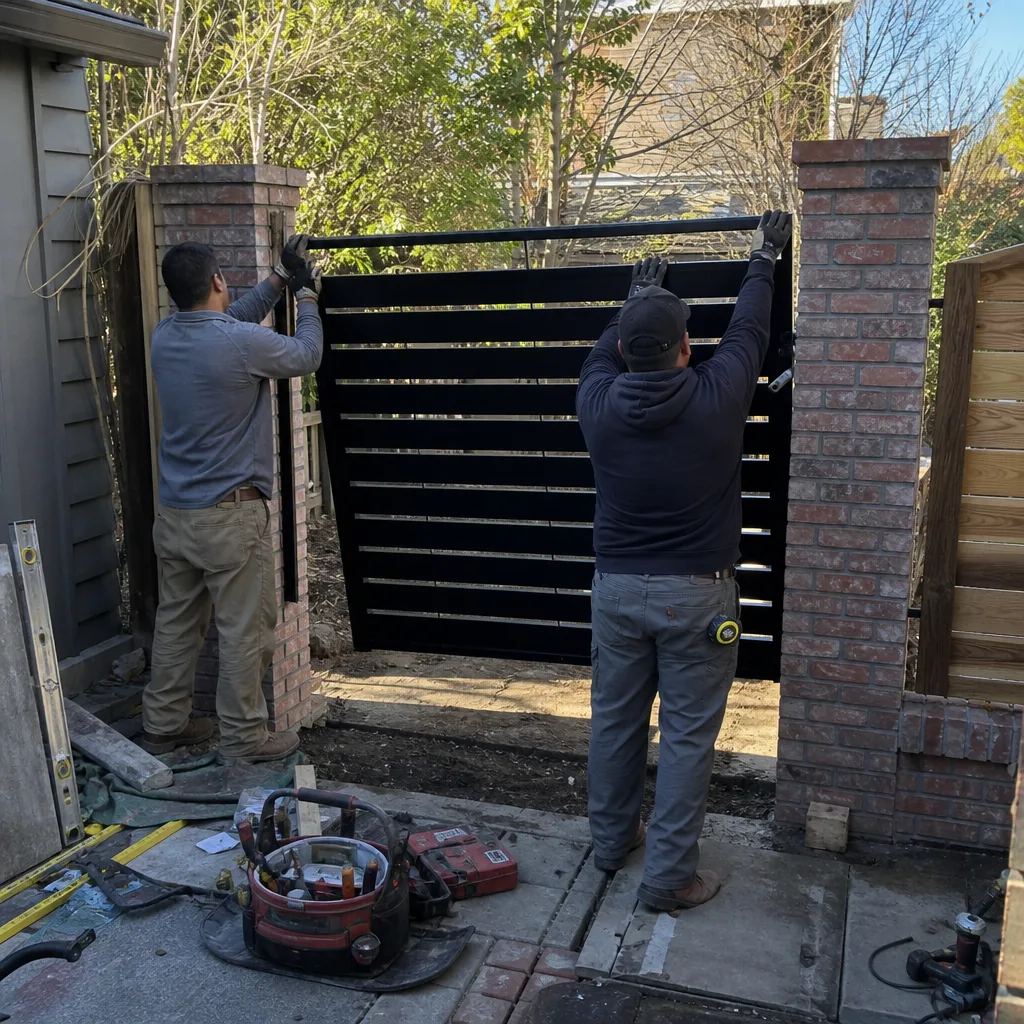
Professional gate maintenance inspections in Berkeley typically run $150-$250 for a single visit covering all items in this checklist, with any needed adjustments quoted separately in writing before work begins. Annual maintenance agreements, which include priority scheduling and documented records, generally range $400-$600 per year for residential gates. Call (510) 879-5471 for an exact quote on your specific gate type and location - estimates are free.
Most homeowners can handle the monthly visual checks, quarterly measurements, and annual documentation we’ve described with basic tools. Hinge pin extraction, limit-switch adjustment, electrical testing, and any work involving spring tension or gate leaf support should be done by a trained technician. The value of doing what you can is early detection; the value of knowing your limits is avoiding injury or equipment damage.
Hinge lifespan in Berkeley varies dramatically by location and material. In marine-influenced areas within two miles of the bay, we’ve seen standard steel hinges require replacement in 3-5 years due to salt corrosion. Inland Berkeley properties with proper drainage and coated hardware often see 10-15 years. The quarterly extraction test and annual disassembly inspection tell you your specific hinges’ condition; calendar-based replacement without inspection wastes money on premature swaps and misses failures that happen faster than expected.
LiftMaster, FAAC, BFT, and Mighty Mule are the brands we service most frequently in Berkeley residential installations. Each has specific maintenance procedures, limit-adjustment protocols, and diagnostic indicator patterns. The brand matters because incorrect adjustment procedure on one can damage the controller on another. Vance Gate Repair Berkeley services all nine major automation brands, so maintenance isn’t limited to whichever brand a particular company sells.
Fog-related failures usually indicate moisture intrusion into the control box, photo-eye lenses, or motor housing. The moisture causes temporary shorting, condensation on optical surfaces, or swelling of gasket material that changes limit-switch positioning. Check your control box seal and photo-eye housing integrity. In Berkeley’s prolonged fog season, unsealed enclosures are a predictable failure point that monthly inspection catches before the seasonal pattern becomes a seasonal headache.
Stop operating the gate. Continuing operation with a tilted post risks motor burnout, hinge weld failure, or gate derailment. The post needs stabilization or replacement, which may involve excavation, concrete work, and re-plumbing before the gate can be safely realigned. This is not a maintenance item; it’s a repair requiring structural evaluation. Document the tilt with photos and measurements, then call for assessment.
The Bottom Line
Gate maintenance in Berkeley fails when it’s generic. The marine salt, clay soil movement, and thermal cycling here create a specific stress profile that national checklists don’t address. Your effective checklist includes monthly safety-device testing and drain-hole clearing, quarterly post-plumb measurement and fastener corrosion rating, and annual limit-switch verification and hinge disassembly. The three Berkeley-specific additions, soil-movement monitoring, salt-corrosion rating, and fog-season drainage, catch the failures we’ve seen repeatedly in this market. Document every check with dated measurements and photos, and your maintenance log becomes a diagnostic tool rather than a forgotten chore. The $12 bubble level and twenty minutes per quarter cost far less than the motor replacement that post tilt eventually demands.
Written by Adrian Vance, Owner at Vance Gate Repair Berkeley, serving Berkeley since 2014.