
Last updated September 22, 2026
Free on-site gate assessment - hinges, posts, and your LiftMaster or Nice gate operator checked before anything is quoted
The assessment is free and the quote is the invoice.

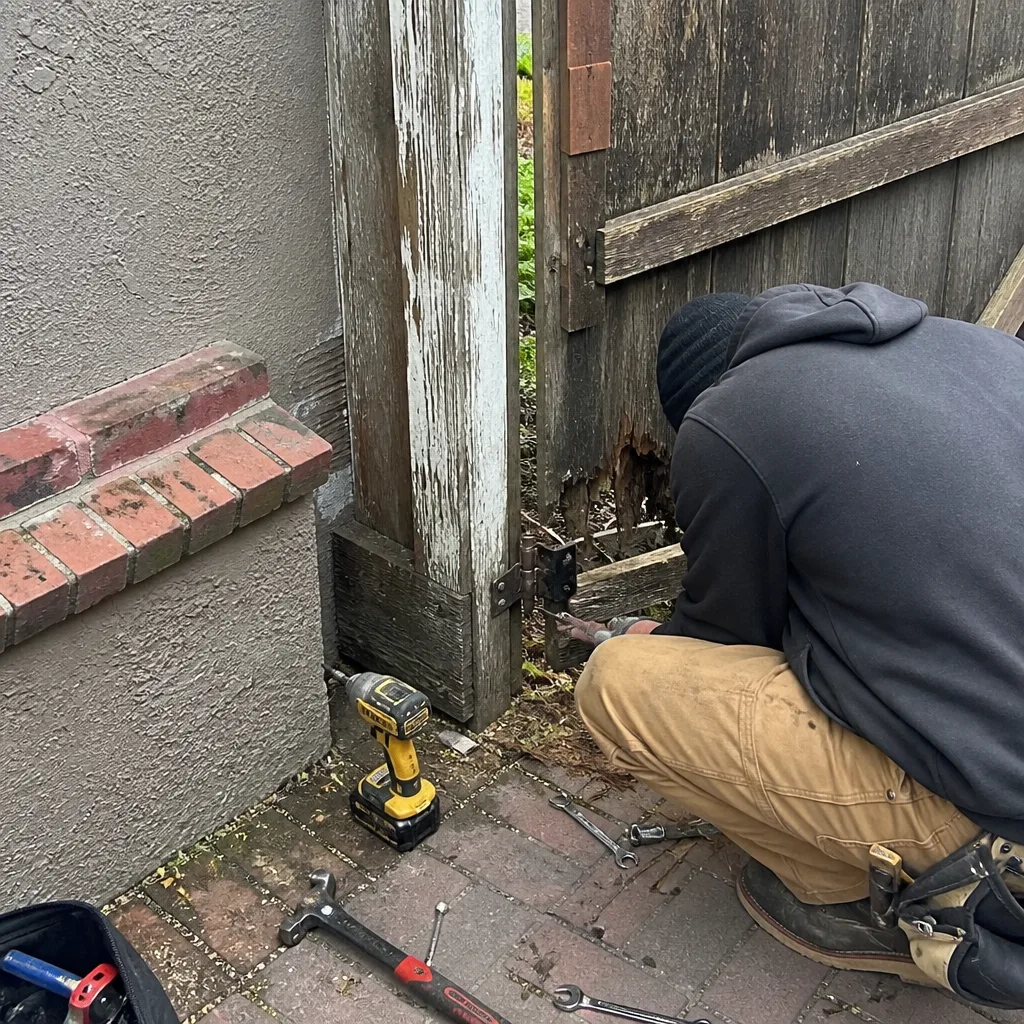 Before
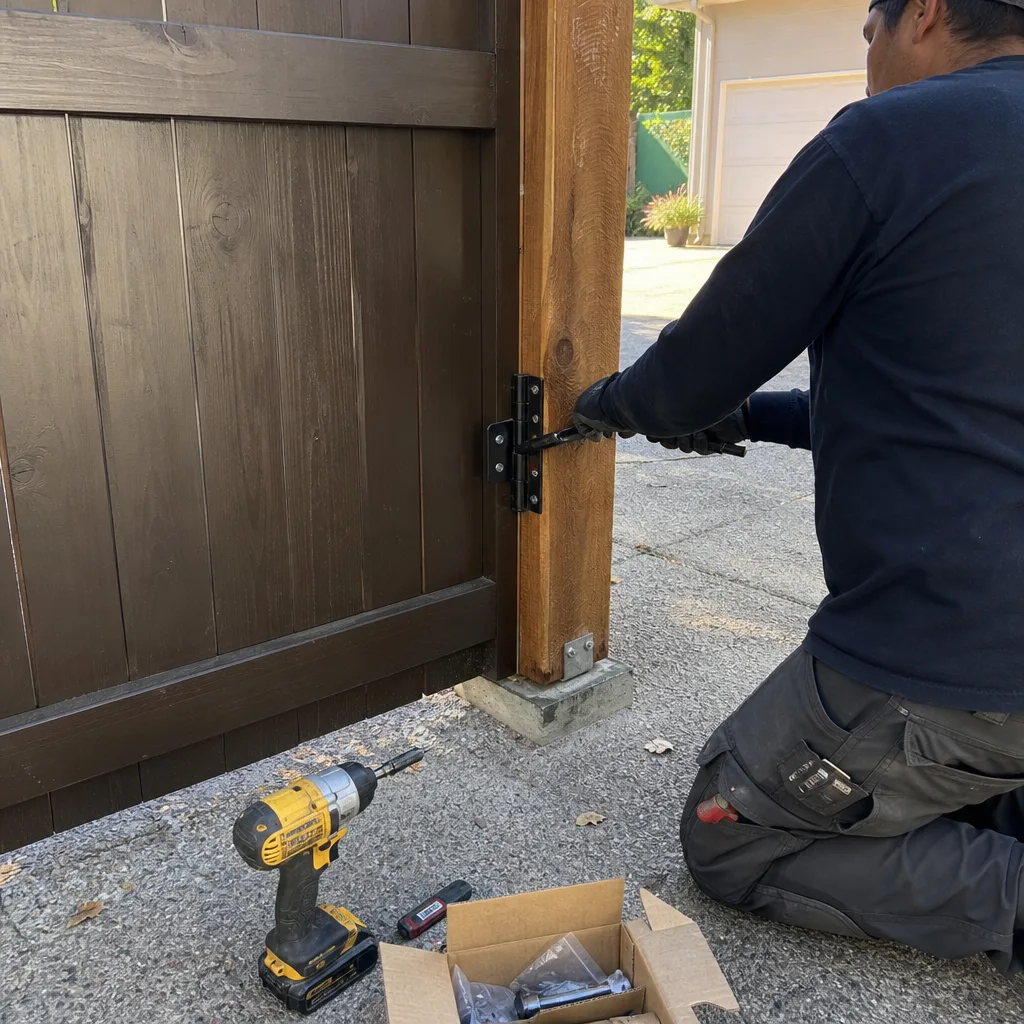 After
After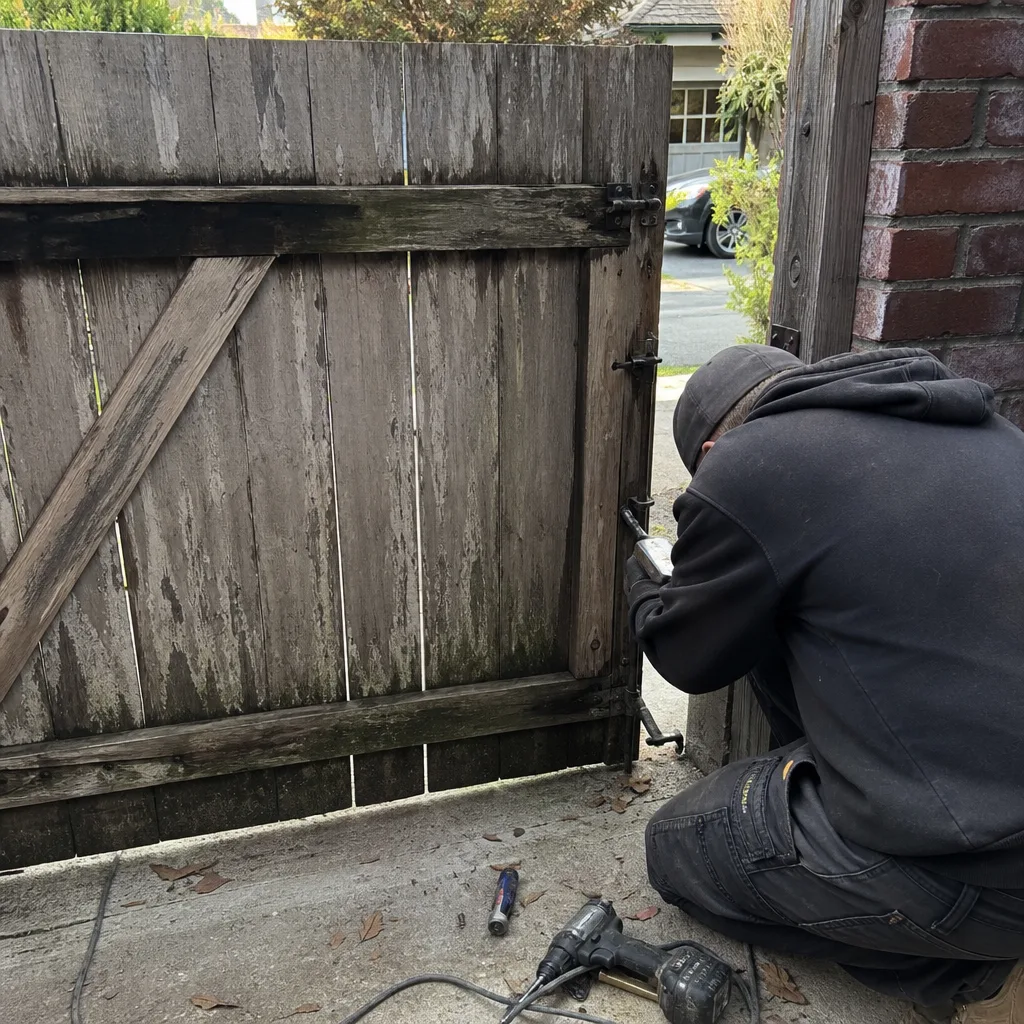 Before
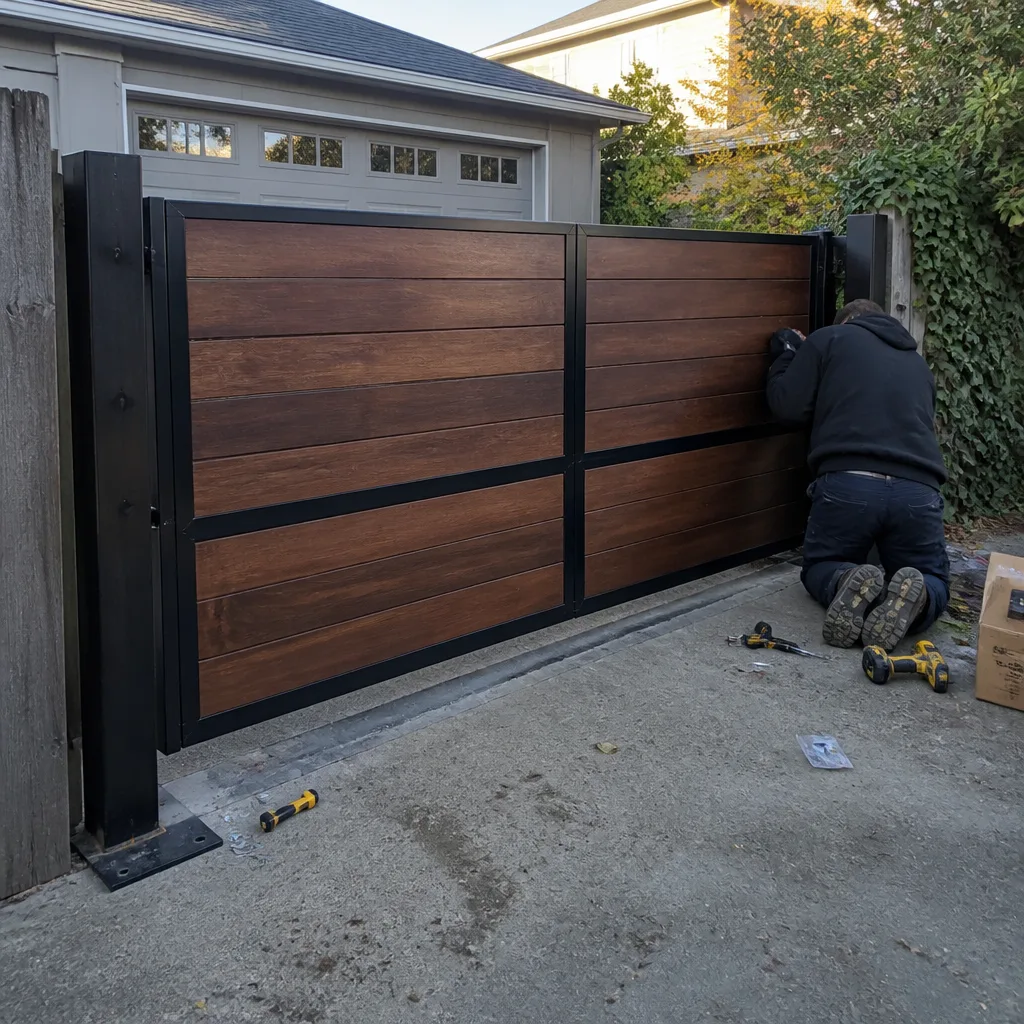 After
After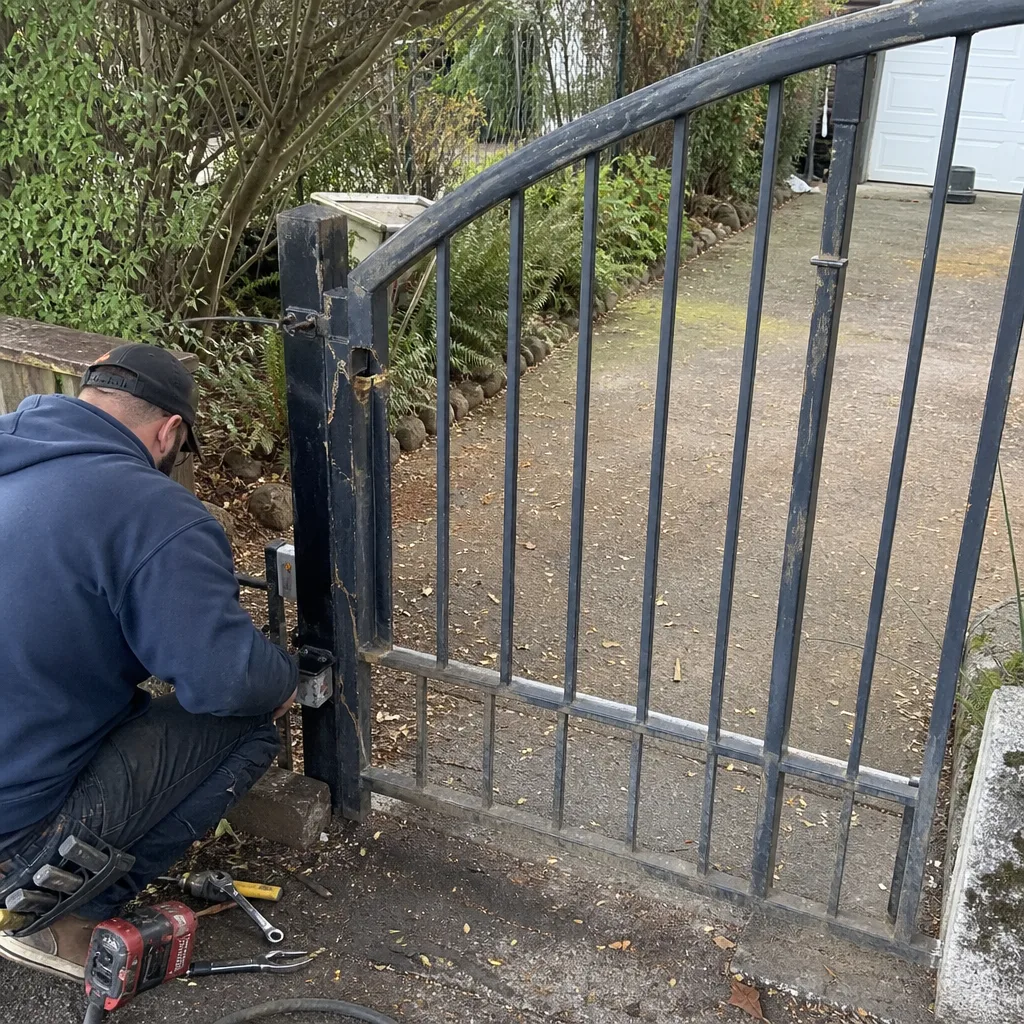 Before
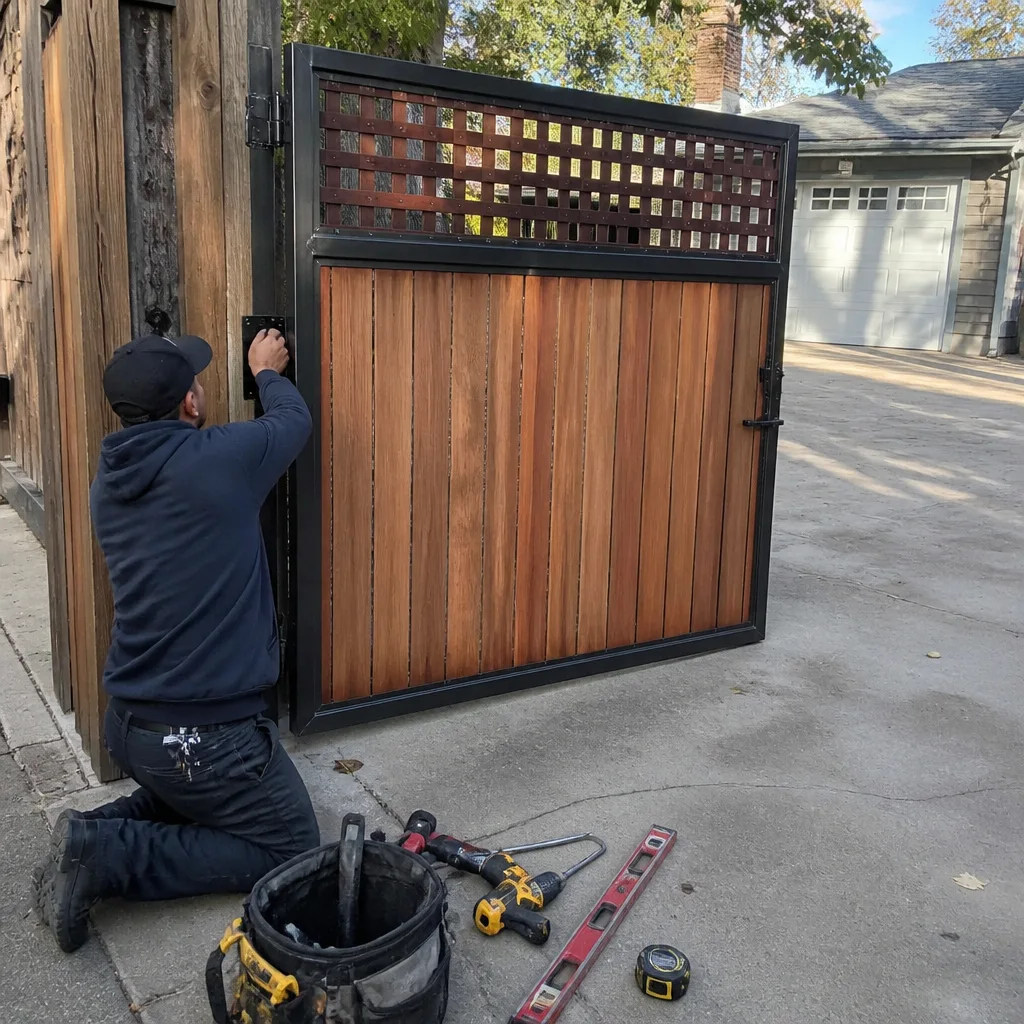 After
AfterSeasonal Gate Repair Care for Berkeley: Year-Round Homeowner’s Guide
Berkeley’s reputation for mild weather masks a destructive cycle. Our foggy, wet winters saturate wooden gate frames and iron weld points, then our dry summers bake that moisture out fast enough to crack finishes and loosen fasteners. The temperature swing is smaller than inland California, but the moisture swing is sharp, and it’s the moisture that kills gates. In 22,000+ jobs since 2014, we’ve found that Berkeley homeowners who treat their gates as “set and forget” because of the temperate climate end up paying for preventable repairs - usually discovered at the worst possible moment, when a gate fails closed and traps a car, or fails open and leaves a property exposed. This guide - alongside The Complete Guide to Gate Repair in Berkeley - maps Berkeley’s actual seasonal stress calendar to specific inspection and maintenance actions you can perform, photograph, and log. Do this, and your next service call will be shorter, cheaper, and more precise because the technician will read your history instead of discovering it.
Quick Answer
Seasonal gate maintenance in Berkeley means four distinct inspection windows: fall prep for winter moisture (clear drains, photograph hinge gaps, test battery backup), winter monitoring for fog-related wood swelling and iron corrosion, spring checks for clay-soil shift affecting post plumb, and summer lubrication and wiring inspection before dry heat degrades components. A simple photo log with dates and measurements cuts diagnostic time and cost on every future repair.
Table of Contents
- Fall Prep: The Highest-Stakes Window (October-November)
- Winter Moisture: What Berkeley Fog Actually Does to Gates (December-February)
- Spring Soil Shift: Ground Movement After Wet Winters (March-May)
- Summer Dry Heat: Lubricant Loss and Wiring Stress (June-September)
- How to Build a Seasonal Gate Log That Saves Money
- Common Mistakes to Avoid
- When to Call a Professional
- Frequently Asked Questions
 Before
 After
AfterFall Prep: The Highest-Stakes Window (October-November)
October and November are the most consequential eight weeks for Berkeley gate owners. This is when you establish baselines before the rainy season, and it’s when small problems are still small enough to fix cheaply.
Here’s what happens if you skip this window. Water finds the lowest point of any gate frame. In wooden gates, that means the bottom rail absorbs ground splash and wicks upward. In iron gates, it means the bottom hinge welds and any horizontal member that traps debris stays wet longest. By January, those areas have been cycling through wet and dry for two months, and the damage is no longer surface-level.
Fall Inspection Checklist
- Clear every drain hole. Metal gates with tubular frames have weep holes at the lowest points. A clogged weep hole turns a hollow tube into a standing water reservoir. Use a piece of stiff wire or a pipe cleaner. In Berkeley’s mixed eucalyptus and oak canopy, leaf debris accumulates fast - check after the first major wind storm in October.
- Photograph hinge gaps before they change. Set your phone to date-stamp and take a straight-on photo of each hinge gap, top and bottom, with a tape measure visible in the frame. A 3/16-inch gap in October that reads 1/4 inch by March means your post has shifted or your hinge pin has elongated. That measurement tells a technician whether the problem is the post footing, the hinge barrel, or the gate frame itself - three very different repairs.
- Test battery backup under load. Berkeley sees more short-duration power fluctuations than prolonged outages. Those flickers are hard on gate motors and their backup systems. Disconnect AC power and cycle the gate twice on battery alone. If the battery is more than three years old, consider replacement before winter. A gate that fails open during a storm because the backup died is a security problem, not just a convenience problem.
- Grease moving parts with season-appropriate lubricant. We use lithium-based grease on hinge pins and nylon rollers in fall - it handles moisture better than petroleum-based products. Wipe off the old grease first; don’t just add layers. Old grease is full of grit and acts like grinding compound.
- Check photo-eye alignment. The infrared safety beam (photo-eye) that stops the gate if something crosses the path gets knocked out of alignment by summer growth, then fog and rain in winter make a marginal alignment fail completely. Measure the gap between emitter and receiver faces - they should be parallel within 1/8 inch over a 20-foot run.
Under Haven Standard Clause 4, our fall prep visits include a documented photo record of every measurement, delivered to the homeowner before we leave. If you do this yourself, date the photos and store them in a dedicated folder. That folder is your gate’s medical history.
Winter Moisture: What Berkeley Fog Actually Does to Gates (December-February)
Berkeley’s winter rain is moderate - roughly 25 inches annually, concentrated December through February - but the fog is the real problem. Weeks of near-100% humidity keep surfaces wet long after the last rainfall. Iron gates in the flatlands near the marina or west of Sacramento Street see more fog hours than properties in the Berkeley Hills, but every gate in the city gets enough moisture to matter.
Wood Gate Frames: The Hidden Damage Path
Moisture ingress in wood gates follows a predictable sequence. First, the finish cracks at joints and end grain - places where the wood moves most. Water enters those cracks, the wood swells, and the crack widens. By the third or fourth wet cycle, water reaches the interior of the rail or stile. At that point, rot spores activate. The wood feels firm when prodded but has lost structural integrity.
What to look for in Berkeley’s winter:
- Finish that has turned chalky or developed a network of hairline cracks, especially on the bottom 12 inches of the frame
- Joint gaps that were tight in October but now show visible separation
- Dark streaks running from joints - evidence of water migration inside the frame
- Gate sag that wasn’t present in fall, indicating the bottom rail has absorbed water and expanded unevenly
If you catch these signs in January, a local woodworker or gate specialist can address the moisture path before rot requires rail replacement. Wait until June, and the dry season will hide the problem - the wood shrinks, the cracks close, and you think the gate healed itself. It didn’t. The rot continued in the dark interior.
Iron and Steel: Corrosion at Weld Points
Galvanized and powder-coated iron gates resist surface rust well, but weld points are vulnerable. The heat of welding changes the metal’s structure at the joint, and the coating is never as complete there. In Berkeley’s fog, corrosion starts at the weld and works inward.
Inspect weld points monthly in winter. Look for:
- Red-brown staining at any joint - this is active corrosion, not just surface discoloration
- Bubbling in the coating within 1/2 inch of a weld - moisture has penetrated underneath
- Cracks in the weld bead itself, visible as dark lines across the shiny weld metal
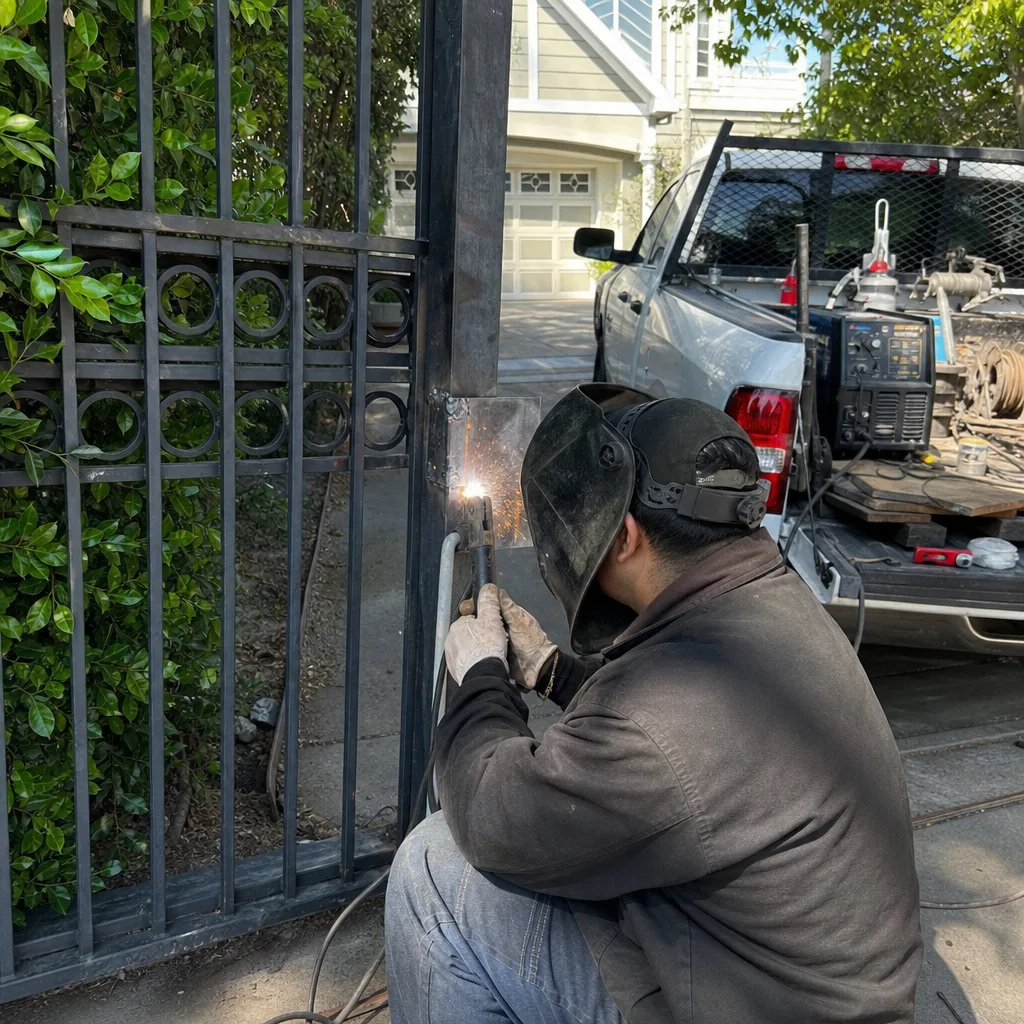
A cracked weld on a moving gate is a progressive failure. The crack lengthens with each cycle until the gate drops or jams. We’ve replaced entire gate sections in North Berkeley and the Elmwood because a 2-inch weld crack propagated through a bottom rail over two winters. The repair would have been 20 minutes and a re-weld in year one.
Motor and Control Box Considerations
Gate motors mounted in low spots or without adequate housing collect condensation. The control board inside a DoorKing or Elite operator is sensitive to humidity - we’ve replaced boards in Berkeley that showed no electrical fault but had corrosion at the terminal block from fog infiltration. If your motor housing has a breather vent, make sure it’s oriented downward and unobstructed. If the housing lacks a vent, drill a 3/16-inch weep hole at the lowest point - but confirm this won’t void your warranty first. Ghost Controls and Mighty Mule have specific housing requirements; check your manual or call us for guidance.
Spring Soil Shift: Ground Movement After Wet Winters (March-May)
This is the season Berkeley gate owners least expect trouble, and the season we see the most post-shift calls.
Berkeley’s soils are clay-dominant, particularly in the flatlands and the transitional zones between hill and plain. Clay expands when wet and contracts when dry. A winter of saturation swells the soil around your gate posts. In spring, as the soil dries from the surface down, it contracts unevenly. The post that was plumb in October now leans 2 degrees. That lean loads the hinge unevenly, binds the latch, and strains the gate motor.
How to Detect Spring Shift
- Re-measure your hinge gaps. Compare to your October photos. A gap that has narrowed on one side and widened on the other indicates post rotation or lean.
- Check the gate’s travel path. Open and close it manually, power off. It should move freely through the full arc. Any binding or hesitation at a specific point means something has moved.
- Inspect the post base. Look for soil cracks radiating from the post, or a visible gap between concrete footing and surrounding earth. A 1/4-inch gap at the footing edge can mean 1/2 inch of movement at the top of a 6-foot post.
- Test the auto-close function. If your motor has auto-close, verify the gate still latches cleanly. A post shift often manifests as a latch that misses by fractions of an inch - enough to leave the gate unlatched and the motor straining against the physical stop.
Minor post lean can sometimes be corrected by adjusting the hinge position on the post or gate frame. Significant lean - more than 2 degrees from plumb - usually requires post re-setting or footing repair. This is not a DIY job for most homeowners; the post is under load, and releasing it without supporting the gate risks injury or frame damage.
In the Berkeley Hills, where slopes accelerate drainage and soil movement, we see more spring shift in gates on retaining walls or cut slopes. The soil behind the wall drains toward the wall face, saturating the post footing from below. If your gate is on a slope, spring inspection is especially critical.
Summer Dry Heat: Lubricant Loss and Wiring Stress (June-September)
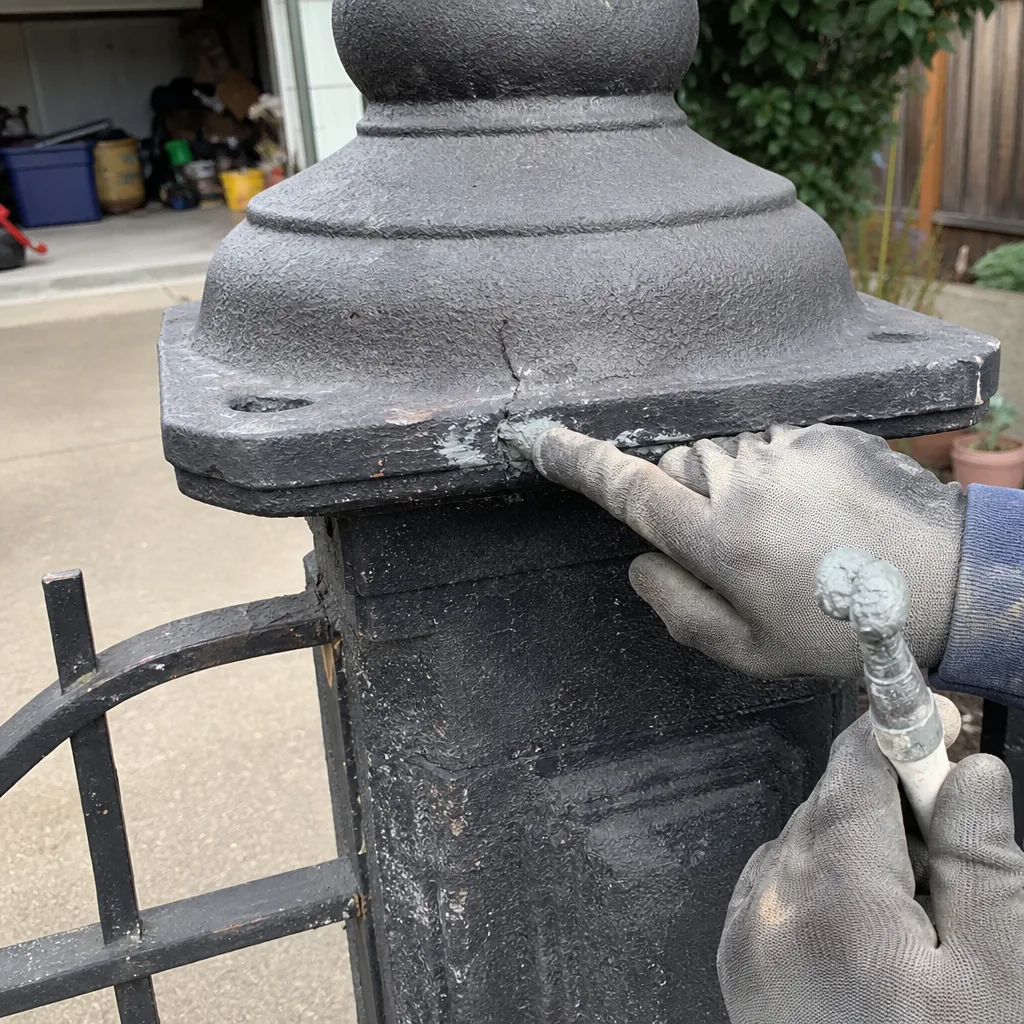
Berkeley’s summer temperatures rarely exceed 80°F near the water, but inland neighborhoods and hill properties see weeks in the 90s. The dry air, not the heat itself, is the stressor. Relative humidity drops to 30% or below, and every lubricated surface loses its film faster than in moderate conditions.
Lubricant Evaporation Timeline
Petroleum-based greases applied in spring can thin and migrate in 60-90 days of dry heat. Lithium greases last longer but still degrade. By August, a hinge that felt smooth in June may be running metal-on-metal.
Our summer maintenance protocol for Berkeley:
- Re-grease all hinges and rollers in early July, regardless of when they were last serviced
- Wipe old grease completely - summer heat turns it to a thin, gritty oil that accelerates wear
- Use a dry lubricant (graphite or PTFE-based) on lock cylinders and latch bolts - wet lubricants attract dust that abrades internals
- Inspect nylon rollers for flat spots or cracking; dry heat embrittles nylon faster than metal fatigue
Wiring and Board Inspection: The Right Season
Summer is the optimal time for electrical diagnostics. Dry conditions mean you’re testing the system at its least stressed - no moisture-induced false readings, no condensation in connections. If there’s a latent wiring fault, summer reveals it cleanly.
What we inspect on summer service calls:
- Low-voltage wiring runs. Check for UV degradation on exposed cable, rodent damage in conduit, and corrosion at terminal blocks. Berkeley’s squirrel population is active year-round; summer is when they seek cool conduit runs.
- Control board capacitor health. Capacitors age faster with heat cycling. A motor that starts slowly or stalls under load in summer often has a failing start capacitor. Test under load, not just at idle.
- Limit switch settings. Dry-season gate position is the reference point. Photograph the limit switch cam or encoder reading. If winter moisture or spring shift has altered travel, you’ll see it in the comparison.
- Grounding integrity. Test the ground connection at the motor housing and control box. Berkeley’s clay soils can corrode ground rods; dry summer soil has higher resistance, making a marginal ground more obvious.
For gate motor and opener service in Berkeley, summer scheduling also means shorter lead times - we’re less busy with weather-emergency calls than in winter.
How to Build a Seasonal Gate Log That Saves Money
The most expensive part of many gate repairs is diagnostic time - the technician’s hours spent figuring out what changed, when, and why. A seasonal log eliminates that cost.
We’ve built this habit into every repair we perform in Berkeley under Haven Standard Clause 4. Homeowners who maintain their own logs get the same benefit: the technician reads your history instead of reconstructing it.
The Log Format
Keep it simple. A dedicated phone album or cloud folder per gate, with dated entries:
- Date and weather: “Nov 3, 2024 - first major rain, 1.2 inches”
- Photos: Hinge gaps, post base, motor housing, overall gate position at full open and full close
- Measurements: Hinge gap dimensions, post plumb (use a phone level app against the post face), motor amp draw if you have a clamp meter
- Observations: “Bottom rail finish cracking at left joint,” “auto-close latches cleanly,” “new squeak from bottom hinge”
- Service records: Date, company, work performed, parts installed, written price paid
What a Good Log Accomplishes
When you call with a problem, read the log to the dispatcher. “The bottom hinge gap was 3/16 in November, now it’s 5/16, and the gate started binding after the March dry spell.” That sentence tells a technician more than an hour of on-site investigation.
We’ve diagnosed post shift from log photos taken six months apart, identified a failing Elite motor from amp-draw trends over two years, and caught a Ghost Controls battery degradation pattern that the homeowner noticed before the backup failed. In each case, the repair was faster and cheaper because the history was already on paper - and under Clause 1, the written price we quote before starting is based on known work, not exploratory time.
For new gate installations in Berkeley, we provide a blank log template and photograph the baseline condition before we leave. The first entry writes itself.
Common Mistakes to Avoid
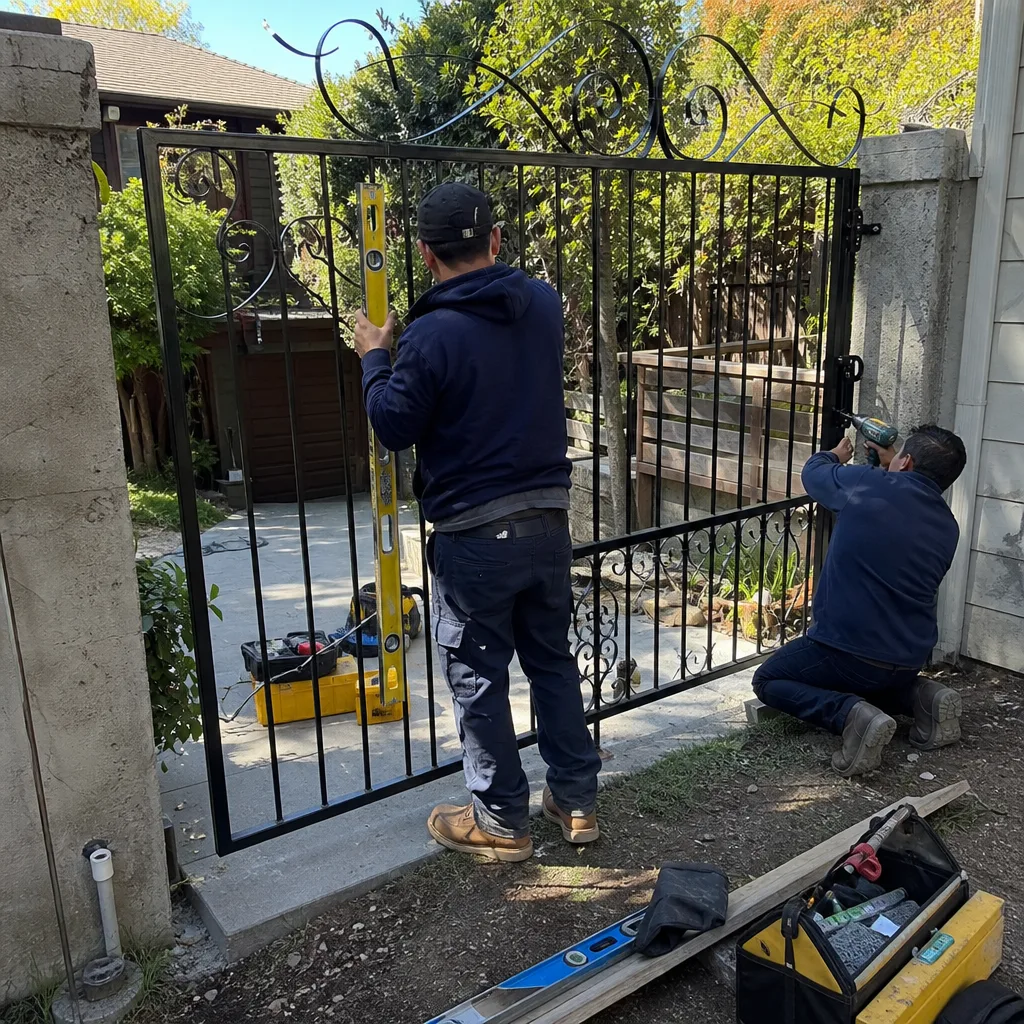
- Assuming mild climate means low maintenance. Berkeley’s moisture swing is harder on gates than steady wet or steady dry. The expansion-contraction cycle loosens fasteners, cracks finishes, and fatigues welds faster than consistent conditions.
- Pressure-washing wood gates. The force drives water into joints and end grain that would never see that depth of moisture from rain alone. Use a soft brush and mild detergent, then let the gate dry fully before re-sealing.
- Ignoring the first squeak. A squeaking hinge is metal-on-metal contact. Every cycle wears the pin and elongates the barrel. A $12 hinge replacement in fall becomes a $400 frame repair in spring when the worn hinge wallows out the mounting hole.
- Using the wrong lubricant seasonally. WD-40 is a water displacer, not a lubricant. It evaporates in days. Petroleum grease in winter attracts moisture and grit. Match the product to the season and the component.
- Skipping photo documentation. “It was fine last month” is not diagnostic data. A dated photo with a tape measure in frame is. The 30 seconds to photograph saves 30 minutes of technician time.
- DIY welding on iron gates. Gate weld points carry dynamic load and require penetration depth that homeowner welders rarely achieve. A superficial weld looks fine and fails catastrophically. We re-do more amateur welds in Berkeley than we can count, usually after the gate has dropped or jammed.
- Waiting for total failure. A gate that moves slowly, squeaks, or requires a second button press is already damaged. Addressing it early prevents cascade failure - a worn hinge stresses the motor, which burns the board, which requires emergency service at premium rates.
When to Call a Professional
Some gate maintenance is homeowner-appropriate: visual inspection, cleaning, lubrication, photo documentation. Some is not.
Call a professional for our Gate Repair services when you find weld cracks, significant post lean, electrical faults, or motor behavior changes you can’t explain. Call when the gate binds, stalls, or reverses unexpectedly - these are safety issues, not just convenience issues. Call before winter if your battery backup test fails, because a gate that fails open during a storm leaves your property exposed.
Vance Gate Repair Berkeley offers free estimates in Berkeley - call (510) 879-5471. A technician will arrive with a written price before any work starts, under Haven Standard Clause 1, and leave with a documented photo record under Clause 4. The 365-Day Done Right Promise covers all completed work: if it’s not right, we make it right at no additional charge.
Frequently Asked Questions
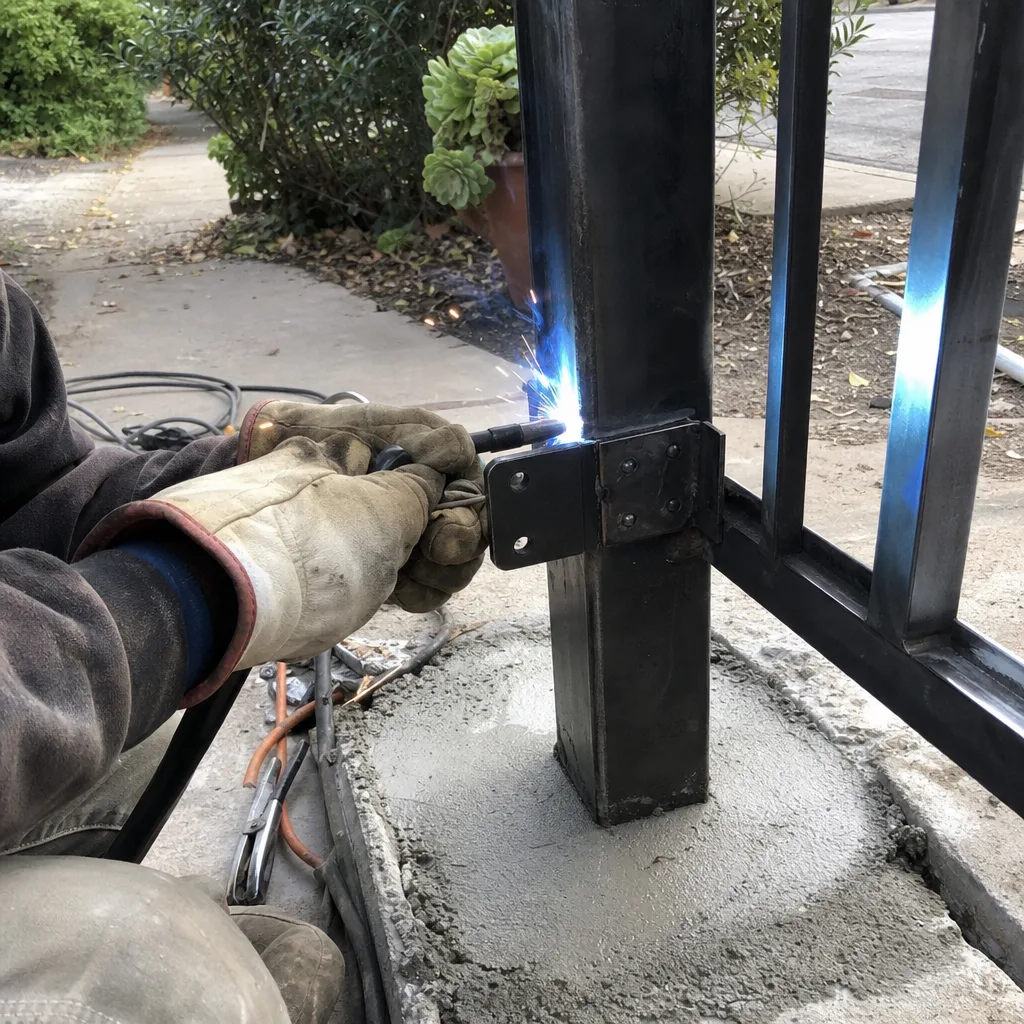
Professional seasonal inspection and tune-up typically runs $150-$280 for a standard residential swing or slide gate, depending on motor type and accessibility. Repairs identified during inspection are quoted separately in writing before any work begins. Call (510) 879-5471 for an exact quote - estimates are free.
Homeowners can handle cleaning, lubrication, visual inspection, and photo documentation safely. Electrical testing, welding, post resetting, and motor board diagnostics require training and tools. We recommend a professional inspection every 12-18 months even if you perform routine maintenance yourself - the technician’s eye catches patterns a homeowner might miss, as covered in DIY vs Professional Gate Repair: The Berkeley Homeowner’s Decision Guide.
Twice yearly: lithium grease in fall before the rainy season, fresh grease in early summer after the dry heat begins. Check monthly by operating the gate manually - any resistance or noise means the lubricant has degraded early.
Chalky or cracked finish, dark streaks running from joints, gate sag that wasn’t present in fall, and joint gaps that open and close with the seasons. Tap the bottom rail with a screwdriver handle - a hollow or dull sound suggests interior degradation even if the surface looks intact.
Fog increases moisture at photo-eye lenses, control board connections, and motor housing breathers. A marginal electrical connection that conducts adequately in dry air fails when humidity bridges the gap. This usually indicates corrosion that needs cleaning or replacement, not just bad weather.
We service nine major automation brands - LiftMaster, FAAC, BFT, Linear, Viking, Ghost Controls, DoorKing, Elite, and Mighty Mule - and we repair rather than replace when the motor is serviceable. Bring us any written estimate from another company and we’ll provide a free second opinion under Haven Standard Clause 3.
The Bottom Line
Berkeley’s climate is mild but not harmless. The moisture swing between foggy winters and dry summers creates a stress cycle that cracks wood, corrodes iron, and shifts posts in clay soil. The homeowners who spend least on gate repair are not the ones with the newest gates - they’re the ones who inspect in fall, monitor in winter, measure in spring, and maintain in summer, with a photo log that turns every future service call from an investigation into a targeted repair. Start your log this season. The 10 minutes you spend documenting today will save hours of diagnostic time and hundreds of dollars when something eventually needs attention.
Written by Adrian Vance, Owner at Vance Gate Repair Berkeley, serving Berkeley since 2014.