
Last updated September 22, 2026
Free on-site gate assessment - hinges, posts, and your LiftMaster or Nice gate operator checked before anything is quoted
The assessment is free and the quote is the invoice.

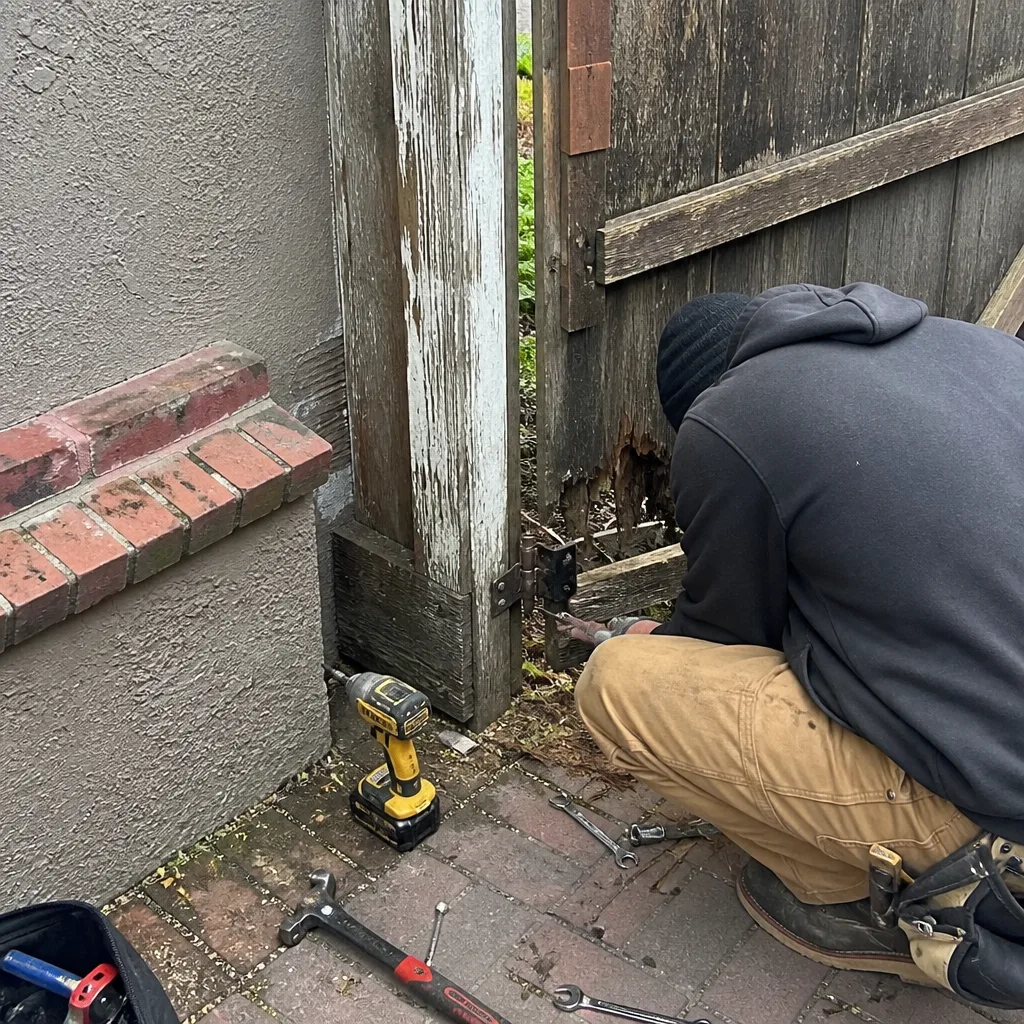 Before
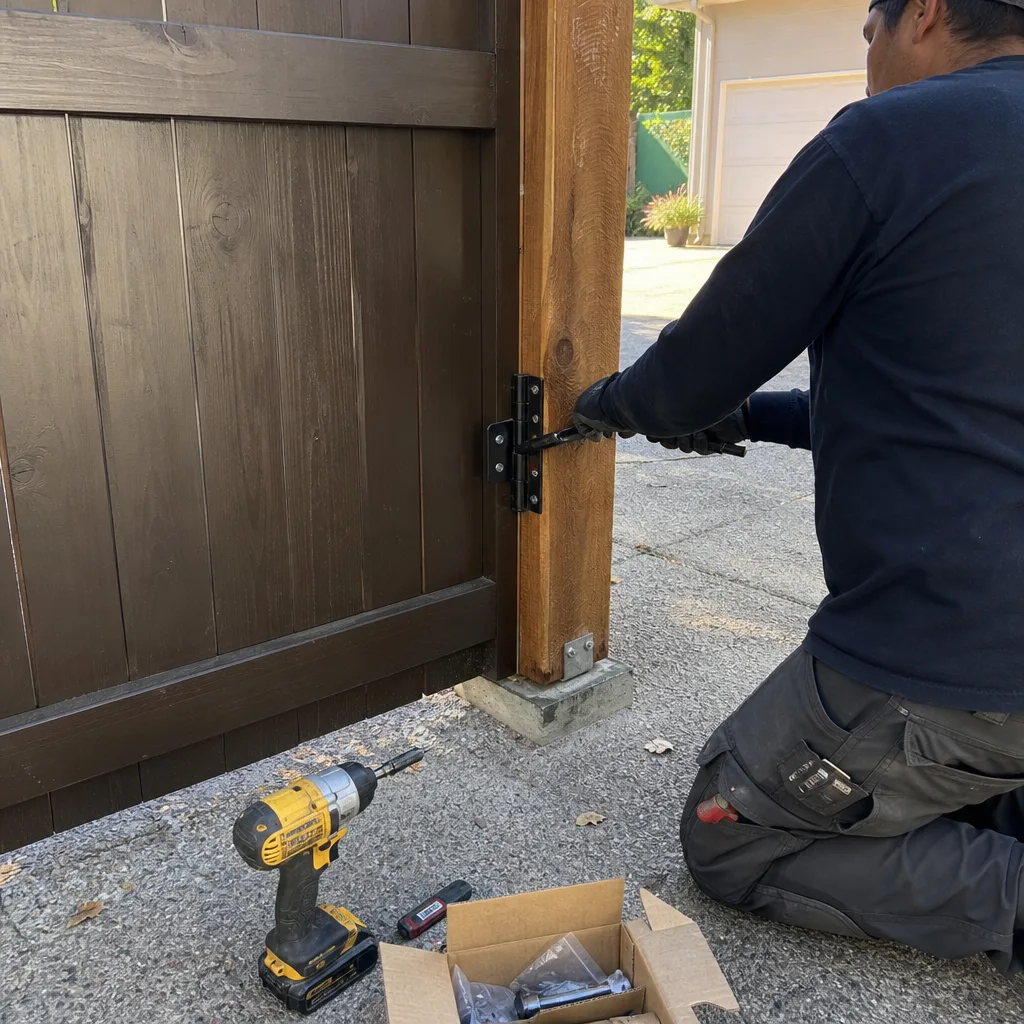 After
After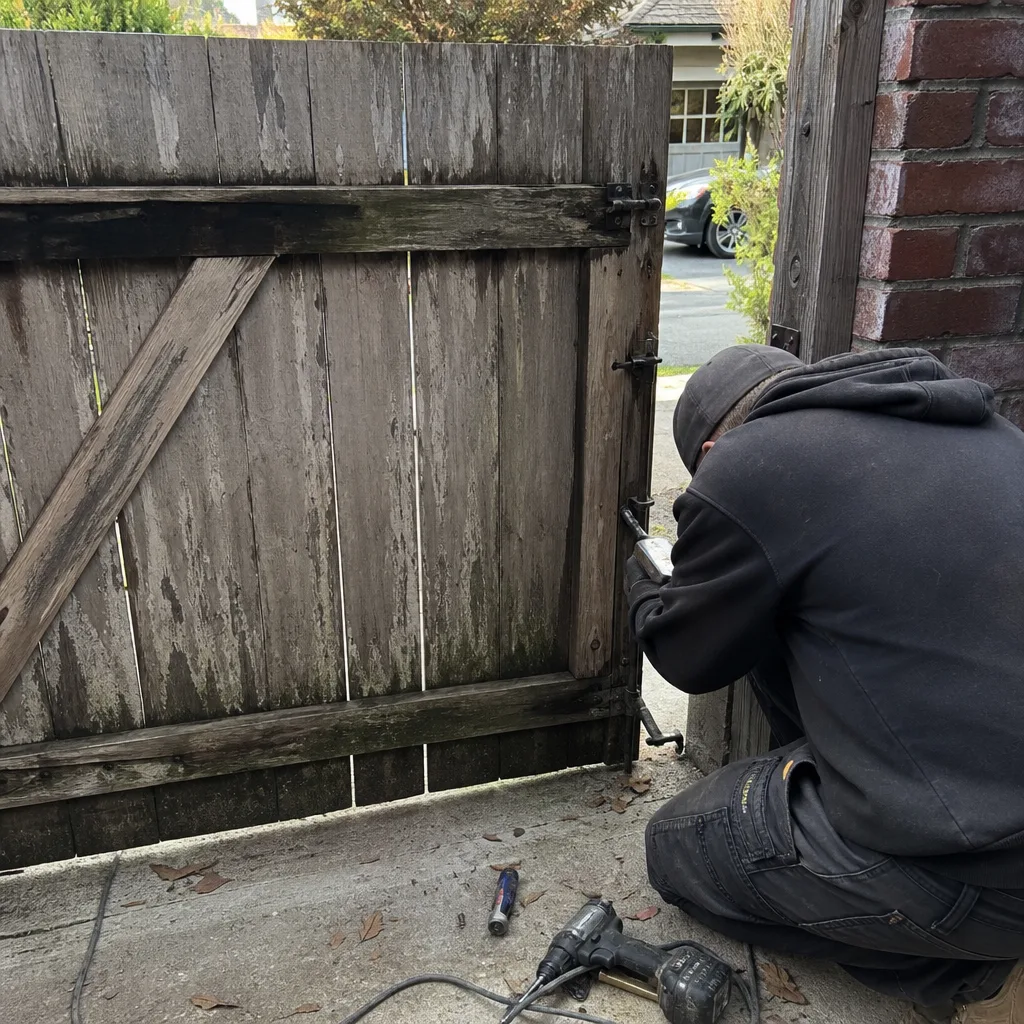 Before
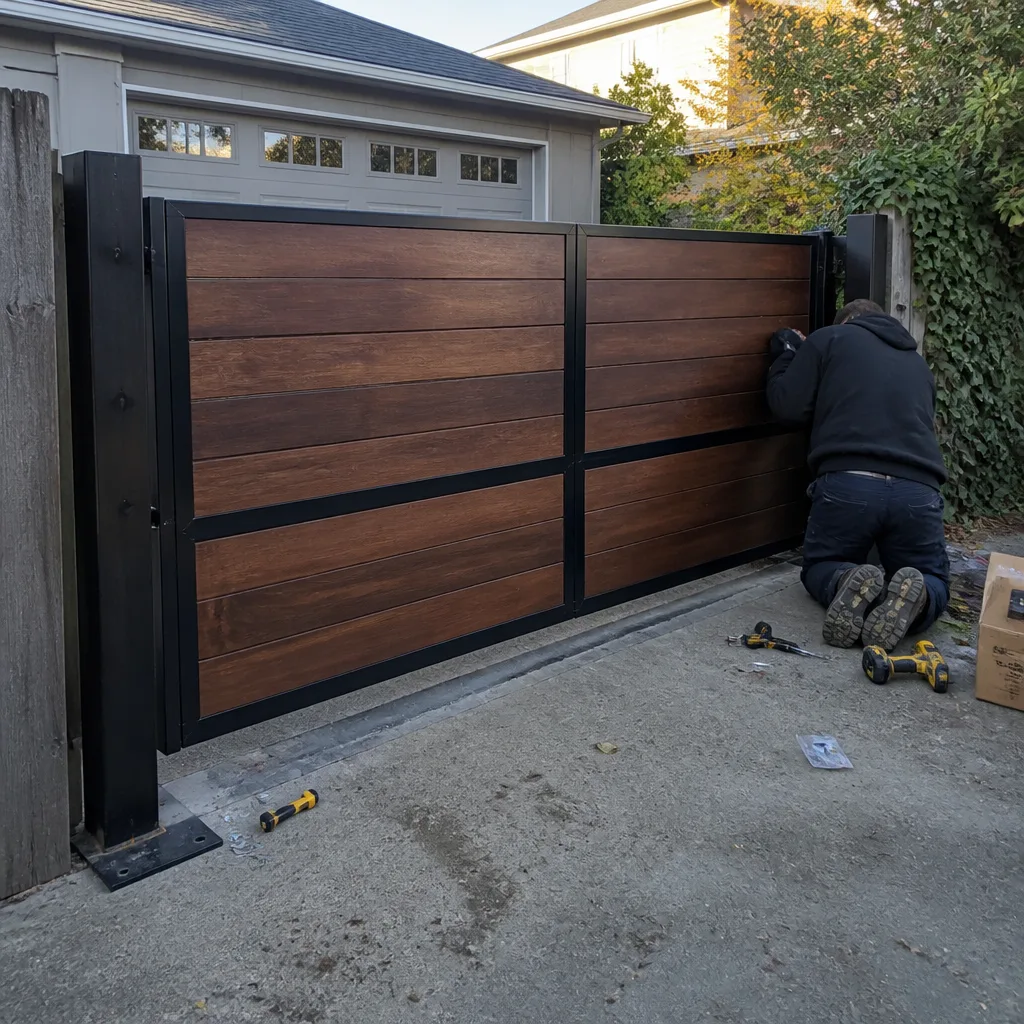 After
After Before
 After
AfterDIY vs Professional Gate Repair: The Berkeley Homeowner’s Decision Guide
The most dangerous DIY gate repair in Berkeley isn’t rewiring a control board or swapping a motor. It’s resetting a post that’s shifted in the clay-heavy soils of the East Bay hills without first diagnosing why it shifted. That lean will return in six months, often worse, and the homeowner who “fixed” it once now owns a documented history of structural work that failed - a liability flag if the gate ever injures someone or damages a vehicle. In this guide and our Gate Repair Maintenance Checklist for Berkeley Homeowners, we’ll draw the repair line at the failure type, not your confidence level. You’ll learn which gate problems are genuinely DIY-appropriate in Berkeley’s specific climate and regulatory environment, which ones create legal and safety exposure regardless of your skill, and how to prepare documentation that saves money when you do call a professional.
Quick Answer
DIY gate repair in Berkeley makes sense for four specific tasks: limit switch resets, battery replacements, remote reprogramming, and seasonal lubrication. Everything else - structural post work, operator replacement, line-voltage electrical work, and any repair involving UL 325 entrapment protection - should be handled by a licensed professional due to liability exposure, code compliance requirements, and the hidden cost of undocumented repairs that future technicians must charge to rediagnose.
Table of Contents
- Where the Line Is: A Repair-by-Repair Decision Matrix
- DIY-Appropriate Repairs in Berkeley
- Never DIY: Structural, Electrical, and Entrapment-Protection Work
- How Berkeley’s Climate and Soil Affect Gate Durability
- What to Document Before Calling a Professional
- How to Evaluate a YouTube Repair Tutorial for Your Gate
- The Hidden Cost of a Successful DIY Repair With No Record
- Common Mistakes to Avoid
- When to Call a Professional
- Frequently Asked Questions
 Before
 After
AfterWhere the Line Is: A Repair-by-Repair Decision Matrix
We’ve repaired over 22,000 gates since 2014, and the pattern is consistent: homeowners don’t injure themselves on the repairs they attempt. They injure themselves on the repairs they attempt without knowing what failure mode they’re actually facing. A gate that won’t close could be a misaligned photo-eye, a dead battery, or a post that has rotated 3 degrees in expanding clay soil. The first two are safe to investigate. The third can drop a 400-pound iron gate on a car, a child, or a pet.
The matrix below separates repairs by what actually fails, not by how confident you feel with tools.
| Repair Category | Typical Failure | DIY Appropriate? | Why or Why Not |
|---|---|---|---|
| Limit switch adjustment | Gate stops short or over-travels | Yes | No load-bearing forces; resettable without tools in most cases |
| Remote/ keypad reprogramming | Signal lost, code forgotten | Yes | Software-level fix; no physical gate interaction |
| Battery replacement | Slow operation, intermittent response | Yes | Plug-and-play; verify voltage match only |
| Seasonal lubrication | Noise, sticking, roller wear | Yes | Maintenance, not repair; use silicone or lithium grease only |
| Photo-eye realignment | Gate reverses randomly or won’t close | Cautiously | Low risk, but misalignment can mask entrapment sensor failure |
| Hinge pin/ roller replacement | Gate drags, squeals, or binds | No | Requires supporting gate weight; incorrect hardware = liability |
| Post reset or replacement | Gate leans, binds, or won’t latch | No | Load-bearing structure; clay soil requires engineered footing |
| Operator/ motor replacement | No response, grinding, or thermal shutdown | No | UL 325 compliance mandatory; incorrect install = entrapment risk |
| Control board wiring | Intermittent function, error codes | No | Line-voltage and low-voltage mixed; code violations common |
| Safety edge/ loop detector repair | Gate closes on vehicles or pedestrians | No | Active entrapment protection; liability exposure is extreme |
This matrix reflects what we document on every gate repair in Berkeley. Under The Haven Standard, we photograph the failure, name the cause, and record the fix - so the next technician, whether it’s us or someone else in five years, doesn’t start from zero.
DIY-Appropriate Repairs in Berkeley
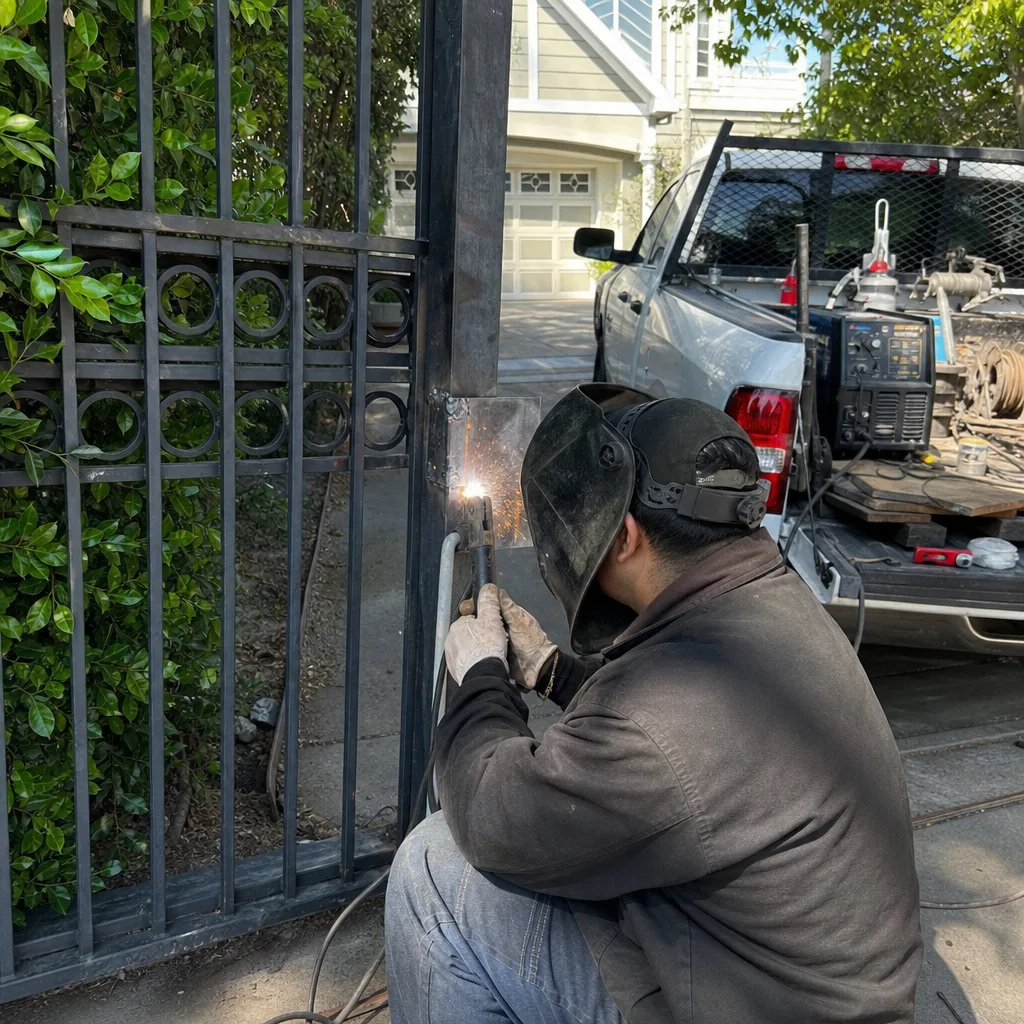
Four gate repairs are genuinely safe for most Berkeley homeowners. Each takes under 30 minutes, requires no specialized tools, and carries near-zero liability exposure if done incorrectly - the worst outcome is that it still doesn’t work and you call a professional with better information.
1. Limit Switch Reset
The limit switch tells the operator when the gate is fully open or closed. On most LiftMaster, FAAC, and Elite systems common in Berkeley’s 1960s-1990s housing stock, this is a small mechanical or magnetic switch inside the operator housing. If your gate stops 6 inches short of the closed position or bangs the stop hard enough to rattle the masonry, the limit switch has drifted.
Steps:
- Disconnect power to the operator (unplug or flip the dedicated breaker - never work live).
- Remove the operator cover; the limit switch is typically a white or gray module with two small adjustment screws or dials marked “Open” and “Close.”
- Turn the “Close” screw 1/4 turn clockwise if the gate stops short; counterclockwise if it over-travels.
- Restore power and test with the remote. Repeat in 1/4-turn increments.
- Document the final setting with a phone photo - include the operator model number visible on the data plate.
If the gate still drifts after two adjustments, the limit switch module is failing mechanically. That’s not a DIY fix; the plastic gears inside fatigue over 8-12 years in Berkeley’s temperature swings, and replacement requires matching the part to the operator series.
2. Battery Replacement
Gate operator batteries last 3-5 years in Berkeley’s mild climate, shorter if the gate cycles frequently or the charger board is weak. A failing battery causes slow operation, mid-travel stops, or complete failure during power outages.
Most operators use a 12V 7Ah or 12V 12Ah sealed lead-acid battery. The replacement is plug-and-play, but verify three things:
- Voltage and amp-hour rating match exactly (printed on the battery case).
- Terminal orientation matches - reversing polarity will destroy the charger board, a $200-$400 mistake.
- The battery tray is corrosion-free; white crust on terminals indicates a leaking battery that may have damaged the tray or wiring.
Document the installation date on the battery with a marker. This simple step, which almost no homeowner does, saves a future technician 15 minutes of diagnostic time.
3. Remote Reprogramming
Lost remotes, new vehicles with built-in HomeLink systems, or simply a dropped remote that lost its pairing - these are software issues, not hardware failures. Every major brand programs differently:
- LiftMaster: Press and hold the “Learn” button on the operator until the LED glows steady; press the remote button within 30 seconds.
- FAAC: Enter programming mode via the control board display, select “Transmitters,” and follow the scroll-and-confirm sequence.
- Mighty Mule: Use the control box “Program” button; some models require a specific button-press sequence on the remote itself.
The critical step most tutorials skip: clear all existing remotes before adding new ones if you suspect a lost or stolen remote. A gate that opens for a missing remote is a security breach, not a convenience issue.
4. Seasonal Lubrication
Berkeley’s marine climate - fog, salt air from the Bay, and winter rains - accelerates corrosion on steel hinges and rollers. Lubrication is maintenance, not repair, but neglected maintenance becomes repair fast.
Use white lithium grease on steel hinges and rollers. Never use WD-40 as a lubricant; it’s a solvent that strips existing grease and attracts dust. Apply sparingly, cycle the gate twice to distribute, and wipe excess. This 10-minute task, done each October before the rainy season, prevents 60% of the binding and noise complaints we see in Berkeley from January through March.
Never DIY: Structural, Electrical, and Entrapment-Protection Work
Three categories of gate repair create liability exposure that no homeowner’s insurance policy will cover if the work was done without a contractor’s license and permits. This isn’t about your skill. It’s about what California law and UL 325 standards require for active safety systems.
Structural Post Work
A leaning gate post in Berkeley is almost always a foundation problem, not a post problem. The expansive clay soils in the hills (think Claremont, Elmwood, and the Northside neighborhoods) swell with winter rain and contract in summer dry spells. A post set in a standard 24-inch concrete footing will rotate, heave, or settle differentially. Resetting it without addressing the soil mechanics means the lean returns, often with more force.
More critically, a gate post is a load-bearing structure. If you reset it and it fails, injuring someone or damaging property, your homeowner’s liability coverage may deny the claim because the work was unpermitted structural modification. Licensed gate contractors carry specific insurance for this exposure; homeowners do not.
We’ve replaced posts in Berkeley where the previous “repair” was a homeowner who packed the base with Quickrete and braced it with a 4×4. The gate held for 11 months. Then the October rains came, the clay swelled, and the 4×4 kicked out, dropping a 340-pound aluminum gate across a driveway. The documentation gap - no permit, no engineer’s spec, no contractor’s record - complicated the insurance claim for months.
Line-Voltage Electrical Work
Gate operators run on 110V or 220V, and the wiring from the main panel to the operator must meet NEC and local amendments. Berkeley requires conduit for underground runs, proper GFCI protection, and specific disconnect placement. A homeowner who extends a circuit to a new operator location without a permit and inspection is creating a code violation that must be disclosed on sale - and a fire risk that insurers may exclude.
Even “low voltage” control wiring carries risk. The 24V circuit that runs photo-eyes and safety edges is low voltage but not low consequence. A shorted safety edge wire can disable entrapment protection without any visible symptom until the gate closes on a person.
UL 325 Entrapment Protection
UL 325 is the standard governing automated gate safety. It mandates specific types and placements of entrapment protection: photo-eyes, safety edges, loop detectors, or contact sensors, depending on gate type and use classification. Any modification to these systems - replacement, relocation, or even temporary bypass - must maintain compliance.
California adopted UL 325 by reference in its building code. A gate operator installed or modified without compliant entrapment protection is a code violation. If that gate injures someone, the liability exposure is strict: the property owner is responsible regardless of whether they “knew” the system was non-compliant.
This is why we document every safety system on every gate installation in Berkeley with photographs of photo-eye alignment, safety edge placement, and loop detector sensitivity settings. Under Haven Standard Clause 4, that evidence stays with the homeowner and in our job file permanently.
How Berkeley’s Climate and Soil Affect Gate Durability
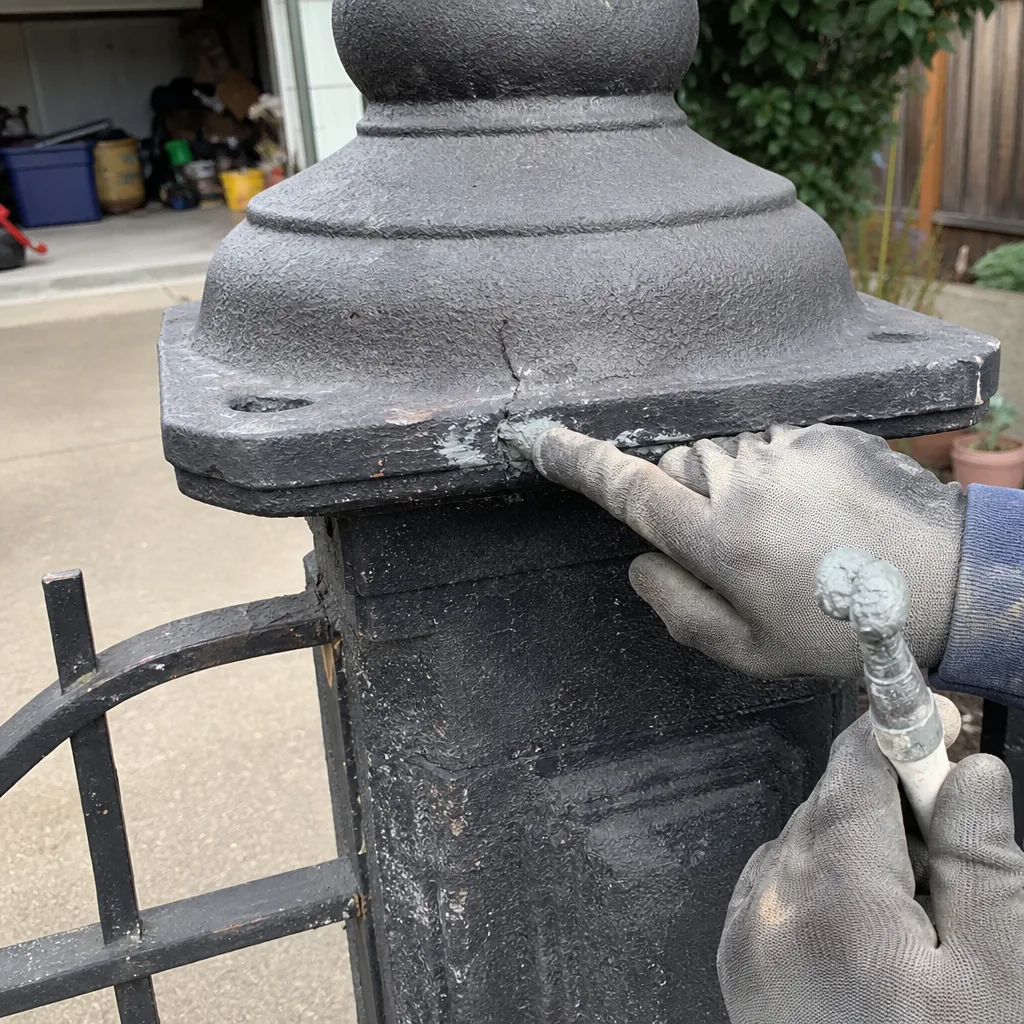
Berkeley’s location between the Bay and the Berkeley Hills creates microclimates that directly impact gate longevity and repair frequency. Understanding these factors helps homeowners distinguish between a true failure and normal environmental stress.
Marine Corrosion
The fog layer that rolls in through the Golden Gate settles heavily in West Berkeley, the Marina, and the flatlands west of Shattuck. Salt air corrodes uncoated steel hinges, rollers, and chain drives at 2-3 times the inland rate. We’ve replaced hinge pins in West Berkeley that were pitted through in 4 years, while identical hardware in the hills above Grizzly Peak lasts 12. If you’re in the fog zone, annual lubrication isn’t optional maintenance - it’s survival.
Clay Soil Movement
The East Bay hills are underlain by expansive clays (the Claremont Shale and related formations). These soils expand when wet, exerting lateral pressure on post footings, and contract when dry, creating voids that allow settlement. A gate that worked fine in September may bind or lean by March. The repair isn’t the gate; it’s the foundation. And foundation repair requires geotechnical understanding that no YouTube tutorial provides.
Tree Root Intrusion
Berkeley’s mature street trees - coast live oaks, London planes, and the remaining elms - send roots under sidewalks and driveways seeking water. A root lifting a concrete driveway slab will also lift a gate track or shift a post footing. We’ve traced gate binding to roots from trees 40 feet away. Cutting the root without arborist consultation can kill a protected tree and trigger Berkeley’s tree replacement ordinance. This is a professional coordination problem, not a DIY repair.
Seismic Considerations
Every gate in Berkeley is subject to seismic loading, though most homeowners never consider it. The 2014 South Napa earthquake shifted gates across the Bay Area, but smaller tremors happen constantly. A gate post with inadequate footing depth or poor concrete quality can rotate incrementally with each event. The cumulative effect shows up as binding, latching problems, or operator strain - symptoms that look like wear but are actually structural drift.
What to Document Before Calling a Professional
The most expensive diagnostic visit is the one where the technician spends 45 minutes reconstructing what happened before the failure. You can cut that time - and the bill - by preparing documentation that answers the questions we always ask first.
- Photograph the failure in context. Wide shot showing the full gate, then close-ups of the specific symptom: the gap at the latch, the error code on the control board display, the angle of lean on the post. Include a photo of the operator data plate with model and serial number visible.
- Note the timeline. When did the problem start? Did it appear suddenly or gradually? Was there a specific event - a storm, a power outage, a vehicle impact, a landscaping project nearby?
- List recent changes. New remote? New vehicle with HomeLink? Recent painting or pressure washing that might have affected photo-eyes? Tree trimming that changed weight distribution on a cantilever gate?
- Record error codes. Most modern operators (LiftMaster MyQ, FAAC E024, Elite CSW) display numeric error codes. Write them down exactly. “Flashing red light” is less useful than “Error 5, photo-eye obstruction.”
- Check the power supply. Is the operator receiving power? Is the battery backup engaged? A simple outlet test with a lamp can save a service call.
- Document any DIY attempts. What did you adjust or replace? When? This prevents us from charging to rediscover your work, and it flags potential complications - like a limit switch that’s now set beyond mechanical travel.
When you call Vance Gate Repair Berkeley with this information, we can often diagnose over the phone and arrive with the correct parts. That saves the return-trip charge that many companies add when they guess wrong.
How to Evaluate a YouTube Repair Tutorial for Your Gate
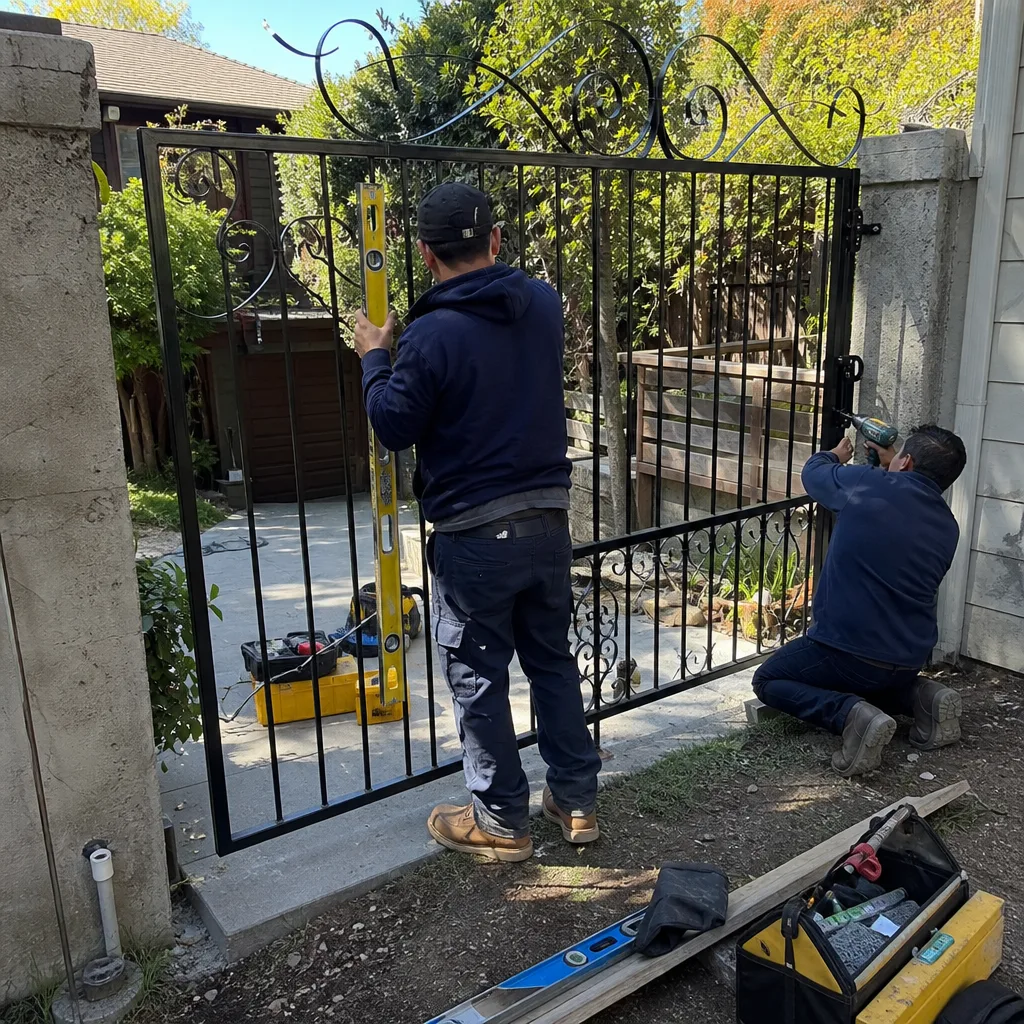
YouTube has democratized repair knowledge, but gate systems are not generic. A tutorial filmed in Arizona on a 150-pound residential swing gate may be actively dangerous if applied to a 600-pound Berkeley iron slide gate on a 15% grade. Here’s how to evaluate whether a tutorial matches your situation.
Check the Operator Model Match
Gate operators are not interchangeable at the component level. A limit switch adjustment on a LiftMaster LA500 (swing gate, 16 ft / 850 lb max) differs from a LiftMaster CSL24U (slide gate, chain drive). The control board menus on FAAC 746 versus FAAC 844 are entirely different. If the tutorial doesn’t show the exact model number visible on the data plate, treat it as entertainment, not instruction.
Verify Gate Weight Class
Hardware that works on a lightweight aluminum gate will fail catastrophically on wrought iron. Hinge pins rated for 200 pounds will shear under 500. The tutorial should state the gate material and approximate weight, or show the hardware part numbers so you can check ratings. If it doesn’t, the person filming may not understand the physics themselves.
Confirm Entrapment Protection Context
California requires UL 325 compliant entrapment protection on all automated gates. Tutorials filmed in states without this requirement may show bypass procedures, jumper installations, or sensor removals that are illegal here and dangerous everywhere. Any tutorial that says “you can just bypass the photo-eye for now” is creating liability for you. We find these bypasses regularly on gate motor service calls in Berkeley, and we document them as pre-existing safety violations because we must.
Assess the Filmmaker’s Documentation Habit
The most reliable tutorial creators show their work: close-ups of part numbers, torque specifications, multimeter readings, and final test procedures. If the video is all hand-waving and “should be fine,” the creator doesn’t have the documentation discipline that professional repair requires. At Vance Gate Repair, we leave a written and photographic record of every adjustment because “should be fine” isn’t a standard anyone should accept. For more guides & resources, see our blog.
The Hidden Cost of a Successful DIY Repair With No Record
This is the point competitors miss entirely. A DIY repair that “works” can cost more over the gate’s life than a professional repair that was documented, even if the professional cost more upfront.
Here’s the mechanism: gate systems are complex, with interactions between mechanical, electrical, and control components. When you adjust a limit switch to compensate for a hinge that’s slowly binding, you haven’t fixed the root cause. You’ve masked it. The gate now closes, but the operator works harder, drawing more current, heating the motor, and shortening its life. Two years later, the motor fails. The technician who arrives sees a dead motor, replaces it, and the new motor fails in 18 months because the hinge is still binding. Without documentation of your earlier limit switch adjustment, no one connects the failures.
We’ve traced “mystery” motor failures in Berkeley to DIY adjustments made 3-4 years prior. The homeowner paid for two motors and two service calls that would have been avoided if the original hinge binding had been diagnosed and fixed, with a record showing the progressive wear.
Under The Haven Standard, every gate repair we complete in Berkeley includes a photo log and written record at no additional charge. That record lives in our job file and goes home with you. When you sell the house, you hand the next owner a maintenance history. When you call us in five years, we know exactly what was done, by whom, and with what parts. The “savings” of an undocumented DIY repair evaporate the first time a technician has to charge you to rediscover what you already knew.
Common Mistakes to Avoid
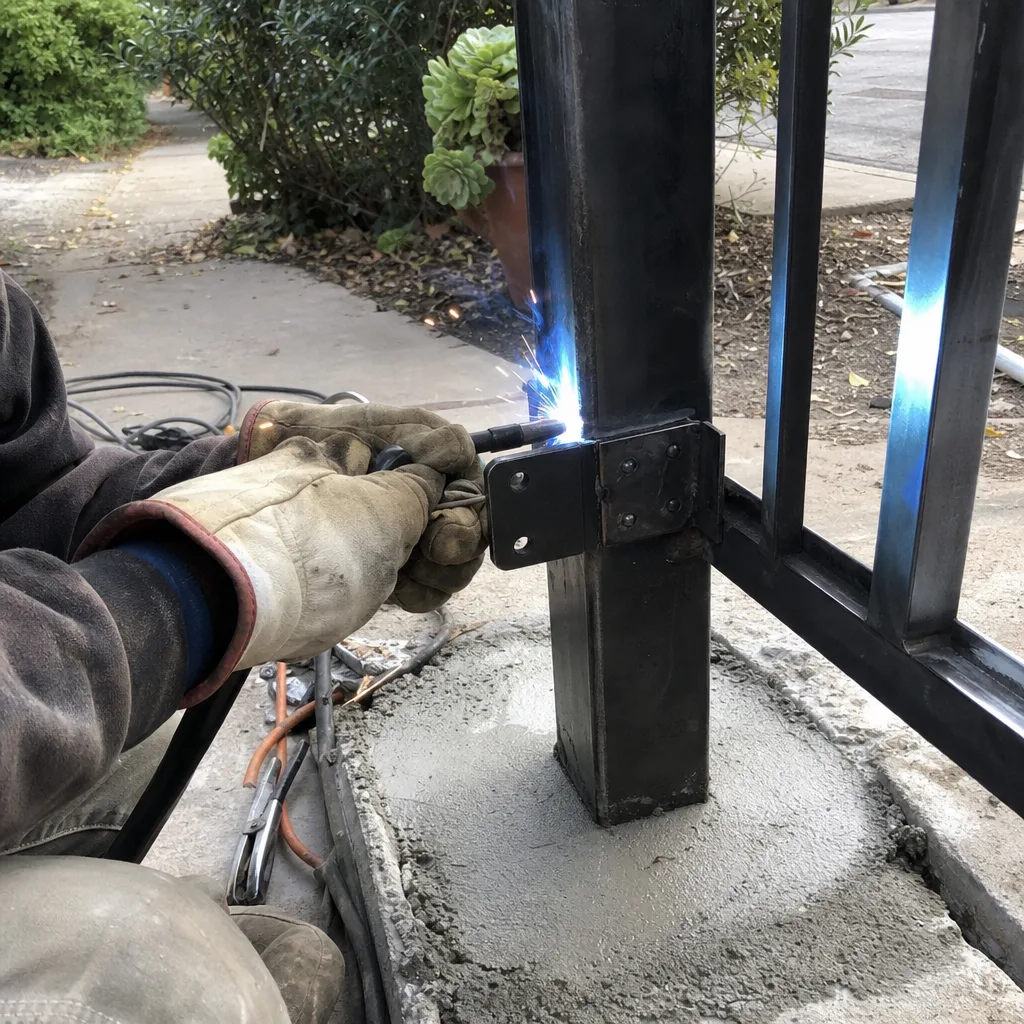
- Resetting a limit switch to compensate for mechanical wear. The gate closes, but the operator strains. Six months later, the motor burns out. Fix the binding, not the symptom.
- Using automotive parts on gate hardware. A car door hinge pin looks similar to a gate hinge pin but lacks the shear rating. We’ve extracted broken auto pins from Berkeley gates that collapsed under load.
- Ignoring the “why” behind a shifted post. Clay soil, tree roots, or a leaking irrigation line will shift the post again. Without addressing the cause, you’re rebuilding on a failing foundation.
- Bypassing safety devices “temporarily.” The photo-eye that “just needs cleaning” may be failing optically. A bypassed safety edge is an entrapment lawsuit waiting to happen. We document every safety system on every visit under Haven Standard Clause 4.
- Mixing grease types on the same mechanism. Lithium grease and silicone spray are incompatible; they break down into a gritty paste that accelerates wear. Pick one, use it consistently, and never add new grease without cleaning the old.
- Assuming all operators program the same way. A LiftMaster Learn button sequence will factory reset a FAAC board. Always verify the brand and model before following any programming tutorial.
- Neglecting to photograph before disassembly. Wire positions, adjustment settings, and mechanical relationships are obvious until they’re not. A 30-second photo saves hours of reconstruction.
When to Call a Professional
Call a licensed gate contractor when the repair involves: load-bearing structure (posts, footings, cantilever arms); line-voltage electrical work; operator or motor replacement; any modification to entrapment protection systems; or any failure you cannot confidently diagnose to root cause. The cost of professional diagnosis is typically 1/10 the cost of liability exposure from a failed DIY structural repair.
Vance Gate Repair Berkeley offers free estimates in Berkeley - call (510) 879-5471. We arrive with background-checked, uniformed technicians; provide a written price before any work starts under Haven Standard Clause 1; and leave a documented photo record of every finding and adjustment under Clause 4. The 365-Day Done Right Promise covers all completed work: if it’s not right, we make it right at no additional charge.
Frequently Asked Questions
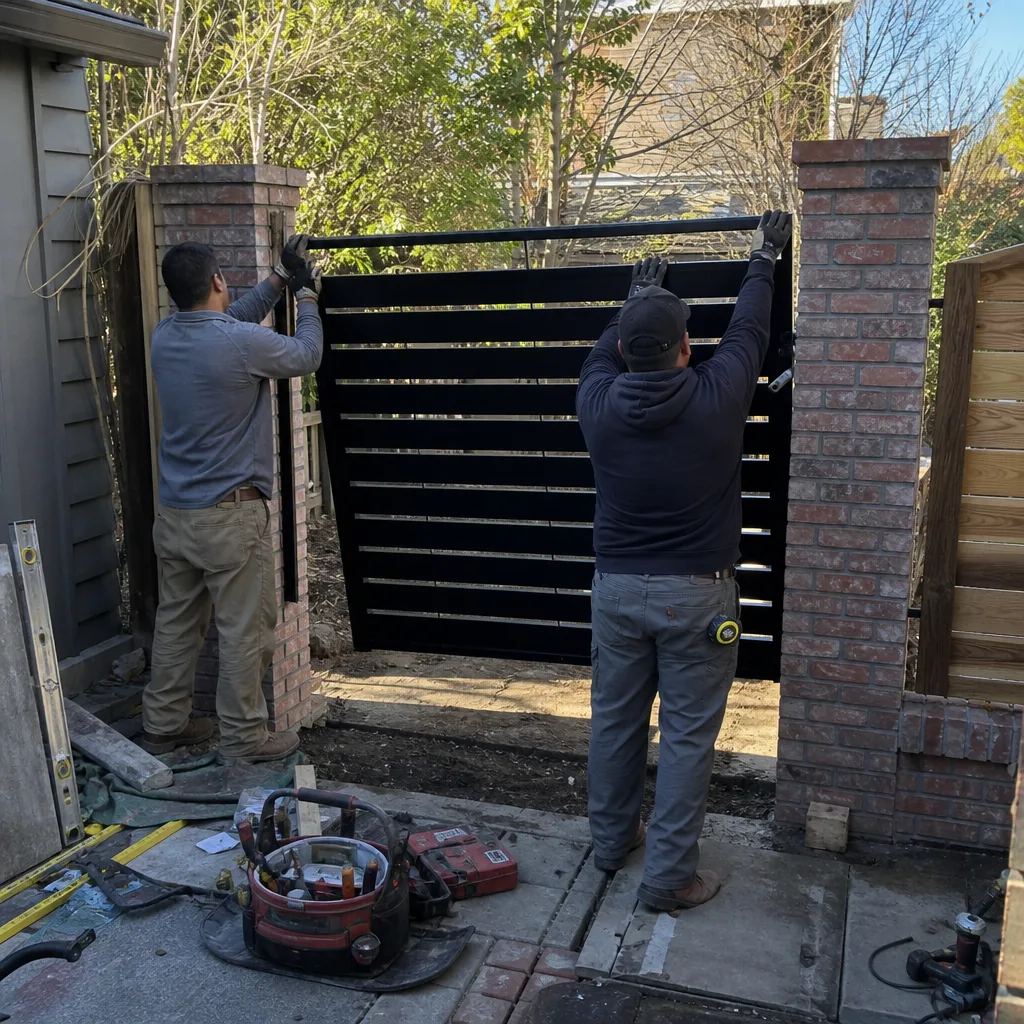
Most Gate Repair services in Berkeley run $180-$450 for mechanical issues like hinge replacement, track realignment, or limit switch service. Operator replacement typically ranges $1,200-$2,800 depending on brand (LiftMaster, FAAC, Elite, and others), gate weight, and whether the existing wiring and safety devices are reusable. Structural post work starts around $800 and can exceed $2,500 if engineered footings are required in clay soil. We provide a written, itemized price before any work begins - no estimate-by-phone, no surprise invoice. Call (510) 879-5471 for a free, on-site quote.
Yes, on most residential operators this is a legitimate DIY task. Locate the adjustment screws or dials inside the operator housing (marked “Open” and “Close”), turn in 1/4 increments, and test. Document the original and final settings with photos. If adjustment doesn’t resolve the issue after two attempts, the limit switch module is likely failing and should be replaced by a technician who can match the part to your operator series.
Berkeley’s clay soils expand with winter rain and contract in summer dryness, shifting posts and tracks seasonally. This is particularly pronounced in the hills neighborhoods. The binding is a foundation signal, not a gate problem. A seasonal lubrication routine helps marginally, but persistent seasonal binding requires professional assessment of post footing depth and soil conditions.
Homeowners can legally install their own operator, but the installation must meet California Building Code and UL 325 entrapment protection requirements. Berkeley requires permits for electrical work and inspections for automated gate installations. An unpermitted installation must be disclosed on property sale and may void homeowner’s insurance coverage for gate-related incidents. Most homeowners find that professional installation, with permit handling and documented compliance, costs less than the risk exposure of DIY.
Test photo-eyes monthly by blocking the beam during gate closure - the gate should reverse immediately. Test safety edges by pressing the edge while the gate moves - it should stop and reverse. Test loop detectors by driving a metal object over the loop at mid-travel. If any device fails to respond, disable automatic operation and call for service. Never bypass safety devices; the liability exposure is extreme and insurance coverage may be denied if a bypass is found after an incident.
Do not attempt to reset or brace a leaning post yourself. A leaning post indicates foundation failure - clay soil movement, inadequate footing depth, or root intrusion. Temporary bracing with lumber or quick-setting concrete creates a false sense of security and documented liability. Call a licensed gate contractor who can assess soil conditions, specify proper footing depth (typically 36-48 inches in Berkeley clay), and provide an engineered solution with permit compliance.
Yes. Bring any written estimate from another company and we’ll review it at no cost. We frequently find that competitors propose full operator replacement when a control board repair or limit switch service would resolve the issue. Our written scope under Haven Standard Clause 1 names exactly what we’ll do, what parts we’ll use, and what the total price is - before any work starts.
The Bottom Line
The DIY-vs-professional question for Berkeley gate repair isn’t a test of your competence with tools. It’s a test of whether you can identify the failure mode accurately enough to know what’s safe to attempt and what creates liability you cannot absorb. Limit switches, batteries, remotes, and lubrication are genuinely DIY-appropriate. Structural posts, electrical work, operator replacement, and entrapment protection are not - regardless of your skill level - because the consequences of failure extend beyond the gate itself into property damage, personal injury, and legal exposure. When you do call a professional, prepare documentation that shortens diagnostic time and preserves a record for the future. And when you choose a contractor, demand what The Haven Standard requires: a written price before work starts, photographic evidence of what was found and fixed, and a warranty that the company stands behind without argument.
Written by Adrian Vance, Owner at Vance Gate Repair Berkeley, serving Berkeley since 2014.